
Bat-men and New York, 1835 July 31, 2010
Author: Beach Combing | in : Modern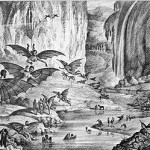
Beachcombing alluded in a recent post to the danger of misinformation in a world that had less instantaneous communications than our own. After all, if Beachcombing flies from London to Washington DC today and asserts, on arrival, that the French island of Corsica has sunk beneath the waves a […]
Russian Roulette Before the Pistol July 30, 2010
Author: Beach Combing | in : Ancient
Beachcombing has never played Russian roulette. But he can think of plenty of people – mainly fictional – who have from some gentlemen in the Deer Hunter, to the hero of Royal Flash, to an all too factual bored teenage Graham Greene – though Greene’s experimentation with loaded […]
Shakespeare’s Lost Letters July 29, 2010
Author: Beach Combing | in : Modern
There are several of Shakespeare’s works that are lost. For example, his plays Cardenio (written with Fletcher) and Love’s Labour Won both appear to have disappeared down the plug hole of time. And to these we should perhaps add a collection of Shakespearean letters that perhaps made […]
False Armistice: the Cable that Lied to a Nation July 28, 2010
Author: Beach Combing | in : Contemporary
A story of misplaced joy with, Beachcombing promises, no elephants. In a world of instant communication it is all too easy to forget how long it once took to get a message from one side of the world to another. Think of the months needed for a seventeenth-century Spanish governor in […]
Review: War Elephants July 27, 2010
Author: Beach Combing | in : Ancient, Medieval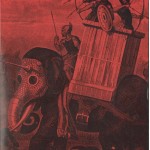
Beachcombing is bringing Elephant Week, ‘the freakish fringe history of the largest land mammal’, to a close with a review of an outstanding recent publication War Elephants by John M. Kistler (Nebraska 2007). In this work the author covers the history of pachyderms on three continents – Africa, […]
Elephants and Burning Pigs July 26, 2010
Author: Beach Combing | in : Ancient
A challenge. Your army is spread across the plain when rumbling into sight come not only two hundred enemy cavalry and a thousand hoplites but, unexpectedly, thirty mounted elephants that seem very, very angry – they have been made drunk before battle according to custom. As your horse […]
The Last Elephant Charge in History? July 25, 2010
Author: Beach Combing | in : Ancient, Medieval, Modern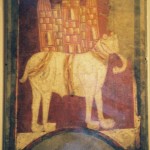
Beachcombing has had several very useful emails from readers on the last cavalry charge in history. So many useful emails, indeed, that he has decided to risk repetition and ask […]
An Elephant Invades Italy in 1936 July 24, 2010
Author: Beach Combing | in : Ancient, Contemporary
Night four of Beachcombing’s Elephant week extravaganza is taken up by Richard Halliburton’s attempt to cross the Alps in 1936 on the back of an African elephant. Halliburton, a fun kind of fellow, managed to hire (and insure!) an […]
Elephants in Eighth-century Honduras? July 23, 2010
Author: Beach Combing | in : Medieval
For the third night of Elephant Week, ‘the freakish fringe history of the largest land mammal’, Beachcombing wants to share a remarkable series of images relating to Stela B at the […]
Mongol elephants in America? July 22, 2010
Author: Beach Combing | in : Medieval
For the second article of Elephant Week Beachcombing thought that he would introduce one of his favourite early nineteenth-century books. Just let the title wash over you… John Ranking’s Historical researches on the conquest of Peru, Mexico, Bogota, Natchez, and Talomeco in the thirteenth century by the Mongols, accompanied with elephants: and the local agreement of […]
Execution by Elephant July 21, 2010
Author: Beach Combing | in : Ancient, Medieval, Modern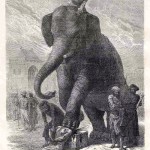
And so begins Elephant Week – for the next seven evenings an article will be given over to the freakish fringe history of the largest land mammal. First of all, this extraordinary passage from the […]
An Early Christian Apostless July 20, 2010
Author: Beach Combing | in : Ancient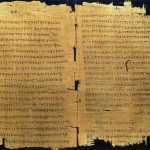
Summer’s here, the sun’s out and Mrs B and little Miss B are trying not to have arguments with the in-laws on a distant strand of Mediterranean. Beachcombing, instead, took a far more sensible line and stayed at home with a collection of books and is subsisting on a diet of […]
Purring – a Lancashire Martial Art? July 19, 2010
Author: Beach Combing | in : Modern
Nineteenth-century clog-fighting: did it really exist? First some background. Clogs, of course, at least in their English incarnation, were wooden-soled shoes typically used in factories or in mines by the working classes in centuries gone by, because they kept their feet warm and because they were cheap Some claim that factory workers would tap […]
ET Phones Home in the Fifteenth Century? July 18, 2010
Author: Beach Combing | in : Medieval
Beachcombing has been thrilled by correspondence over his posts and hopes to put up the useful (as opposed to the merely nice or amusing) ones towards the end of this month. However, he has been disappointed by the almost complete silence over some of his early pieces from the […]
Invisible Libraries: a Victorian Contribution July 17, 2010
Author: Beach Combing | in : Modern
There is a respectable literary tradition dating back to the end of the Middle Ages of scholars, writers and fantasists creating libraries of books that might or that should have once existed. To the best of Beachcombing’s knowledge this tradition begins – where else? – […]

