jump to navigation

The Ash Wednesday Supper May 12, 2012

Posted by Beachcombing in : Medieval, Modern

Giordano Bruno (pictured badly) was a sixteenth-century philosopher with a thing about infinity. Giordano also had an infinite capacity to create irritation. Indeed, his travels around Europe have a fascinating pattern of greeting, slighting and sprinting. Typically, GB is obliged to leave his last home in a hurry because of offence caused to the church or/and secular authorities. Giordano then turns up in his new home, is greeted as a major European thinker. Then six months later the pattern reasserts itself and Giordano is running for his life once more.

Among GB’s very many unfortunate habits were those of throwing out images of saints and that of telling anyone who cared to listen that God had created endless inhabited worlds, making Giordano a kind of patron secular saint of the UFO community. This pattern, in any case, finally went up the chimney when 17 February, 1600, Bruno was burnt as a heretic in a Roman piazza. His ashes were then scattered in the Tiber and Giordano Bruno became his ideas: all that survived of him.

Now on the subject of ashes… In 1584 Bruno had one of those legendary dinners – the Ash Wednesday Supper – that, on previous occasions, Beach has referred to as Immortal Meals. Moments when the Olympians of the human race meet over bread and wine. We know about this meal because GB wrote a pseudo-Platonic dialogue based around it that he published in the same year under the title Cena de le Ceneri. It was by any standards, perhaps particularly though by the standards of a razor-sharp Italian bon vivant,  a catastrophic repast.

First GB had been invited to the house of the poet Fulke Greville, an over serious Elizabethan sonnet writer who served both Elizabeth I and James I and who was a great friend of Philip Sydney. GB had been called in to debate philosophy with some Aristotelians down from Oxford for the evening. Bruno, it goes without saying, was a Platonist.

GB probably saw this as an opportunity to educate the ‘mad barbarians’ as he called the English. But the evening turned into a sorry comedy of errors. Bruno misunderstood the time of the meal and this caused confusion with his hosts who came to pick him up but found him out. Then, when they finally met up, he and his hosts crossed the Thames on a boat and ended up lost on the wrong side of the river (don’t do this in London). We cannot be certain how much of this account is ‘allegorical’ (those damn Platonists) and even basic details may have been invented: it is argued that the meal took place, for example, in a house other than Greville’s.

However, we can probably trust the account in terms of its intellectual content. The Oxford scholars made a terrible impression on the Italian. Bruno tried to defend the Copernican system, but he did so against men who, according to his account, barely knew how to argue (sounds like an Oxonian) and who were still trapped in medieval scholasticism.

This was all compounded by the fact that GB (an unquestionably brilliant scholar) had not troubled to learn English and by the fact that the English Professors did not know Italian. The argument (for such it quickly became) raged then in Latin. This must have been a sixteenth-century equivalent of empiricist American professors of fifty years ago, say, being confronted over table by Foucault in a furious conversation in poor Spanish.

Naturally, Bruno came off best and is praised by his host: but then Bruno wrote the account and Bruno always comes out best in those circumstances. A year later, England had chewed him up and spat him out. Then sixteen years later a fire was lit under Giordano’s toes. We’ll end with a detail that has always haunted Beachcombing: before GB was burnt his mouth was taped shut so that he could not spout dangerous sentences to the gathering crowds, something that the professors at that long ago meal would doubtless have approved of.

Beach is always looking out for remarkable meals: drbeachcombing AT yahoo DOT com

Suicide and Historical Loopholes April 7, 2012

Posted by Beachcombing in : Actualite, Ancient, Contemporary, Modern

***Dedicated to David: ‘between the bridge and the river…’***

Suicide has proved abhorrent to most spiritual traditions. Certainly, the great monotheistic religions and most of the far Eastern religions have condemned ‘self-murder’: cue lots of pulpit bashing and descriptions of hell or unpleasant reincarnations. This begs the question though of what you can do if you live in 500 BC or 500 AD or 1500 AD and you want to end your life at all costs. Beach was musing on this last night (as you do) and he wondered, human ingenuity being what it is, how individuals have got around these strictures through time. He would be very interested in any other categories or vivid examples: drbeachcombing AT yahoo DOT com At the same time he should say that he writes this well aware of the horrible gravity of these matters and their capacity to blight families and communities; none of what follows is meant to be flippant either to G-K-Chesteron-Flag-of-the-World types or, indeed, to euthanasia ‘enthusiasts’.

i) This doesn’t count. Beach has come across several examples where individuals convince themselves that certain forms of suicide are not really suicide. For instance, if I eat rat poison then clearly I am ending my life and must suffer the eternal consequences. But if I stop putting food and drink in my mouth and I die then I have not ‘done’ anything: at best we can talk of a sin of omission. Curiously the examples of non-suicide by starvation, that he has found, come from nineteenth- and twentieth-century Germany. Not sure what to make of that or its historical background. Naturally many modern just-turn-off-the-machine debates involve similar arguments. It is one thing to fill someone’s veins with poison: another to stop pumping oxygen into the lungs or to take the food tube out of someone who has spent three decades immobile in hospital. An orthodox Catholic would claim, of course, that the difference, in the end, is not a categorical one: though even Beach’s beloved uber-Catholic wife would give up here if we talk about an elderly patient refusing, say, to take medicine.

ii) It wasn’t me. One extreme version of ‘this doesn’t count’ is tricking someone else into killing you. Take ‘a soldier’s death’: remembering countless examples from the eastern front in WW2. The man who does not want to go on living leaps out of the trench and walks towards the enemy firing to be killed moments later. There are some instances of death by cop in the modern United States, one problem with having an armed constabulary: a ‘perp’ pulls a weapon and police officers fire to defend themselves not knowing that they are really being coerced. Then there are even some extraordinary instances from history where a suicide kills an innocent (murder can be forgiven in most religions) so that they can be executed. This became a veritable plague in Denmark in the Early Modern Period. (Thanks to Andy the Mad Monk for this reference and Jason Z for some comments. ) Interestingly the early Christian martyrs had debates on a related question. Was it right to go and give yourself up to the Roman authorities? Or should you sit at home and wait for them to come to you? Christian attitudes to suicide arguably formed in this period in a strong rejection of the first.

iii) Can you help me? The reader will have noted that a lot of this suicide-avoiding-stuff involves loopholes. We’ll have to hope that, if there is an Almighty, He is more interested in the letter than the spirit of the law. Along similar lines one slightly more moral version of the ‘it wasn’t me’ technique is actually negotiating with someone to kill you so the sin is not on your head. A famous historical case of this was Masada where the defenders slaughtered each other by taking lots before the Romans could break through into the inner sanctum: that peculiar reluctance found in some period of not wanting to give your enemy the pleasure of massacring you. Beach, getting fictional, also has a scene from the Three Colours White in mind where much is made of this idea and the ‘murderer’ succeeds  – the scene is extraordinarily moving -  in giving the suicide a renewed will to live. It is interesting that in many cases couple suicides involve the partners ‘helping’ each other, almost as if there is a desire (unconscious or otherwise) to avoid putting your own hand on yourself.

iv) I ended my life but to save others. This is the category for those who suspect that, contrary to what was said above, the Almighty (always granting His existence) is more interested in the spirit than the letter of the law. There are, after all, cases where an act of suicide should actually help the world: depending naturally on our appallingly limited human viewpoints of what ‘help’ means. This might include the suicide of a Woolwich cadet described in an A.E.Housman poem who ends his life because he is worried he is going to damage himself and others: he was presumably homosexual at a time, late 19 cent, when this was unacceptable.  This argument is passionately used as a justification for suicide bombing by some Islamists. An uneasy Biblical ‘precedent’ is Samson who brings down the temple on the heads of himself but also the Philistines: the same Samson praised by the normally grumpy Paul in his letters. Altruistic suicide might very reasonably be used to describe the death of Bruno Fanciullacci the Italian resistance fighter in the last war who hurled himself from an upper storey window to avoid torture and indiscretions at the hands of the Gestapo, arguably saving tens of lives.  Thinking about this Beach once had a fascinating discussion with a member of Opus Dei who argued that, by this definition, Christ himself had committed suicide. Discuss.


Escaping the Guillotine March 4, 2012

Posted by Beachcombing in : Modern

Capital punishment: it’s been a while. Beachcombing was thinking about close escapes from death penalty. There are two types of these, of course: either royal screw ups on the part of executioners or daring escapes at the point of death.  The first category would include John Lee and a few others who somehow survived a hanging: unfortunately most other forms of state-inflicted death leave far less room for manoeuvrings. The second category would include… well, whom? Beach has been able to come up with lots of examples but all appear in fiction and many of those in comic books. So any genuine escapes at the point of death? drbeachcombing AT yahoo DOT com To get the ball rolling Beach offers up this tale of Henri Chateaubrun who was allegedly sentenced to death in the ‘Terror’ because a Jacobin fell in love with his wife.

The next morning a number of carts were backed up to the door of the concierge, and a soldier in the prison called the names of twenty-one men who were to forth to execution. Among them was Henri Chateaubrun. They all walked out of the carts, some erect, all of them showing in their pale and haggard features the mark of death. Standing in the carts, they were driven towards the Seine and crossed it by a bridge entering the Place de la Revolution, since called the Place de la Concorde. There stood the guillotine with persons to work it ready to lop off twenty-one heads, and there stood a crowd kept back by soldiers, to witness the grewsome [sic] sight. The carts stopped besides the machine and the victims descended from the carts.

And now began a work that even an implement so well adapted to the purpose found it difficult to perform. Each one of the prisoners, hatless and with his hands tied behind his back, in turn stepped up to it, was laid upon it, strapped to it; the knife fell, his head rolled into the basket and his body was removed to make room for the next victim. Fifteen of the twenty-one had been executed when the guillotine refused to work. Whether the knife got wedged in the grooves or whether the machinery that raised the ax or that which detached it after it had been raised got out of order doesn’t matter. Something had gone wrong, and those in charge of the executions were unable to fix it.

The proceedings were stopped, and a messenger was sent for mechanics to put the guillotine in order. This required time. Waiting is not conducive to discipline. The soldiers who were there to keep the crowd back grew lax, and by the time workmen had arrived people had elbowed their way close upon the remaining six men standing in line waiting for the repairs on the machine that was to make corpses of them.

‘Get back!’ cried the guards, shoving the crow with the buts of their muskets. This was repeated so often that at last very little attention was paid to it. Chateaubrun presently found himself in the first line of spectators. Then, instead, of being in the line next [to] the guillotine, he found himself in the second. In the pushing that continued he was wedged back into the third line and at last was at the back of the crowd that was there to see his head cut off.

There was something radically wrong with the guillotine. The men fixing it hammered and pulled and screwed and unscrewed. Meanwhile the day was ended, and it was growing dark. Chateaubrun, considering the sight of his execution not worth so long a wait, quietly walked away.

The Place de la Concorde is at the beginning of the Champs d’Elysces. Chateaubrun, ever moment expecting to be missed, concealing as well as he could his tied hands, his heart beating wildly, passed into the Champs d’Elysces eager to run, but forcing himself to walk leisurely. There he made his way onward in the shadow of the trees. Finally, when he had gone far enough from the scene of his intended execution, meeting a man coming toward him he said: ‘M’sier, a friend of mine just now, who is a great wag, tied my hands behind my back and ran away with my had. Kindly unloosen me.’

The man of course did so and Chateaubrun was free to go. But is it a true story? Rather worryingly there is a similar  tale about a man called Antoine Gaspard de Châteaubrun. Beach then smells the distinct though not unpleasant whiff of cobblers. For anyone with access Beach learns in another place that ‘This ” histoire merveilleuse,” [the one recounted about Henri rather than Antoine] as the French narrator rightly calls it, will be found in the memoirs of the Comte de Vaublanc, who also, but for his own adroitness, had been shaved by the national razor.’ Mmmmm


Rhyming with Death December 8, 2011

Posted by Beachcombing in : Contemporary, Medieval, Modern


***dedicated to Andy the Mad Monk, who sent Beach several notable examples***

Death concentrates the mind wonderfully and, at least in the east, a longstanding custom has been to pen a final poem: a last communiqué to the world. This custom stretches far back into the Middle Ages  and perhaps the greatest thing to recommend it is the brevity of the works in question

So we have Seong Sam-mun (obit 1456) a Korean minister executed for plotting against a tyrant. Seong limited himself to little more than thirty words.

What shall I become when this body is dead and gone?

A tall, thick pine tree on the highest peak of Bongraesan,

Evergreen alone when white snow covers the whole world.

Or the Japanese Zen monk Ryokan (obit 1831)

Now it reveals its hidden side

and now the other—thus it falls,

an autumn leaf

By the standards of Seong and Ryokan Kuribayashi (obit 1945) , the Japanese commander at Iwo Jimma was rather prolix.

Sadness overcomes me as I am unable to fulfill my duty for my country,

Bullets and arrows are no more

I, falling in the field without revenge,

Will be reborn to take up my sword again.

When ugly weeds run riot over this island,

My heart and soul will be with the fate of the Imperial nation

Kuribayashi probably died in the uniform of a Japanese private in a night time attack against the American invaders one or two days later.

Death poems may have been institutionalised in parts of Asia, but they have also featured in western culture. Those dying in hospital beds or in accidents don’t typically have the energy to spout sonnets: and of the poems above only Ryokan’s was written before a natural end. But the executed or those who have decided on suicide very often have existential angst to work off.

Take, for example, the histrionic Russian poet Sergei Esenin (1928) who, before hanging himself, wrote a few consoling lines to his friend in his own blood: this kind of melodrama is not given to those who have a tumour growing around their liver.

Goodbye, my friend, goodbye

My love, you are in my heart.

It was preordained we should part

And be reunited by and by.

To be honest Beachcombing cannot understand a suicide writing a poem: the typical modus operandi is to say ‘sorry, it is not your fault’ and to be done with it. But Robert Howard (obit 1936), for example, the American pulp fiction author borrowed the following lines from Viola Garvin and slipped them into his wallet. He committed suicide with a pistol in his car when he knew that his mother was slipping towards death.

All fled – all done, so lift me on the pyre;

The feast is over, and the lamps expire.

Sara Teasdale (obit 1933) the poet used her last words to put the knife into a lover who had deserted her. Did he give a damn? Beachcombing doubts it.

When I am dead, and over me bright April

Shakes out her rain drenched hair,

Tho you should lean above me broken hearted,

I shall not care.

For I shall have peace.

As leafey trees are peaceful

When rain bends down the bough.

And I shall be more silent and cold hearted

Than you are now.

Then still with suicides here are Hunter Thompson’s last words (obit 2005) written to his wife, Anita. OK verse it isn’t. But it is not exactly prose either. It is certainly though difficult to forget, particularly the first four words.

Football Season Is Over. No More Games. No More Bombs. No More Walking. No More Fun. No More Swimming. 67. That is 17 years past 50. 17 more than I needed or wanted. Boring. I am always bitchy. No Fun for anybody. 67. You are getting Greedy. Act your old age. Relax This won’t hurt.

Wishful thinking?

Suicide rates, however, far behind execution in getting the rhymes going. Here there is Timothy McVeigh (obit 2001) quoting Invictus before he was frazzled. Or the murderer, Robert Harris, who had his last breaths in a Californian gas chamber (obit 1995), remembering a scene from Bill and Ted’s Excellent Adventure: ‘You can be a king or a street sweeper, but everyone dances with the Grim Reaper.’

Others have been more cerebral and have at least written their own epitaphs. José Rizal, the Philippine patriot composed a poem that has since become one of the national works of the country he helped to create. The last stanza of which is:

Adios, padres y hermanos, trozos del alma mia,

Amigos de la infrancia, en el perdido hogar;

Dal gracias, que descanso del fatigoso dia;

Adios, dulce extranjera, mi amiga, mi alegria;

Adios, queridos seres. Morir es descansar.

Farewell, parents, brothers, beloved by me,
Friends of my childhood, in the home distressed;
Give thanks that now I rest from the wearisome day;
Farewell, sweet stranger, my friend, who brightened my way;
Farewell, to all I love. To die is to rest.

At least, in the English speaking world execution poetry seems to have been most important in the Tudor and Elizabethan period. Poor old Anne Boleyn (obit 1536), for example, saw death as a kind of nursery nurse.

Death, rock me asleep,

Bring me to quiet rest,

Let pass my weary guiltless ghost

Out of my careful breast.

Toll on, thou passing bell;

Ring out my doleful knell;

Let thy sound my death tell.

Death doth draw nigh;

There is no remedy.

Sir Walter Raleigh wrote perhaps his most successful poem The Lie in the shadow of the axe.

Go, soul, the body’s guest,

Upon a thankless errand;

Fear not to touch the best;

The truth shall be thy warrant:

Go, since I needs must die,

And give the world the lie.

Then there is one of Beachcombing’s favourite poems in any genre and from any time: Chidiock Tichborne’s My Prime of Youth, written to his wife in 1586 before the 28 year old was publicly  disemboweled, for plotting against Elizabeth. For a devout Catholic – the thing that essentially got CT killed – the poem entirely and curiously lacks religious sentiment.

My prime of youth is but a frost of cares,

My feast of joy is but a dish of pain,

My crop of corn is but a field of tares,

And all my good is but vain hope of gain;

The day is past, and yet I saw no sun,

And now I live, and now my life is done.

My tale was heard and yet it was not told,

My fruit is fallen, yet my leaves are green,

My youth is spent and yet I am not old,

I saw the world and yet I was not seen;

My thread is cut and yet it is not spun,

And now I live and now my life is done.

I sought my death and found it in my womb,

I looked for life and found it was a shade,

I trod the earth and knew it was my tomb,

And now I die, and now I was but made;

My glass is full, and now my glass is run,

And now I live, and now my life is done.

Any other death poems: suicide, execution or natural death? drbeachcombing AT yahoo DOT com

***

11/12/2011: Eire writes: ‘Beach you missed out, with the exception of Iwo Jimma, the beautiful poems written by soldiers before they believe they are going to die in battle. What about T.M. Kettle who died in 1stWW just a few days after writing this!  In wiser days, my darling rosebud, blown/ To beauty proud as was your mother’s prime/ In that desired, delayed, incredible time,/ You’ll ask why I abandoned you, my own,/ And the dear heart that was your baby throne,/ To dice with death. And oh! they’ll give you rhyme/ And reason: some will call the thing sublime, / And some decry it in a knowing tone./ So here, while the mad guns curse overhead,/ And tired men sigh with mud for couch and floor,/ Know that we fools, now with the foolish dead,/ Died not for flag, nor King, nor Emperor,—/ But for a dream, born in a herdsman’s shed,/ And for the secret Scripture of the poor.’ Thanks Eire!

24, 1, 12: Ricardo sends in this blog on war poetry which is well worth a visit: in fact, Beach just wasted half an hour there. Thanks Ricardo!


Last Witch Killing? September 14, 2011

Posted by Beachcombing in : Modern

There is some argument about when the last witchcraft killing took place in Western Europe, but this, for what it is worth, is Beachcombing’s candidate dating from 1861: he fully expects to be proved wrong, drbeachcombing AT yahoo DOT com The name of the victim was Dummy. It is true that he was not killed immediately, but his swimming seems to have been punitive rather than an ordeal to see whether he would sink or swim.

From time to time cases come to light in England which show that there are districts there in which a belief in the superhuman power of individuals is exceedingly common. Probably, however, no instance of this kind, attended with results so revolting, ever previously came under public notice as that which has been engaging the attention of the magistrates at Castle Hedingham, and will, in March next, be heard before the Judge at Chelmford Assizes.

It appears that, for some years past, an old Frenchman, not less than eighty to eighty six years of age, had resided in the town of Hedingham. He had previously lived for some time at an adjoining town, but beyond that fact all traces of his history are lost. Even his every name was unknown. His tongue, it would appear, had been cut out, but why or by whom was never discovered. This man had lived through the French revolution; he might have been a soldier of the grand army; or, on the other hand, one of the emigrants who fled from their country during the Terror. It is even possible that he had himself been one of the instruments of the Terror; but everything concerning was absolutely hidden, and during the latter years of his prolonged existence he lived in a hut in Castle Hedingham accumulating about him heaps of nameless rubbish, and having, amongst other things, nearly 500 walking sticks and a large number of umbrellas stored in his wretched dwelling. The fact that he possessed a number of coins of the French Empire indicates that he cherished some reminisces of the reign of the First Napoleon.

Though the present report does not give his name: Beach repeats, the man was universally known as ‘Dummy’ in the area.

Whatever may have been his early history, his end was sufficiently sad. He was dumb, and it is thought he was also deaf, and the grotesque attitudes which he assumed when endeavouring to communicate with others caused the belief to become prevalent that he possessed some diabolical power; and he was consequently regarded  with much awe. That he gained a living by trading upon this belief is proved by the facet that in his hut were found hundreds of slips of paper, each of them containing a written question. Some persons asked after the fate of missing persons: ‘Her husband have left her many years,’ says one anxious but illiterate dame, ‘and she want to know weather [sic] he is dead or alive.’ ‘Shall I ever marry?’ is the oft-repeated query of blushing damsels; and some even desired him to foretell how many children they would have. That these inquiries were not made so much in thoughtless levity as in the firm assurance of the old man’s powers, appears from the wretched sequel of the story.

A woman named Emma Smith entertained the belief that the wretched Frenchman had bewitched her. She had given him permission to sleep in a shed, but when she subsequently wanted him to leave he wrote on the door that she would fall ill in ten days. The imagination of the woman caused the threat to become prophetic. In ten days she fell ill, and she remained ill from that time, so that no physician could cure her. The fact that no remedy was effectual at once indicates that the disease existed only in her own fancy. However, she not only believed herself to be afflicted, but she thought that the old Frenchman alone could cure her, and she came from her own residence, six miles away to bring him home with her. He declined to go, and she proceeded to use force. In the presence of a crowd of sympathisers, she struck him over the head and shoulders with a stick and threw him among the stones in a shallow stream of water. When the unfortunate man crept out, a cry arose in the crowd to float him in the mill-pond, and in a moment he was seized and flung deep into a deep pool of water, where it would appear, he was all but drowned. When taken out, his clothes were saturated, and thick slime lay upon his person, and in this horrible condition he crawled back to his hut, where he lay helpless through the night, and was found next day still lying in the clothes he had on. He was taken to the workhouse, and, after lingering a month, died from the effects of the ill-treatment to which he had been subjected.

It is scarcely possible to credit this horrible story, and yet it is only too true. A crowd of persons, any of whom would have interposed to save a dog from similar usage, stood calmly by whilst the dumb old man was being hustled among the stones, beaten with sticks, kicked by an infuriated woman, and floated in the mill-pond. The brutality of the scene can scarcely be excused by the ignorance of those who enacted it, and those who were passive spectators. But it is plain enough that if the victim who was being tortured before them possessed some supernatural powers which he had been malignantly using to destroy the health and the peace of some of their neighbours, they would never have permitted such occurrences to proceed unchecked.

It is extraordinary that there was a memory in nineteenth-century East Anglia of floating a witch in water, but that was Dummy’s fate.

***

 28 Oct 2011: Shaun writes in bringing up an old friend of this blogger. ‘Your recent article on witchcraft trials in Western Europe does not mention the case of Bridget Cleary, who in 1895 was burned to death by her husband and several others who suspected her of being a Changeling. While not a witch in the strict sense, being more inclined as it is to Faerie superstition, it does rather distressingly follow the usual pattern: independent woman who has some success and assets is tortured and killed by men who seemed threatened by her very existence. The crime is then covered up with supernatural proclamations to scare away the inquisitive. Sadly for the husband, such malarkey does not cut the mustard in the Industrial Age, and he got a nice jail cell for his reward.’ Thanks Shaun!

Torturing Guy June 21, 2011

Posted by Beachcombing in : Modern

At present, the Beachcombing family are under assault from a group of teenage toughs who have taken to ringing their bell in the evening and running off into the dark. Of course, the sensible thing would be to ignore the little idiots and hope that their antics don’t wake up the children. But Beachcombing never takes the sensible route when self-immolation is on the menu. Instead, he has set up a water trap, is looking into electrifying the door bell and has ordered night vision goggles on eBay. The red-hand gang, in short, are going to pay. [After a series of worried emails  I should note that this is letting off steam and sadly they don't sell night vision goggles on ebay.co.uk - sigh] However, if Beach is a vengeful type he has his limits. He is not particularly keen on killing people and is nauseated by torture. But, of course, what is illicit in the present is fascinating in the past and he was mesmerised by this torture evidence that he recently came across on Guy Fawkes’ confession.

Guy Fawkes – aka Guido Fawkes – was an English Catholic patriot ‘pleasant of approach and cheerful of manner, opposed to quarrels and strife’ who decided, in 1605, to blow up the English Parliament with James I in it. Beachcombing will leave his readers to enjoy the contradiction and quickly move on.

5 November Guy was captured in the act. Questioning began on the very same day and torture began on the 7 of that month. GF was a brave man – he had fought in the religious wars in the Low Countries – but the 7 he was already sharing some details of the plot (and his true name) and by the 8 he was singing like a bird, naming fellow conspirators and the like.

The following signatures from three confessions he was ‘encouraged’ to sign are a reminder that torture means not just the physical, but also the mental destruction of an individual. They show Guy’s progression from arrogant partisan to man of jelly.

It is a road Beachcombing would not send even his worst enemies down, not even the bell ringers.

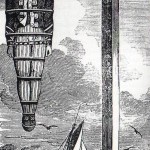
A final curiosity. Guy was sentenced to excruciating death: on 31 January 1606 he was to be hung drawn and quartered. This punishment meant, of course, half hanging an individual and then cutting them up while they were still just conscious. However, GF had the last laugh for he managed to jump with the noose on, breaking his neck.

Fair play to you, Guido.

The hangman doubtless lost his job.

Beachcombing would be most interested in any other peripheral memories of torture: drbeachcombing AT yahoo DOT com

***

23 June: Jones writes in to note ‘The papal courtier Platina (Bartolomeo Sacchi) was tortured. In this picture you can still see his dislocated arm several years after the ordeal’ Thanks Jones!

Maximilian’s Shirt June 3, 2011

Posted by Beachcombing in : Modern

‘Emperor’ Maximilian was a scion of the Hapsburg dynasty who was parachuted into Mexico (1864) as Imperial Ruler in the Old World’s last concerted attempt to meddle in the Americas. Maximilian was not quite the patsy though that many in Europe and  monarchists of Mexico had hoped. He was one of those men who had a little bit too much energy for his own good and had some alarmingly liberal instincts for one who had grown up in the shadow of Metternich. Certainly, He took to his new title with gusto and when the rise of a Republican faction within Mexico put his position and, indeed his life at risk, he refused to remove himself from his adopted country and danger. In 1867, with his darling wife, Carlotta, thankfully far away in Europe, he was captured by his enemies and sentenced after a brief trial to death.

His crime? He was shot with two of his generals on the basis of the Law of Punishment for Crimes against the State. Most good men and women who have been shot in the last two hundred years have died for some version of the same.

Bizarrists will find much to fascinate them in Maximilian’s life. There is the forgotten kingdom element, the peculiarity of a Hapsburg, born in Vienna, turning up to govern a chaotic Latin country of which he knew nothing and for which ultimately he would die.

There is Maximilian’s wife, poor Carlotta, whose tragedy was a long drawn-out version of his own: she was driven mad by her husband’s fate and had several extraordinary meetings with Pope Piux IX where she convinced the Bishop of Rome, inter alia, to make hot chocolate for her with his own hands (another post, another day).

But for Beachcombing the most memorable event was Maximilian’s death and above all how that death was communicated to the world.

Maximilian himself died with the good manners that anyone who knows the Hapsburgs and their Peacock throne will have come to expect. He forgave his enemies, asked them to forgive him and said some kind things about the country that had murdered him: ‘Perdono a todos y pido a todos que me perdonen y que mi sangre, que esta apunto de ser vertida, se derrame para el bien de este país; voy a morir por una causa justa, la de la independencia y libertad de México. ¡Que mi sangre selle las desgracias de mi nueva patria! ¡Viva México!‘ A gentleman to the end, he even ceded his place in the middle of the shooting wall to his loyal general Miramón. He then lifted his hands and looked up to the heavens.  Beachcombing imagines that his last thoughts in the dusty compound at Querétaro was of imperial Vienna, shining like the ugly wedding cake that it then was.

There were eight men in the firing squad. They stood at five paces from the condemned. They could hardly miss.

There were – indeed, there still are today – Mexicans who see Maximilian as a martyr. There were large sections of Europe, particularly in Catholic and Latin countries who, if they were not prepared to go that far, certainly sensed an interesting tragedy in his life. And naturally images of the last Emperor’s death began to be made and disseminated.

The first was the extraordinary photograph that heads this post. François Aubert had been court photographer for Maximilian and rather ghoulishly hung around at his master’s place of execution to finish the job. He was not given permission to take pictures of the executions itself: if he had these would have been perhaps the first images of death in the new medium. However, he sketched the event. Then he photographed the firing squad (below), the three graves and he also photographed Maximilian’s shirt with its three bullet holes.

The shirt particularly made an impression on international opinion – it could have been a saint’s relic and certainly represented the Emperor’s suffering to a world that was fascinated by the fate of royals.

Edouard Manet followed with a famous painting of the shooting (look out for the watchers) that, while not exactly Goya,  cememented the event in the European imagination.

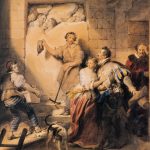
Then there is the extraordinary picture of Jean-Paul Laurens showing Maximilian bidding his priest farewell with a sang-froid that was entirely historical.

There is a slight joke in that the three men who immortalized Maximilian’s death – Aubert, Manet and Laurens – were French, the nation that more than any other, had pushed for and then abandoned Europe’s Mexican venture.

Beachcombing is always on the look out for remarkable historical images: drbeachcombing AT yahoo DOT com

***

Invisible sends this: ‘Here are a few more relics of Maximilian and Carlota. Also  search for ‘piano’ for the Empress’s piano at this site. The author also has a photo of Maximilian’s ‘temporary coffin’. There is also a large collection of Carlota’s jewellery at Chapultepec Palace. I found (but cannot verify) this quote from Pope Pius IX when he gave Carlota shelter in his library: ‘Nothing is spared me in this life. Now a woman has to go mad in the Vatican’. And for more deathless images: The Empress on her deathbed; the Emperor in his coffin‘. Then KMH has a useful qualification. ‘Emperor Maximilian entered Mexico at a time of America’s Civil  War. If he had survived, he would have faced an invasion from American military to enforce the Monroe Doctrine, a policy  elucidated by  past President James Monroe which made further colonization or interference in the New World cause for declaration of war.’ Thanks Invisible and KMH!!

Last Words of the Executed May 27, 2011

Posted by Beachcombing in : Actualite, Contemporary, Modern

Beachcombing will not deny it: he’s been in a real Last Words mood recently. So when a friendly book dealer sent him Robert K. Elder’s Last Words of the Executed he was hardly going to complain: even if, by a bizarre error of the printer’s art, the index had ended up being bound in the middle of the book.

So what is it that explains Beachcombing’ obsession with Last Words and other dead things: after all, tags on this site include Capital Punishment, Human Sacrifice, Archaeological Horrors, Hanging and Decapitation

Well, Beachcombing likes to think that it is not sadism or a morbid fascination over death: rather it is that such climactic events bring us to the very edge of what we are. And it follows that those about to see their head removed, their central nervous system fried, their breathing choked off feel something that most of us will only ever experience on our death beds, if at all. They have insight that might be the real reason – instead of crappy ideas of fair-play – that penal systems allow them to speak before the button is pressed, the needle injected or the trap door sprung.

So what do men and women facing imminent death actually say? This volume of three hundred pages is the perfect place to look for an answer: it picks dozens of cases from American history organizing ‘last words’ into chapters according to the means of death – the five traditional means employed by the American states – then chronologically, spending a paragraph, or more, providing background to each death.

Perhaps the most numerous category – at least here -  is that of ‘collusion’. The prisoner expresses his gratitude to the warden, the executioner, the chaplain… This echoes the experience of many nurses that dying patients often give their last words to thank the people who have cared for them. Or is this rather something that medieval priests called ‘the good execution’, with the subject playing his or her part fully in their own orderly disintegration? Partly perhaps because it will go easier for them, partly in a last desperate attempt to belong to a community – even if only of those paid to kill them. Gary Coleman’s ‘Let’s do it’ sums this up – we are doing it together.

As far as bad executions go a rare act of successful sabotage is Joe Hill in 1915 screaming ‘Fire’ as the order is given to shoot. Whereas the most horrible are those among the death rowers who are clearly terrified of the fate awaiting them. Harvey Edwards broke his own glasses and tried to bleed himself out to avoid the electric chair: a decision that the suicide-averse but electrophobic Beachchombing completely seconds. ‘I can’t stand the thought of going to the chair. Don’t – please don’t – try to save me for that…’ Edwards was, of course, given a blood transfusion and then rode the lightning anyway. Or there is poor Mary Surratt, whose real crime was to have had dangerous Confederate friends, shouting ‘Please, don’t let me fall’ on the gallows.

Next to these blasphemous and violent prisoners are fairly every day and unremarkable.

Another major category is the ‘I’m innocent’ ploy. Beachcombing is your average soppy European liberal over capital punishment: a favourite film is Morris’ extraordinary The Thin Blue Line. But he suspects that many of those protesting their innocence are – no surprises here – anything but. The criminal class generally – and particularly today’s criminal class brought up on welfare and counselling – are past masters at making themselves into victims. And shouting out your innocence to the world, even when that innocence is illusory, you come close to revenging yourself on the death professionals, who might have a few more nightmares as a result. Certainly, It is difficult to understand the last words of a man like Roger ‘An innocent man is going to be murdered tonight’ Coleman in any another way: Coleman was confirmed, after his death, as a rapist and a murderer by DNA testing.

There are the shots at humour too. ‘Rather be fishing’, ‘a bullet proof vest please! ‘do you have a gas mask?’ The most effective of these make fun of the process of death itself with wonderful insouciance – ‘Here we go pals, round and round’ on being hung or, also facing the noose, ‘make it snappy!’

The more sententious quotes: ‘You may break my neck, but you won’t break the seal of my manhood’ are in comparison forgettable. Perhaps because so many of these  criminals celebrate their own irrelevant egotism: take that chief tonto Tim McVeigh reading out the poem Invictus!

On the other hand, ‘I regret only having one life to give for my country’ is memorable because at least Nathan Hale is dying for something. Even ‘viva l’anarchia!’ or the Reich-mad spouting of German spies caught on American soil are more effective than poetry-quoting murderers boasting of their own excellence.

A particularly interesting category are those who have recreated an identity – Islamic, Christian, ‘Scottish’… – in prison and go out defiant, wearing their new uniform of beliefs. ‘I am an African warrior born to breathe and born to die’, or from the lips of Frank Macfarland: ‘I call upon the spirit of my ancestors and all of my people, the land and the sea and the skies and I swear to them and now I am coming home. Loch Sloy!’ [war cry of the Macfarland Clan].

There are also the strange, desperate if understandable last attempts to communicate with your own family and the family of the victims, often facing the condemned in the ‘viewing gallery’. Some of these are incredibly moving. Most turn into bad Oscar speeches ‘I’d like to thank Mom and Dad and the dog and also to say to Mrs Carruthers that I didn’t mean to rape and kill Julie…’

OK Beachcombing made the last one up, but there are many like it in this excellent work.

Beachcombing is always on the look out for unusual books: drbeachcombing AT yahoo DOT com

***

27 May 2011: Slame writes in with a couple of other Last Word books: Guthke, Last Words: Variations on a Theme in Cultural History (1992); Le Comte, Dictionary of Last Words (1995); Robinson, Famous Last Words (2003). Any other gratefully received. Thanks Slame!!!

Vikings Vikinged in Dorset UK March 29, 2011

Posted by Beachcombing in : Medieval, Prehistoric

Beachcombing has sometimes confessed in this place that he is not a great fan of the Vikings. Indeed, say ‘Viking’ to your average medievalist and they will get lyrical about sturdy boats and trips to Greenland. Beachcombing, on the other hand, sees burnt monastic libraries, lines of children being brought to slavery in the fiords and a couple of kings whose chests have been opened to the elements, just for the hell of it. It gives Beachcombing some satisfaction then to know that every so often the locals got one up on the Norse pirates.

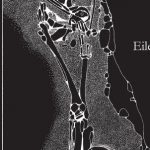
Beachcombing is referring to the pile of skulls that was found in the summer of 2009 at Ridgeway Hill near Weymouth (Dorset) in the UK.  The find – as most important early medieval discoveries – was a chance one. A ‘relief road’ that friend of archaeologically-minded historians everywhere uncovered a pile of forty eight skulls and fifty one headless bodies in a Roman-age quarry.

Here was what, in a later age, would be known as a ‘war crime’.

However, before our tear ducts open in sympathy these were unquestionably invaders. All but a handful of elder ring leaders were young males, from late teens to early twenties. They had no possessions buried with them. But testing on the teeth of a handful – the magic they can now do… – suggested that the victims had come from Scandinavia.  Indeed, one had grown up in the Arctic Circle!

Given that the atrocity dates to the tenth century when the English Kingdom of Wessex was almost overrun by Viking warriors, it is reasonable to assume that these were some of the rare Vikings who found themselves on the losing side in that dismal century. Payback for Maldon and other disgraces of those years.

The place of killing was probably some way from the place of capture: it was on the parish line and close to some prehistoric barrows, a place beloved of executioners as Beachcombing established only last week.  This hints that they had been marched after capture to be killed or that they had been captured conveniently close to an execution site.

Nor will their last moments have been happy ones. Their lack of clothes suggest that they had been stripped naked. And there are ‘grim’ marks on their body suggesting abuse and pain. The head shots were rarely clean: blunt swords and axes taking several blows to end the lives of the prisoners. In one case a victim’s hands had been cut, suggesting that he reached up to stop the blade descending. Given that some were only sixteen Beachcombing can muster up a modicum of sympathy.

Then when it was all over the bodies and heads – minus three presumably taken for display purposes – were dumped in the old Roman quarry Beachcombing referred to above: there was no question of burial with respect.

Beachcombing is fascinated at the way that early medieval historians generally avoid the implications of violence in their period. Faced by such appalling details as this though there can be no question that life for a Dark Ager, perhaps particularly the warriors was, often, bittersweet (ahem).

For a description of a Viking execution Beachcombing has put up a post that may be worth reading.

Beachcombing is always interested in slaughter in the archaeological record: drbeachcombing AT yahoo DOT com  He has a file full of British examples but would love some from further afield.

***

6 July 2011: Round Judith writes in with a link to the Guardian and further work on this mass burial in Dorset. Before the article disappears behind the pay wall, Beach will excerpt some of it: ‘The fashion for dental bling goes back 1,000 years, according to a new discovery by archaeologists. Long before contemporary trends for gold dental caps or teeth inlaid with diamonds became popular, young Viking warriors were having patterns filed into their teeth… The front teeth [in the grave] have horizontal lines that were so neatly filed, archaeologists believe it must have been done by a skilled craftsman rather than by their owners, and the process undoubtedly would have been excruciating. David Score, of Oxford Archaeology, the unit which has been studying the bones since they were discovered in a pit near Weymouth in 2009, said: ‘It’s difficult to say how painful the process of filing teeth may have been, but it wouldn’t have been a pleasant experience. The purpose behind filed teeth remains unclear but as we know these men were warriors, it may have been to frighten opponents in battle or to show their status as a great fighter.’’

22 Feb 2012: Invisible write in with an update from a BBC piece: ‘Dr Britt Baillie, from the University of Cambridge, said she believed the killings could have taken place during the reign of Aethelred the Unready. Following a series of Viking attacks he had ordered all Danish men living in England to be killed on 13 November, St Brice’s Day in 1002. The killings which ensued became known as the St Brice’s Day massacre. Remains have been found in Oxford and it is thought that massacres also took place in London, Bristol and Gloucester. However, Dr Baille said in some respects the killings at Ridgeway Hill were unique. Unlike the frenzied mob attack that took place at Oxford, all the men were murdered methodically and beheaded in an unusual fashion from the front. The Cambridge academic said she believed the skeletons belonged to a group of Viking killers who modelled themselves on a legendary group of mercenaries. They were the Jomsvikings, founded by Harald Bluetooth and based at Jomsborg on the Baltic coast.’ Thanks Invisible and notional thanks to the BBC!

Capital Punishment and Prehistoric Burials March 19, 2011

Posted by Beachcombing in : Medieval, Prehistoric

**Beachcombing dedicates the following post to JKM who brought up this fascinating subject in an email**

You are a member of the minor nobility in some part of northern Europe found guilty of murder in the fifteenth century. After the capital sentence is passed you are thrown in the back of a cart and driven out to the local place of reckoning.  However, as you are also interested in history you can’t help but wonder at the spot that has been chosen: for curiously, you are pulled to the top of a local tumulus where a nice-looking gentleman in a black mask is nursing something metallic and shining. You are just thinking about the possibility of a paper on ‘Prehistoric Barrows as Execution Sites’ (naturally in Latin) and imagining loud hurrahs from antiquarian circles, perhaps a knighthood and a place in the royal academy, when the priest,  begins to mutter the offices of the dead and you remember why you are there…

Incredible as it may seem, there is a serious point behind this fantasy, which has been haunting Beachcombing all morning (the fantasy that is not the ‘point’). Many Europeans dispatched by the axe or the gallows in the Middle Ages and, indeed, in more recent times were executed on prehistoric barrows out beyond the village or the town where they had been sentenced or, in more baroque justice systems, near where the crime had been committed.

Research into this peculiar phenomenon has been fragmented geographically: because establishing where executions took place depends on a lot of spade work involving maps, placenames, archaeology (real spades) and textual references. But it would be, by now, uncontroversial to say that the custom was followed throughout Northern Europe from Scandinavia, to Germany, in the Lowlands and in England (think of the Walkington Wold Burials). Indeed, the whole ‘Germanic’ portion of Europe seems to have subscribed: though not apparently the Celtic fringes?

So why did our ancestors choose Prehistoric barrows to kill and display felons?

It is a nice question and a number of solutions have been dreamt up: Beachcombing enumerates them here from the least dramatic (1) to the most extraordinary (3).

(1) Prehistoric barrows typically stand in visible locations, often near routes or even crossroads, and, of course, are elevated. Executioners also demanded visibility, especially for the display of the body, and so the barrows were pragmatically reused.

(2) The prehistoric barrows that survived often lay on boundaries between settlements. The boundary place was a natural location for killing partly for reasons of visibility – two communities could enjoy the ‘lesson’, but also because these were liminal areas away from community life: the criminal had not only been killed by his neighbours but cast out of human society into the twilight where the fairies and demons dwelt.

(3) Prehistoric barrows sometimes included sacrifices and therefore the custom of medieval execution was an updated Christian form of sacrifice.

Beachcombing is reminded of similar debates about medieval meeting places outside settlements, meeting places that were often close to boundaries and likewise on elevated ground. Here too there have been arguments about whether the reasoning was purely pragmatic or whether there were ancestral memories of earlier customs, though  all that jazz about liminal zones is a bit less convincing in the context of Dark Age talk shops.

Much as Beachcombing loves examples of bizarre continuity through the centuries – and the idea of  bodies being displayed in the nineteenth century mimicking Neolithic killings is splendid, he personally would go no further than (2) and then only with reservations; the landscape and the barrows being  reinterpreted by those who dwelt around them.

Any striking records of sacrifice or killing being associated with barrows? Drbeachcombing AT yahoo DOT com

***

19 March 2011: KMH makes an important point about the hollow nature of barrows. And, of course, many medieval executed bodies have been found in these hollows, often overlaying the original Neolithic body. ‘I favor the notion that barrows were a place where death was meted out, either for sacrifice or as a penalty for breaking the law. It is efficient to centralize the bloodletting around a publicly visible location such as a barrow.  If the barrows had some hollow space in the interior and  were used in ancient times as tombs then there might be an additional reason for ancient killing activities at the top – the bod(ies) might be entombed directly below, thus eliminating any need for further transportation. Continuing the custom would present no problem for Christianity other than the grounds for taking a life.’ Thanks KMH!

29 March 2011: Two more thought provoking emails. First from Cory P who brings an unexpected New World perspective to all this. ‘Having at one time lived about a mile away from the crossroads of Gallows Hill in the northeastern part of Bucks County, PA, I was struck by your entry on the association between executions and ancient barrows in northern Europe. The US Geological survey lists 11 towns, hills, and cemeteries in the eastern US with the Gallows Hill name, most of them in New England. They include a Gallows Hill Burying Ground in Litchfield, CT — an interesting redundancy, since the name Litchfield itself means a burying ground. This might suggest that the original intention was merely to carry out executions on elevated locations which would thus serve as a constant warning to potential malefactors.  Or you might be right that the barrow association was deliberate, in which case the American colonists would have simply been doing their best to carry on the tradition in the absence of any actual barrows. Certainly a number of the hills in and around that part of Bucks County have a somewhat ‘spooky’ reputation, ranging from one popularly known as Ghost Mountain to one which the Pennsylvania Germans called Hexenkopf and where witches were said to gather on Walpurgisnacht.’ Then if this wasn’t fascinating enough Jonathan Jarrett over at A Corner of Tenth Century Europe offers the following: ‘Executions at barrows rang immediate bells as last term I set myself the mission of reading the final Sutton Hoo site report, and as you may or may not be aware the mounds were, post-conversion we can be pretty sure since they themselves span the conversion period, used as an execution site. My personal feeling is that by executing criminals (or whatever category one who was so dispatched fell into then) at such places they were condemning them to the demons as which Christianity had recast the pagan gods, and that there was no inherent conflict in believing that such supernatural powers continued to associate with the burials of pagans, though now ‘correctly’ identified by the learning of the Church. If you transgressed the Christian community’s limits enough, and churchyard burial was forbidden to you, this was the alternative… Interestingly, they found some empty pits in the execution cemeteries (though it’s hard to be sure because of what the soil there does to meat) and that suggests to me that some people were somehow saved from the final ignominy of damnation-by-burial and dragged off to be put somewhere nicer. I may be thinking too binarily however: the most recent work on such matters emphasises that conversion did not just switch off older practices, and that burial at older cemeteries alongside presumed pagans continued with apparently-Christian burials. Sutton Hoo, however, is a fairly special case. I wrote a long and rather morbid post, including some pictures of the bodies (which are one of the bizarrer things even you may have seen). All a bit earlier than you’re talking about, but probably more plausible as an explanation than continuing human sacrifice… Thanks Jonathan and Cory P!!

Page 1 of 212