
A Motor Car A Hundred Years Too Early April 27, 2018
Author: Beach Combing | in : Modern
This blog has frequently pioneered ‘wrong time’ objects: things that appear decades or generations before we might reasonably expect them to. Here is an instance (not our first, wrong time car readers might remember) of a motor car about one hundred and fifty years before the car was invented. We are in London in 1742 […]
Iron Key to a Lost World April 7, 2018
Author: Beach Combing | in : Contemporary, Medieval
Leaving Spain In 1492 Spain’s Jews were given an awful choice. They were, by royal fiat, to convert to Christianity or they would be kicked out of the country. The majority half-halfheartedly took on the new religion. However, a minority of as many as 100,000, loyal to the God of their fathers, took, instead, […]
Gerbert and a Tenth-Century Robot? February 27, 2018
Author: Beach Combing | in : Medieval
Did you hear the one about the tenth-century robot created by a pope no less? Several books and authors credit the invention of a talking, walking machine by Gerbert of Aurillac (Pope Sylvester II, obit 1003) and the source is interesting. But, of course, there are no microchips, no nuts and bolts and, in fact, […]
A Tudor Elevator? February 6, 2018
Author: Beach Combing | in : Modern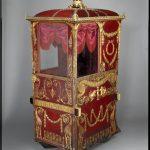
At the trial for Duke of Norfolk, at the very end of Henry’s reign, Bess Holland, Norfolk’s mistress gave the following testimony about Henry VIII’s obesity. She claimed that the Duke had told her: That the king was much grown of his body and that he could not go up and down stairs and was […]
Ghost Procession or New Invention? October 27, 2017
Author: Beach Combing | in : Modern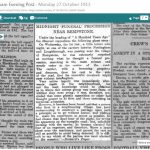
First the problems with dates. This appears in a 1913 newspaper and had been borrowed from the Observer, which had taken it from a newspaper from ‘A Hundred Years Ago’, named Drakard’s Paper. 1813, c. 1813? For the record this does not sound like a report from 1813, but why spoil a good story Wednesday, […]
King’s Evil and a Two-Hundred-Year-Old Charm June 29, 2017
Author: Beach Combing | in : Modern
The King’s Evil (aka scrofula) was a form of tuberculosis that created horrific injuries on the skin’s surface, particular in the neck area. It could only be cured, many early modern French and British sufferers believed, by contact with royalty: a sufferer would go to the king or queen, be touched, and cured. The practice […]
Greek Hot Air Balloon? May 7, 2017
Author: Beach Combing | in : Ancient
This little tale appears in a vaguely sceptical Aulus Gellius, whose Attic Nights provides some very enjoyable reading for those wishing to travel back into the ancient world. that which Archytas the Pythagorean [obit 347 BC] is said to have devised and accomplished ought to seem no less marvellous, but yet not wholly absurd. For […]
Breaking the Ampoule January 23, 2017
Author: Beach Combing | in : Medieval, Modern
A WIBT moment from eighteenth-century France: the collision of the hoary old with the bright-eyed, metallic and ghastly new. It involves a cathedral, a hammer and the crystal fragments of a Roman perfume bottle, the Sainte Ampoule, one of the longest continuously used objects in world history. This tiny flacon had been made in the late Roman […]
In Search of Crimean Gothic November 4, 2016
Author: Beach Combing | in : Medieval, Modern
Crimea is the Ukrainian or Russian peninsula that stretches down into the Black Sea and whose large bays make it resemble a famished fish about to eat a smaller prey. Crimea’s geography has made it a natural place for enclaves. In ancient times, the Greeks and Romans held colonies here, as did the Byzantines and Genoese in […]
John Trew and an Elizabethan Tank? October 15, 2016
Author: Beach Combing | in : Modern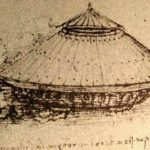
Beach recently enjoyed Robert Hutchinson’s The Spanish Armada, particularly this short passage about an Elizabethan inventor, John Trew: Periods of national crisis often throw up the more eccentric among us. John Trew wrote to the queen in December offering his services for ‘her preservation and salvation… Though an old man, I desire to be employed […]
The Itza: the Last American Indian State September 23, 2016
Author: Beach Combing | in : Modern
When did the last American Indian state fall to predatory Europeans? Well, you could argue that there are still some independent hunter-gatherer ‘states’ in the Amazon that have preserved their independence by virtue of jungle foliage. There was resistance among the plain Indians in the US as late as the 1920s (another post, another day). […]
Wrong Time Bread, Wrong Place Fairies September 19, 2016
Author: Beach Combing | in : Contemporary, Modern
Beach wants to introduce today a folklore custom that survived unexpectedly for three hundred years in the dark, before emerging to be briefly photographed by stunned folklorists at the end of the twentieth century. The tradition in question relates to bread. It was believed in south-west England in the 1600s that if you carried bread […]
A Nineteenth-Century Hydrogen Bomb? August 13, 2016
Author: Beach Combing | in : Contemporary, Modern
Was the first hydrogen bomb designed in the late nineteenth century in France? One contemporary newspaper suggests as much.
The Last African Slaves to Be Brought to America: Eyewitness Accounts April 21, 2016
Author: Beach Combing | in : Modern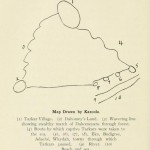
The slave trade to America was banned in 1807, but slaves were still brought to America illegally in the decades that followed. The last known slave ship that brought slaves across the Atlantic was the Clotilde in 1859. What is extraordinary about the Clotilde’s journey is that the young slaves who were sold in Alabama, […]
Romans in Nineteenth Century Wales?! March 15, 2016
Author: Beach Combing | in : Ancient, Medieval, Modern
There is lots of enjoyable nonsense about the Welsh and the Romans. The medieval Welsh genealogies are full of supposed Welsh connections to Caesar and other luminaries of the Empire. If memory serves correctly Gerald of Wales claims that the Welsh of his time sported Roman hairstyles (or was it their clean beardless faces that […]

