The Problem with Sea Apes May 24, 2012
Posted by Beachcombing in : Actualite, Contemporary, Modern***Dedicated to Andy the Mad Monk and Invisible***
Beach has, since the early days of this site, shown a persistent interest in mermaids. It would be outrageous then to pass by the important new documentary coming out (or has it already aired?) on Animal Planet. The following is borrowed from Wikipedia (courtesy of the inestimable Invisible).
Mermaids: The Body Found is a two hour Animal Planet… The fictional film tells the story of a scientific team’s investigative efforts to uncover the source behind mysterious underwater recordings and an unidentified marine body. Two former National Oceanic Atmospheric Administration (NOAA) scientists tell their story on camera for the first time. After investigating mass strandings of whales, the team claimed to have recorded mysterious underwater noises coming from an unknown source. This sound resembled a sound previously recorded in 1997, called the ‘bloop’. They also claimed to have recovered 30% of the remains of an unknown creature from inside a great white shark which was said to possess attributes of the human body. They alleged that the marine creature had hands, not fins, and the hip structure of an upright animal. These findings, along with many others led the team to determine that this unknown animal was very closely related to humans, possibly a mermaid.
So a mockumentary has been created to entertain and to offer the latest theory on mermaids. And what is this theory? This time Beach borrows from part of a Fox News report (courtesy of Andy). Note how there is absolutely no mention here of the fictional content unless the word ‘compelling’ (as in ‘the punters don’t do simple facts’) is supposed to cover that!
In the two-hour CGI Special Mermaids: The Body Found, Animal Planet dives deep into the idea that mermaids may have been real, and, even better – related to humans! ‘It’s a very radical theory on human evolution, but we have approached an age-old myth and really chased its origins,’ Animal Planet honcho Charlie Foley told FOX411’s Pop Tarts column. ‘It has been compiled in a way that is very compelling, making us think that mermaids might not just be mythical creatures.’ The show unravels mysterious underwater sound recordings and presents a bone-chilling argument for the Aquatic Ape Theory, which suggests that during the transition from apes to hominid, some humans went through an aquatic stage. This stage is argued to have resulted in ‘aquatic ape-like’ creatures. ‘There are striking differences between us and other primates, yet [there are] many features we share with marine mammals, like the webbing between our fingers, which other primates don’t have, a layer of subcutaneous fat, and a loss of body hair,’ Foley explained. ‘We also have an instinctive ability to swim, and control over breath. Humans can hold breath up to 20 minutes, longer than any other terrestrial animal.’ Mermaids: The Body Found ponders the concept that coastal flooding millions of years ago turned some of our ancestors inland, while another group branched off into the deep water out of necessity and for food.
Beach has already highlighted sea apes. In fact, he dug up, to the best of his knowledge, the earliest reference to the concept that dates back to the eighteenth century. And this is where the problems begin… Readers might want to flag up problem concerning biology, which Beachcombing is, sadly, not qualified to do: drbeachcombing AT yahoo DOT com However, Beachcombing would like to stick his oar into the epistemology of sea-bourne monkeys.
If you want to explain the unicorn then it makes sense to look for a now extinct creature. After all, people no longer see unicorns (with very few exceptions) and those sightings there are usually involve travelers far from home confronted by unusual but known animals. If there was a unicorn-like animal ten thousand years ago then it is possible that this animal got trapped in an early phase of human myth and that it was passed down to us from there.
However, the problem with explaining mermaids in this way is that sightings continue into the present. There are dozens of sightings, for example, from the Hebrides (Scotland) in the nineteenth and twentieth centuries. Beach can only see three ways forward in relation to the sea-ape theory.
(i) There is a small population of sea apes that survived (or survives) on and off the British coast and yet no body or photograph has ever turned up.
(ii) The mermaids that are seen cannot be explained as physical entities. Here you can give a psychological, a theosophist or a ‘pagan’ explanation, but sea apes are out.
(iii) By some bizarre mechanism presently beyond our understanding the sea ape, which has not lived on the Scottish coast for a thousand or ten thousand years, entered ‘collective memory’ and has reappeared in the imagination of locals: go to (ii) above but with sea apes ‘in’.
Beach just might be able to conceive, against all his better judgement, that in the wild backwoods of New Zealand or in the expanses of the Rocky Mountains there are giant flightless birds or unknown hominids. But if anyone finds a sea ape community on the coast of Scotland, he’ll eat a tonne of boiled sweets. He has never seen (pace Jungians) any proof for ancestral memory. And so he would plump for number (ii), as he would for fairies.
In fact, forget sea apes, mermaids seem to be sea fairies. And in many ways the sea ape theory is to mermaids what the late nineteenth century pygmy theory was to the fey.
People sometimes see things that are not physically present: whether they are truly external or not Beach will happily leave to the philosophers. What is absolutely terrifying about this is that if our perception can play these kinds of tricks on us (or ‘pull back the veils of creation’ if you prefer) can our senses be trusted under any circumstances? On just that subject, looking forward to the documentary…
***
25 May 2012: Wade writes in ‘Your sea ape post instantly reminded me of the aquatic ape theory, first proposed by a German pathologist, Max Westenhofer, in 1942, then proposed again British marine biologist, Alister Hardy, in 1960. It has since been championed by Elaine Morgan, a Welsh writer (per Wikipedia). I saw a special on this years ago. It is a fascinating idea. My impression is that most anthropologists have either actively hated or completely ignored the theory as pseudo-science. Here are two links: Elaine Morgan’s and an anthropologist’s view that examines the controversial theory and yields the sceptical response. Thanks Wade!
The Last Invasion of Britain? May 5, 2012
Posted by Beachcombing in : Modern***Dedicated to Kithra***
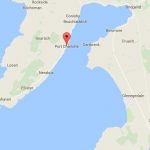
It is sometimes said that the last invasion of Britain took place 22 April 1778 at Whitehaven in Cumbria. On that date, John Paul Jones, a Scot and an American patriot led his ship, the USS Ranger, against the small Lakeland Port (another post, another day) in an unlikely annex to the War of Independence. However, this was not the last invasion on British soil, for the simple reason that Jones himself launched a later attack on St Mary’s Isle on the Solway Firth in Scotland (pictured). So obscure is this raid that even its date is not clear: it was probably carried out 24 or 25 of the same month. However, Jones’ logic in attacking was straightforward enough. Dunbar Douglas 4th earl of Selkirk had his home on the isle and Jones wanted prisoners, particularly important unionists. It should also be mentioned that Jones’ father had worked for the Earl’s family: there may have been a bit of Freudianism in this descent. The true last invasion of Britain began, in any case, as an attempt at kidnapping and ended as something rather different. Here are Jones’ own words.
On my return on board the Ranger [after Whitehaven], the wind being favorable, I set sail for the coast of Scotland. It was my intention to take the earl of Selkirk prisoner, and detain his lordship as hostage, in conformity to the project already mentioned. It was with this view about noon of the same day I landed on that nobleman’s estate, with two officers and a few men. In the course, of my progress, I fell in with some of the inhabitants, who, taking me for an Englishman, observed that lord Selkirk was then in London, but that her ladyship and several ladies were at the castle.
Note that this ‘invasion’ was so fearsome that the locals did not even realise that they were being attacked! We then have evidence of that strange ‘keep-the-gloves-on’ chivalry that generally characterised the American forces, though not sadly always British forces, in that war.
On this [news], I determined to return: but such moderate conduct was not comfortable to the wishes of my people, who were disposed to pillage, burn, and destroy every thing, in imitation of the conduct of the English towards the Americans. Although I was not disposed to copy such horrid proceedings, more especially when a lady was in question, it was yet necessary to recur to such means as should satisfy their cupidity, and at the same time, provide for Lady Selkirk’s safety. It immediately appeared to me, to be the most proper mode to give orders to the two officers to repair to the castle with the men, who were to remain on the outside under arms, while they themselves entered alone. They were then instructed to enter, and demand the family plate, in a polite manner, accepting whatever was offered them, and then to return, without making any further inquiries, or attempting to search for more.
It should be mentioned that Jones had serious problems with his crew who were a mutinous bunch. After this pleasant interlude in Scotland, indeed, Jones reports that he ‘ran no small risk of being either killed or thrown into the sea’ by his sailors and officers.
I was punctually obeyed; the plate was delivered; lady Selkirk herself observed to the officers, that she was exceedingly sensible of my moderation; she even intimated a wish to repair to the shore although a mile distance from her residence, in order to invite me to dinner; but the officers would not allow her ladyship to take so much trouble.
Next we see the strangely quixotic character of Jones himself. A savage man at times, who had flogged, earlier in his life, a sailor to death and who would later be accused of rape, he could also act like the perfect Scottish gentleman: he despised, for example, slavery.
At the time I had been obliged to permit my people to take Lady Selkirk’s plate, I determined to redeem it out of my own funds the moment it should be sold and restore it to the family. Accordingly, on my arrival at Brest, I instantly dispatched a most pathetic letter to her ladyship, in which I detailed the motives of my expedition, and the cruel necessary I was under in consequence of the English in America, to inflict the punishment of retaliation. This was sent open to the post-master general, that it might be shewn to the king of England and his ministers… During the course of the war, I found it impossible to restore the plate belonging to the Selkirk family; I, however, purchased it at a great price, and at length found means to send it by land from l’Orient to Calais, by means of M. de Calonne, who transmitted to me a very flattering letter on the occasion; in short I at length received a very flattering letter from the earl of Selkirk, acknowledging the receipt of it.
Those damn Yankees, blast their eyes for their horrid inhumanity!
Any other unlikely acts of chivalry in war? Drbeachcombing AT yahoo DOT com
***
5 May 2012: Very quick is Southern Man this morning who writes: ‘I know this story and would like to share with you a passage from an anti-Jones publication. This describes how one of the officers at the castle was polite and the other rude. It also gives more details of the plate’s return. ‘Several years elapsed without [lady Selkirk] hearing from jones, and all hope of the realizement of his promise had vanished; but, in the spring of the year 1783, to the great and agreeable surprise of her ladyship, the whole of the plate was returned, carriage, paid, precisely in the same condition in which it had been taken away, the tea-leaves remaining in the tea-pot as they were left after the breakfast on the morning of their visit to the castle.’ I love the detail of the tea-leaves. Seriously though I think the elapse of years speaks strongly in favour of Jones the gentleman rather than Jones the flogger or (supposed) rapist.’ Thanks SM!
Dark Age Scotland Without Oxygen? March 25, 2012
Posted by Beachcombing in : Ancient, MedievalFirst of all huge apologies for lack of coverage in these days: the Beachcombing household really is in a it-doesn’t-rain-it-pours month. In less than 48 hours their beloved aupair disappears and despite honourable and numerous dishonourable efforts to sort this out they have been left uncovered. The first time someone falls ill there is going to be hell to play… And already Beachcombing has been signed up for a mega 48 hour just-look-after-them while his wife has to go and do unpleasant things in Athens. Then there is also the news that Beach’s father-in-law (predictably difficult relationship) is coming to live with the family for a few weeks. And no this will not make things easier: he’s a sociologist. He’ll also be recovering from an operation and telling Beach where to hang his pictures.
Please be patient then if you’ve written an email. In the meantime here is another part of Procopius’ crazy mid-sixth century ravings about an island called Brittia, which is probably Britain. This passage is usually taken as proving that Brittia is indeed Britain because of what is apparently a sixth-century record of Hadrians Wall; by then abandoned.
Now in this island of Brittia the men of ancient times built a long wall, cutting off a large part of it, and the climate and the soil and everything else is not alike on the two sides of it. For to the east of the Wall there is salubrious air, changing with the seasons being moderately warm in summer and cool in winter. And many people dwell there, living in the same fashion as other men, and the trees abound with fruits which ripen at the fitting season, and the corn lands flourish as abundantly as any other; furthermore, the land seems to display a genuine pride in an abundance of springs of water. But on the west side everything is reverse side of this, so that it is actually impossible for a man to survive there even a half hour, but countless snakes and serpents and every other kind of wild creature occupy this area as their own. And strangest of all the inhabitants say that if any man crosses this wall and goes to the other side, he dies straightaway, being quite unable to support the pestilential air of that region, and wild animals, likewise which go there are instantly met and taken by death.
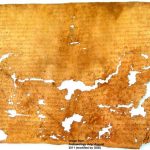
It would be interesting to see what the Scottish tourist board would make of this. Perhaps they would point out that the geography suggests that this is not Scotland as the wall runs from north to south dividing the island into western and eastern parts. This does not tally, of course, with Hadrian’s Wall, nor the Antonine Wall that run from east to west dividing the island into southern and northern sections. This might have something to do with the strange Roman geographical error that misconstrued the position of ‘Scotland’ in Britain: see the illustration at the head of the post. In that case what we probably have here is the rumour of the last legionnaires staring into that God forsaken heather… Any other ideas: drbeachcombing AT yahoo DOT com
PS Mrs B has just pointed out the obvious. If Beach’s solution with the bent Roman map is correct – and it sounds credible – it is Scotland that has lots of springs and a pleasant climate and England where you can’t breathe the air…
***
30/04/2012: Gary V writes in: The bend is documented as far back as Ptolemy’s Geography, here is the relevant section of John Pinkerton’s An enquiry into the history of Scotland: preceding the reign of Malcolm III But the bend is common knowledge among people familiar with ancient and medieval geography. Who are you going to believe? Ptolemy or your lying sextant?‘ Thanks Gary!
Fairies and Vegetation March 16, 2012
Posted by Beachcombing in : Contemporary, Modern***Dedicated to Pater Beach***
Yes, sorry, Beach has not respected his only one-fairy-post a week rule. But this just proved too interesting to let go AND it was keeping him awake while Mrs B was gently snoring besides him.
First the facts. In many modern works fairies are portrayed as ‘nature spirits’ actively working for trees, flowers, gorse bushes or whatever else is green and tickles your fancy. Sometimes they are allies of nature, sometimes they are the personification of nature and sometimes things get all very Gaia and the two points mesh. For example, in an astute modern essay: ‘If fairies are some hidden aspect of natural processes, the personification of rotting or photo-synthesis in a parallel reality, then – yes, maybe I can believe in them.’
Modern instances of this let’s-all-vote-green tendency are countless though there are some particularly striking descriptions associated with the New Age commune at Findhorn in Scotland. For example, a nature spirit there explained to Robert Ogilvie Crombie ‘that he lived in the Garden, and that his work was to help the growth of trees. He went on to say that the Nature Spirits had lost interest in humans, since they have been made to feel that they are neither believed in nor wanted. He thought that men were foolish to think that they could do without the Nature spirits.’
It would be interesting to see if this concern over nature and humanity’s ‘broken relationship with the planet’ can also be traced in post-war UFO reports as environmental angst and anxiety grow in the 1950s and 1960s.
Beach has found many references to fairies as nature drones in theosophical works. For example, take this from Edward Gardner’s Fairies: A Book of Real Fairies (1945).
The life of the nature spirit, nearly the lowest or outermost of all, is active in woodland, meadow and garden, in fact with vegetation everywhere, for its function is to furnish the vital connecting link between the stimulating energy of the sun and the raw material of the form-to-be. The growth of a plant from a seed, which we regard as the ‘natural’ result of its being placed in a warm and moist soil, could not happen unless nature’s builders [i.e. the fairies] played their part.
Similar sentiments can be traced back through theosophical works to, at least, 1900, when they become rarer but when they are still kicking around. However, Beach has had enormous problems finding any traditional texts crediting fairies with this special relationship with vegetation. The closest – though this is really quite different – are Brownies who help around the house and the farm: until, of course, the ignorant farmer offers to buy them some clothes and they skedaddle.
The one text that did seem to anticipate this dates to 1870 and, at least claims, to be telling the story of an experience from some years (decades?) before: it has no trace of links with theosophy or proto-theosophy.
A Yorkshire man sees some fairies hoeing turnips and, though he is disbelieved, ‘… he stuck steadily to his story; and never went hoeing turnips again without a full conviction that, if he got up early enough, he should be sure to see the fairy farm-labourers. And when he never did see them, he still persisted – if the turnips were particularly green or well grown – that the little men, with their little hoes, must have been there in the night.’
Beach would be inclined to put all the nature spirit stuff down to zeitgeist and the changing way that humans process ‘fairies’ in their imagination. But this one Yorkshire text suggests that such a belief might date back to traditional modern or even early modern beliefs: anything earlier or similar? drbeachcombing AT yahoo DOT com
And while we are speaking fairies: a potential new fairy fake with thanks to Mike! ‘It’ looks suspiciously like the Virgin to Beach.
***
16 March 2012: Invisible very kindly sends in fragments from a chapter of Katherine Briggs entitled ‘Forgotten Gods and Nature Spirits’. Beach is not particularly struck by any connection between these nature spirits and vegetation. They seem more the personification of certain forces in nature: particularly unpleasant and dangerous ones. However the Gwyllion and the goats come close to the idea of assistance in livestock terms and the final tale, dating from 1900 (?), might fit into the idea of a connection between a fairy and growth? ‘The nature spirits are the rarest of all the fairies in these islands and yet traces of them can be found in many places. The Calleach Bheur, the Blue Hag of the Highlands, appears to be the personified spirit of Winter. She herds the deer, and fights Spring with her staff, with which she freezes the ground. When at length Spring comes, she throws her staff under a holly tree under which green grass never grows. It is the Cally Berry in Ulster who is in perpetual conflict with Fionn and his followers. Black Annis of the Dane Hills of Leicestershire is a hag-like creature of the same kind. Her name is said to be derived from Anu or Danu, the Celtic goddess, mother of the Tuatha de Danu. In Wales, the Old Woman of the Mountain leads travellers astray. She is one of the Gwyllion, the hill fairies of Wales. They are friends of the goats, as the Cailleach Bheur is of the deer. Occasionally they come down from the mountain and enter human houses, where they must be hospitably entertained. A gentler and more benevolent mountain spirit is the Ghille Dubh of the Gairloch district. He was seen in the second half of the eighteenth century dressed in leaves and moss. He looked after lost children and led them home. In spite of his kindness five lairds of the Mackenzies set out to shoot him. Fortunately, they found no trace of him. A more excusable attempt was to poison the Each Uisge, who lived in Loch na Beiste in the Gairloch district by putting hot lime into the water. In this they did not seem to succeed as he was seen again in 1884…. In Germany there are spirits which guard the cornfields; the only trace of such a belief which I have found in Britain is in a tale told to me in 1959 by Jeannie Tobertson, the folk-singer who is one of the travelling people of Aberdeenshire. It was told her by her grandmother as a personal experience. Mrs Robertson’s grandmother, when she was a girl of fifteen, had, like the other girls of her family, a pony of her own. Hers was a little beauty, of whom she was very fond, and she looked after it very carefully. This particular year there was a poor harvest, and the farmers were unwilling to part with their grain, even for money. The girl was determined that her pony should not want, even if she had to steal for it. One night they camped near a fine field. Where the corn was standing in shocks, ready to be led. That night, after the rest of the camp was asleep, she stole out and went to the field. It was a bright moonlight night, as clear as day. She stooped to pick up a sheaf, and something moved beside her. She glanced aside, and saw a wee, wee woman, as big a year-old child. The little creature did not seem to notice her, but jumped on to one of the sheaves, and leapt from shock to shock. The girl drew back. Though her horse starved, she felt she could not steal from that field. Step by step she crept away, and still the little woman leapt from sheaf to sheaf. So they girl went back empty handed.’ Thanks Invisible!
29 March 2012: Pam adds ‘Also, I’ve been poking around (in a rather distracted manner, I admit) regarding the subject of nature spirits, as discussed in your blog of March 16. If Evan-Wentz is to be believed, the idea that fairies help in the growth of plants is a Neo-Platonic one and goes back to at least the 16th century (if I’m remembering correctly!). Which suggests to me that it was probably a belief amongst the scholarly occultists rather than something the local cunning man or woman might adhere to. (Then again, who knows?) (I believe there was also some reference to this Neo-Platonic idea in Paul Devereux’s Fairy Paths, but he may have gotten it from Evan-Wentz as well.) I’ve been meaning to copy out the passage(s) from Celtic Faith (& etc.) for a week and a half, but things are rather chaotic on my home front as well. I’ll try to get to it soonish. (Any excuse to comb through the fairy lore, et al., is welcome.)’ Thanks Pam!!
30/April/2012:
Pam writes back with the promised passage: I couldn’t find much in the Paul Devereux book, so my memory was faulty there, but here are the relevant passages from Evans Wentz. W. Y. Evans Wentz, The Fairy Faith in Celtic Countries: In the positive doctrines of mediaeval alchemists and mystics, e.g. Paracelsus and the Rosicrucians, as well as their modern followers, the ancient metaphysical ideas of Egypt, Greece, and Rome find a new expression; and these doctrines raise the final problem—if there are any scientific grounds for believing in such pygmy nature-spirits as these remarkable thinkers of the Middle Ages claim to have studied as being actually existing in nature…. These mediaeval metaphysicians, inheritors of pre-Platonic, Platonic, and neo-Platonic teachings, purposely obscured their doctrines under a covering of alchemical terms, so as to safeguard themselves against persecution, open discussion of occultism not being safe during the Middle Ages, as it was among the ancients and happily is now again in our own generation…. All these Elementals, who procreate after the manner of men, are said to have bodies of an elastic half-material essence, which is sufficiently ethereal not to be visible to the physical sight, and probably comparable to matter in the form of invisible gases. Mr. W. B. Yeats has given this explanation:—’Many poets, and all mystic and occult writers, in all ages and countries, have declared that behind the visible are chains on chains of conscious beings, who are not of heaven but of earth, who have no inherent form, but change according to their whim, or the mind that sees them. You cannot lift your hand without influencing and being influenced by hordes. The visible world is merely their skin….’ [From Yeats' Irish Fairy Tales and Folk-Tales] Wentz again three paragraphs on: And independently of the Celtic peoples there is available very much testimony of the most reliable character from modern disciples of the mediaeval occultists, e.g. the Rosicrucians, and the Theosophists, that there exist in nature invisible spiritual beings of pygmy stature and of various forms and characters, comparable in all respects to the little people of Celtic folk-lore. Yeats’s words do somewhat remind me of the famous opening of the Reverend Robert Kirk’s Secret Commonwealth,wherein he says these beings are said to be of a midle Nature betuixt Man and Angel, as were Dæmons thought to be of old; of intelligent fluidious Spirits, and light changable Bodies, (lyke those called Astral,) somewhat of the Nature of a condensed Cloud, and best seen in Twilight. Thes Bodies be so plyable thorough the Subtilty of the Spirits that agitate them, that they can make them appear or disappear att Pleasure. Some have Bodies or Vehicles so spungious, thin, and delecat, that they are fed by only sucking into some fine spirituous Liquors, that peirce lyke pure Air and Oyl…’ Thanks a million Pam!
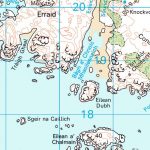
Fairy Sighting on Skye, c. 1880 March 12, 2012
Posted by Beachcombing in : Contemporary, ModernThe family crisis continues here and so Beach offers a modest little post on a fairy sighting in Skye: perhaps Beachcombing’s favourite witness account of the ‘good folk’. This was written out in the early 1960s that puts the experience back c. 1880.
In the darkening of an Autumn evening over eighty years ago a little boy in the Isle of Skye was awaiting the return of his mother from a visit to an ailing neighbour. He and his elder sister had been left with their grandmother while their mother was on an errand of mercy. Another little boy had joined them, and all had played happily during the afternoon. Their own home was some distance from their grandmother’s – just too far for little ones unaccompanied. Presently there came to call on their grandmother an elderly woman from the village, one whom the children knew well and whom they liked. Probably by this time they were becoming a little tired and cross, and their old friend was trying to amuse them. Suddenly she said: ‘Come with me. I want to show you something.’ They all took hands and went out into the gloaming and down the path by the side of the burn. Then the old lady stopped, and said: ‘Look, do you see them?’ And there on the hillside, all dressed in green, were the fairies dancing in a ring round a fire. The children were simply enchanted by what they saw, and one can imagine their excitement and the wonderful story they would have to tell their mother on her return. Next morning they rushed out to look for the ashes of the fairy fire, but there was nothing to be seen.
So what is so special about this account? Well, it is perhaps not the account in itself, but what the account led to that makes Beachcombing’s hair stand on end. The little boy in this story was Ernest Edward Briggs, the father of perhaps the greatest post-war British folklorist Katherine Briggs. And as one biography of KB puts it ‘[her father] was an imaginative storyteller and devoted to Katherine and it was from this childhood influence that Katherine developed a strong interest in fairytales and folklore later in life.’ Certainly this story haunted the family and was told again and again.
KB, in fact, wrote:
[A]s children my brother and sisters and I were never tired of hearing this story. My aunt too, when she came to visit us, would corroberate [sic] the tale. And I have passed it on to mine, and shown them the green, grassy mound ‘where Papa saw the fairies’. Two years ago, and for the first time, I met the third child, now an old man, and he could recall as vividly and clearly as if it had been yesterday all the details of that wonderful evening.
This could in part be rationalised away as brother and sister retelling and retelling an experience and misunderstanding the presence of fairies on a Scottish island: the wealthy Briggs family had connections with Skye. But KB’s discussion of the tale with ‘the third child’ suggests someone outside the magic circle who had his own independent memories.
Perhaps KB is right, if we want to look for a ‘rational’ solution, to concentrate on the one adult present who was said to have second sight.
An interesting point in this narrative is the second-sighted woman who gave the children their glimpse of the fairies. It is noticeable that they were all hand in hand when they saw them, though her method was simpler than that of the wizards described by Kirk, who put their right hand on their pupil’s head and their right foot on his left and made him look over their right shoulder. The fairies were dressed in the usual manner in green and were dancing round a fairy knoll, but it was somewhat unusual for them to dance round a fire instead of being more mysteriously lit. Fires are as a rule only used by the iron-working fairies.
As always where ‘genuine’ fairies are concerned Beachcombing has not the slightest idea what to make of this. He has though since becoming part of the fraternity of fairy scholars become fascinated by the fairy-faith beliefs of those involved in fairy studies. Views on the reality of fairies seem to stretch from wicked disbelief to silly-headed credulity. What for example did Briggs really think about the existence of fairies? drbeachcombing AT yahoo DOT com
***
14/Mar/2011: Fey writes: ‘The question of fairies, belief and fairy experts is a fascinating one. Let me give some examples. There are out and out believers: e.g. Signe Pike and Eddie Lenihan. They are not scholars and can get away with it. Janet Bord author of Fairies: Real Encounters with Little People is a serious type and I suspect that she believes. ‘My personal view is that traditional fairy lore had developed from various stimuli, namely belief in nature spirits, primitive races, pagan gods and the spirits of the dead. Personal sightings, on the other hand, could be the results of imagination, fabrication, or the externalisation of unconscious archetypes. If these were the only explanations, then none of the Little People seen were objectively real. Can this be true? I honestly do not know, and I am not going to pretend that I do, but if I were to allow myself a flight of fancy, I would speculate that some of the Little People might be real, and that they live in another world which exists parallel to ours.’ Katharine Briggs says in some place – can’t find it! – that the Cottingley Fairies don’t seem real to her because they look too much what Edwardian Fairies should look like. Does this not imply a certain patience that fairies can exist? Perhaps, perhaps not. Or what about this from Welsh scholar Robin Gwyndaf? ‘Once upon a time there was a boy who lived on a farm, high in the hills of north Wales. Occasionally when he was not needed to help with the housework or on the farm, or when he just felt like wandering over his ‘country estate’, he would leave the farm yard, walk along Cae Bach (the little field) until he came to Y Giat Goch (the red gate. Once through this he was right in the centre of a circular piece of land about ten yards in diameter . The grass there was always green – unusually green – and always fine and even, like velvet. There the young lad would sit for hours and dream his time away. Nowhere would he be happier than in that green circle of land near the red gate, because there the fairies would come and take him with them on a long journey, over the Foel Goch hill, Llangwm village nearby, and the Berwyn mountains, to a wonderful land of beauty and plenty, sweet music and dance. The author of this essay was that yong boy! I mention my childhood recollection not to emphasise the power of imagination, but to point out that the belief in the fairies persisted in Wales into the late forties and early fifties of this century.’ This surely implies belief in a scholar?’ Thanks Fey!
Slaves for Sale February 17, 2012
Posted by Beachcombing in : Contemporary, ModernBeachcombing has recently become interested in slavery, a matter that he has neglected in previous posts, with the exception of a very unpleasant beating in Colonial American and an early piece on the Barbary Coast. Beach has particularly been impressed/horrified by slave adverts and has stumbled on several remarkable examples. Let’s start off with something fairly standard from New York in 1795, but an ad that at least gives a sense of the person about to be put up for auction.
A likely Negro Fellow, about 25 Years of Age. He is an extraordinary good Cook, and understands setting or tending a table very well, likewise all kind of House Work, such as washing, scouring, scrubbing, etc. Also, a Negro Wench, his Wife, about 17 Years old, born in the City and understands all Sorts of House Work. For farther Particulars, inquire of the Printer. New York Gazette, March 21st, 1795.
Unusually there follows a free slave.
A Female Negro Child (of an extraordinary good Breed) to be given away. Inquire of Edes and Gill. Boston Gazette, Feb. 25th, 1765.
And a slave for sale in lowland Scotland in 1769.
A handsome black boy, about thirteen years of age, very well qualified for making a household servant, serving a table well, etc, of a find constitution, enured to the climate and has had the small pox. Any person inclining to purchase him, may call at Mr William Reid’s, iron-monger opposite to the door of the city guard. This Advertisement not to be repeated.
Beach loves the idea that to be a slave in Edinburgh you had to be ‘enured to the climate’: at least the poor child will not have picked cotton or thrashed sugar.
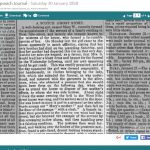
Then there are the runaways. So common that many newspapers used a familiar graphic (pictured above) to signal such adverts.
19 May 1848 Twenty-five dollars reward. Ran away on Saturday evening, 4th instant, the negress Peggy, about 34 years of age, rather thick set, speaks and walks slowly, has very bad teeth, has a sulky look, carrying with her a rosewood dressing case having in the lower drawer a diamond ring, star shaped with 5 diamonds, and other articles. The above reward will be paid for the recovery of the negress and the articles stolen, or half that sum for the negress alone, on their return to J.W.Breedlove, Nayades street, second door above Calliope.
Or another novel plot from the same issue
One hundred dollars reward. Ran away from the undersigned on Sunday night, the 20th February, 1848, a negro man named Stephen, about 28 years old, 5 feet 10 to six feet high, stout, well made, down cast look, talks slow, has holes in his ears and sometimes wears ear-rings. When he left he had long beard under his chin, had on white linsey pants, grey jeans roundabout, old white. Hat. His back has marks of having been severely whipped before I bought him [doth protest too much?]. He has been on the river as a boat hand and lived sometime in Memphis; I purchased him in Owensboro’, Ky., last summer. I have reason to believe that he was enticed away by white men on a flatboat. I will give for the apprehension of said boy and his delivery to me $25 if taken in this neighbourhood; 50$ if taken up out of the State and delivered to me or lodged in jail so that I obtain him; and $100 for him as above together with the thief if he has been stolen. A Wickliffe, Post Office, Worthington Point, Washington County, Miss.
Or going back in time, to 1726, an Amerindian.
This Day Run away from John McComb, Junier, an Indian Woman, about 17 Years of Age, Pitted in the Face, of a middle Stature, and Indifferent fatt [sic], having on her a Drugat, Wastecoat, and Kersey Petticoat, of a Light Collour. If any Person or Persons shall bring the said Girle to her said Master, shall be Rewarded for their Trouble to their Content. American Weekly Mercury, May 24th 1726.
Or from a century later:
$20 Reward Ran away from the subscriber, on the 1st instant, a NEGRO WOMAN, who goes by the name of JULIA GREGGS or Julia Holland, about 40 years of age, slender made; small feet, 5 feet 1 or 2 inches high, light chestnut color. Had a gathering on the left side of her jaw, her face was somewhat swollen, and acne lumps on her neck. Had on when she left home, a plaid linsey frock, with a light calico over it, and a straw bonnet. I will give the above reward if taken out of this State, or $10 if taken in this State, and secured so I can get her. Daniel Stansbury, Patapsco Neck, Baltimore County.
There are likely worlds of pain behind that ‘so I can get her’. Incredibly the next runaway comes from Bristol in the UK and dates to 1746.
Run away the 7th instant, from Capt Thos. Eaton of the Prince William, a NEGRO MAN, named Mingo, of a good black Complexion, smooth Face, wears a black Wig; has no two short blue Waistcoats, and brown Breeches, about 5 Foot, 5 Inches high, his Legsa little bent, his upper Teeth scagg’d and broken, has a Cut on his Right Wrist which stands up in a bunch. He speaks pretty good English, has been in and out of this City about eight Years. Whoever will deliver the said Black into the possession of his Master, Capt. Eaton afore-said, shall have a Guinea Reward. N.B. All persons are hereby forbid entertaining the said Black at their Peril. And if he will return to his Duty, he will be kindly received, and have his offences pardoned.
Beach suspects that these last lines are more for the good folk of Bristol than for Mingo who would likely soon have several more cuts to add to his collection. What were his chances of escape in an English port city in the middle of the eighteenth century? Let’s hope he knocked on the door of a Methodist preacher.
Any other slave adverts? drbeachcombing AT yahoo DOT com
***
PP takes the time to write in with some expert knowledge. ‘Your post on slave adverts today sent me to the bookshelves for The Peculiar Institution: Slavery in the Ante-bellum South by Kenneth M. Stampp (1956, Knopf), a thorough and readable treatment of what slavery was really like in the American south. Several adverts for runaways are given in Ch. III: A Troublesome Property, which begins with this interesting passage: ‘According to Dr. Cartwright, there was a second disease peculiar to Negroes which he called Drapetomania: ‘the disease causing negroes to run away.’ Cartwright believed that it was a ‘disease of the mind’ and that with ‘proper medical advice’ it could be cured. The first symptom was a ‘sulky and dissatisfied’ attitude. To forestall the full onset of the disease, the cause of discontent must be determined and removed. If there were no ascertainable cause, then ‘whipping the devil out of them’ was the proper ‘preventive measure against absconding.’’ (p 109) This book fueled my interest in the subject, coming, as I did, from a southern-derived family some of whose members still apologize for the practice – ‘they were better off on the plantation than in Africa; all their needs were provided for; they received Christianity,’ etc. Same justifications made at the time! Stupid old lies die hard. Another excellent book is Bury the Chains: Prophets and Rebels in the Fight to Free an Empire’s Slaves by Adam Hochschild (2005, Houghton Mifflin.) Plenty of description of slavery conditions in the sugar islands is given, in the story of how an unlikely band of 12 guys schemed to bring down the economic engine of England of the time, inspiring the American abolitionists to use what we now call grassroots organizing in their efforts to do the same. I hope this feeds your interest in the topic– but be prepared for heartbreak’. Then Invisible: ‘You asked for other slave adverts. The Virginia Gazette, published at Williamsburg Virginia, is a prime source for such material It is particularly useful for information on clothing, either slave clothing or articles stolen by the runaway. The index is a bit cumbersome. Look at S, then at Slaves. There are a variety of topics including “Slaves – runaway” from a variety of Virginia counties. “Run away from the subscriber” was the usual heading of such advertisements. Young black servants dressed in exotic livery with turbans were a popular fashion accessory in the 18th century. This article mentions their role as decoration: There are several images of these orientalized slaves in this article, which has some other interesting images of 18th century slaves as well as information on the role Josiah (not Thomas) Wedgwood played in abolishing slavery in Britain.’ Thanks to PP and Invisible!
What Religion did Fairies Follow? January 22, 2012
Posted by Beachcombing in : Ancient, ModernBeach’s endless reading in the literature of fairies has led him to a couple of unusual passages. He honestly doesn’t know that to make of them. In truth, they frighten him.
The first is from a south-western fairy tale where a man is reunited with his ‘dead’ fiancé who is actually trapped in fairy land. While there she explains the lifestyle, beliefs and manners of the fairy folk.
‘For you must remember they are not of our religion,’ said she, in answer to his surprised look, ‘but star-worshippers. They don’t always live together like Christians and turtle-doves; considering their long existence such constancy would be tiresome for them, anyhow the small tribe seem to think so. And the old withered ‘kiskeys’ of men that one can almost see through, like puffs of smoke, are vainer than the young ones. May the Powers deliver them from their weakly frames! And indeed they often long for the time when they will be altogether dissolved in air, and so end their wearisome state of existence without an object or hope.’
This rather ghastly half life is bad enough, but what Beachcombing finds most intriguing is the reference to ‘star-worshipping’. What on earth does this mean in this context? Is it an erudite nineteenth-century reference to astrology? Or is it, if we want to be almost absurdly ambitious, a memory of Neolithic religion in Cornwall in the 1800s? There has long, of course, been the idea that the fairies are the memory of an earlier civilisation.
Beach would plump for astrology and sleep well the night after. But every so often other sources have curious details about fairy religion that are rather more difficult to explain away. This is Robert Kirk on the fairies in his Secret Commonwealth, written in 1691 describing fairy beliefs.
They live much longer than we yet die at last, or least vanish from that state. For ‘tis one of their tenets that nothing perisheth, but (as the sun and year) everything goes in a circle, lesser or greater, and is renewed and refreshed in its revolutions, as ‘tis another that every body in the creation moves (which is a sort of life), and that nothing moves, but has another animal moving on it, and so on, to the utmost minutest corpuscule that’s capable to be a receptacle of life.
We have here a slightly intellectualised version of village Hinduism. But what the hell is it doing in late seventeenth-century Scotland? There are two explanations that jump to Beachcombing’s mind.
First, a wild one: the ancients compared druidic belief to Pythagoras. Is it possible that this transmigration of souls comes from authentic druidic customs that have somehow survived to be represented as fairy beliefs? There was long the idea that fairy belief stemmed from druidic belief.
Second, a contorted version of the same. Is it possible that knowing that transmigration was connected with the druids the seventeenth century had connected these beliefs with the fairies as an act of antiquarianism?
For the record, Beach suspects that both explanations are wrong. And this paragraph remains like a great beached whale flapping its tail and daring us to explain it.
So what is going on here? drbeachcombing AT yahoo DOT com
***
22/1/2012: Phil P writes in to say ‘One other possibility comes to mind. The Rom as presumed to have originally come from India. (Romany is related closely to Sanskrit) Is it possible that they brought a bit of Hindu cosmology to Scotland? I don’t know how far back their presence in the isles goes.’ Thanks Phil! Several correspondents wrote in afterwards with a fifteenth/sixteenth century date for the arrival of fairies.
24/1/2012: Invisible is next: ‘The first excerpt you quote—it seems very “literary” rather than coming from genuine folk/fairy tales. What is the location and date? Who “collected” the tale? [Beach: Robert Hunt, 1865] I’d almost suspect some Theosophist/Yeats-ian interpolation. [Beach: about ten years too early?] As for the second 1671 quote, I’d see it as more of a reflection on the rising interest in science/molecular theory and microscopy. Here are a few tidbits on the subject: In Religion and the Decline of Magic, Keith Thomas p. 725 One sixteenth-century wizard stated that the fairies had power only over those lacking religious faith. p. 729 Most of those who remained sympathetic to fairy-beliefs admitted the Roman Catholic character of the fairy kingdom. ‘Theirs is a mixt religion,’ wrote Robert Herrick, ‘part pagan, part papistical.’ [The Poetical Works of Robert Herrick, ed. L.C. Martin ( Oxford 1956), p. 91] Goodwin Wharton, who was tricked by Mrs Parish into believing that he had extensive relations with the fairies, or ‘low-landers’, as she sometimes called them, was told that they were ‘Christians, serving…God that way, much in the manner of the Roman Catholics, believing [in] transubstantiation, and having a Pop who resides here in England.’ [ British Museum , London Add. MS 20,006, f. 36v.] Although I cannot quickly find the source, the Elves of Iceland (huldufólk/hidden people) are believed to come in both Christian and pagan varieties. Here is the info from the Huldufolk FB page. Note the tiny churches: Huldufólk (Icelandic hidden people from huldu- “pertaining to secrecy” and fólk “people”, “folk”) are elves in Icelandic folklore. Building projects in Iceland are sometimes altered to prevent damaging the rocks where they are believed to live. According to these Icelandic folk beliefs, one should never throw stones because of the possibility of hitting the huldufólk. In 1982, 150 Icelanders went to the NATO base in Keflavík to look for “elves who might be endangered by American Phantom jets and AWACS reconnaissance planes.” In 2004, Alcoa had to have a government expert certify that their chosen building site was free of archaeological sites, including ones related to huldufólk folklore, before they could build an aluminum smelter in Iceland . In 2011, elves/huldufólk were believed by some to be responsible for an incident in Bolungarvík where rocks rained down on residential streets. Icelandic gardens often feature tiny wooden álfhól (elf houses) for elves/hidden people to live in. Some Icelanders have also built tiny churches to convert elves to Christianity. President Ólafur Ragnar Grímsson has explained the existence of huldufólk tales by saying: “Icelanders are few in number, so in the old times we doubled our population with tales of elves and fairies.” Hidden people often appear in the significant or prophetic dreams of Icelanders. They are usually described as wearing 19th-century Icelandic clothing, and are often described as wearing green. I remembered reading Icelandic tales [repeated in Ireland again and again] that told of elves despondent over their salvation. Here’s a site that gives some of those tales. The Count writes in: ‘Concerning the intriguing though staggeringly pointless question of which religion is adhered to by creatures who don’t exist in the first place, I found myself, very surprisingly, stimulated to give the matter some serious thought, since, as you say, this is an extraordinarily intriguing subject, even if it has no bearing on anything that matters in any way whatsoever… Here are my conclusions, which unexpectedly turn out to have some possible bearing on reality. Since this missive has turned out to be quite long, I am not suggesting that you publish the whole thing on your blog – it is merely food for thought. But do with it as you will. Anyway… You don’t give a source or a date for your curious quote about fairies being “star-worshippers” [1865 Robert Hunt, Cornwall UK], but assuming this is a genuinely old folk-tale as opposed to a bit of random nonsense made up for the kiddies, this whole paragraph could be read as a garbled description of the beliefs of the Cathars. The Cathar élite, the Perfecti, led extraordinarily ascetic lives and actively tried to belong less and less to this horrible sinful world, longing for the time when they would die and rejoin the Godhead. Catharism was one of the few religions that encouraged ritual suicide when you reached what you considered to be your condition of peak holiness! Since this ferocious level of holier-than-thou-ness was very hard to maintain for one’s whole life, most of the Perfecti were old men, and many Cathars only took the final vows on their deathbeds. The Perfecti may very well have been scarily fanatical ultra-pessimists whom everybody else was in awe of. And the “star-worshipping” thing could easily refer to a misunderstanding of their belief that humans – and to some extent every living creature – contained tiny bright specks of the actual substance of God, the entire point of their religion being to render themselves so far removed from this horrible wicked world created by the Devil masquerading as God that these little pieces of God (which surpasseth all understanding – ha ha! – theological joke!) would be able to return to the Divine Light, which existed unreachably far above us, instead of being recycled to continue their miserable existence in this vale of tears, which actually constituted torture of God. It all fits rather well, does it not? You say this tale is from the “south-west”, which I take to mean Britain. Since prior to the Albigensian Crusade the Cathars had no significant presence in Britain, it would have been a logical place for small bands of them to flee to. Even if they were officially heretics there just like everywhere else, the average peasant wouldn’t have heard of them and wouldn’t automatically get worked up about them being in the neighborhood. Living in forests would not be a problem for people who embraced asceticism in all its forms, and the very fact that they were deliberately poor and humble to a downright excessive degree struck a chord with poor people who had come to associate the Catholic Church with greed and oppression (which was why there was a crusade against them in the first place, of course). So we’re talking about mysterious people who are obviously from somewhere else who live in the forest and aren’t Christians, and are therefore actively persecuted by the church. And since they regarded getting their message across as more important than life itself, they wouldn’t have been shy about attempting to explain their weird beliefs to an uncomprehending farmer who could probably barely understand their accent. Note also that since the Cathars believed that creating more life was a sin (for the reasons stated above), sex was heavily discouraged even within marriage, and was utterly out of the question for Perfecti. Thus a small group of Cathars devout enough to hold out to the bitter end in a forest would presumably have a birth-rate somewhere between “very low” and “non-existent”. This would tend to doom them to fairly speedy extinction, but it would also explain the belief that fairies have trouble reproducing in the usual way. Of course, fairies supposedly existed long before the Albigensian Crusade. However, existing beliefs could have been modified by subsequent events. Especially if the original fairy stories were based on a similar but longer-lasting situation where tiny pockets of Druids continued to dwell in forests, which is known to have been the case well into the early Christian era, mostly in Brittany and to some extent in Wales, but quite possibly elsewhere too. Note that the Druids had an all-male priesthood and lived in all-male communities so that women wouldn’t find out their holy secrets, whatever they were. For a dying religion with a dwindling trickle of recruits, this must have been a problem, and may well have given rise to that whole thing about fairies having trouble reproducing and being forced to steal babies – which desperate Druids may actually have done a few times. On a related note, the official Christian position on fairies was that, not being humans or angels, they had to be devils, because there were no other alternatives. However, the common people had strong beliefs in these creatures who, though scary and sometimes malicious, were nowhere near relentlessly evil enough to be proper demons, and could sometimes actually be nice. Therefore a totally unofficial belief grew up that fairies were angels who had refused to take sides in the original war in Heaven, and as a punishment for fence-sitting, didn’t fall as far as the really bad guys, but instead were condemned to wander the Earth forever as a morally ambiguous and totally irrelevant third party mainly preoccupied with apathetically wishing Doomsday would come around so it would all be over. Not unlike the Liberal Democrats. This idea does fit in quite well with some of what your sources say about fairy religion, but it also states quite categorically that fairies are failed angels. If you know for an absolute fact that there are no gods but God because you used to live with Him, it’s a bit silly to waste your time worshipping stars! Interestingly, Islam incorporated a lot of untidy Middle Eastern popular beliefs by officially embracing this idea from the start. The djinn are neither divine nor infernal, just an irresponsible bunch of random supernatural beings who mostly just do their own thing. The famous variety who usually seem to end up imprisoned in lamps for some reason are the most powerful djinn, but there are dozens of other varieties, ranging all the way down to trivially unpleasant monsters that are basically supernatural animals. Djinn are more strongly inclined towards evil than fairies, perhaps because they were never angels in the first place and therefore don’t sit around all day moping, so they’re much more energetically amoral, and that sort of thing tends to end badly for somebody. Also, the most powerful djinn are so terrifying that they don’t really have counterparts in Fairyland. But other than that, djinn and fairies are basically identical. Since Islam and Christianity partially agree, certainly on the entire monotheism issue, I would have to say that as far as the official position of the world’s major religions goes, fairies are lapsed Muslims. KMH writes ‘Contrary to popular opinion, none of man’s or fairy’s religions in the beginning worshipped physical objects such as the stars, the sun, or animals. What was actually worshipped was the spirit, or higher entity, intrinsically associated with these objects. Unfortunately as cultures and religions decline their own adherents may not truly understand what they are doing. So we are given these simplistic explanations of religious beliefs from sources not understanding their real basis. Before astrology there was an ancient tradition of star gazing to obtain inspiration from these higher entities which Christians would say are no more than angels. See. Rev. 1:20 for an example of the identification of stars with angels. Today we have the UFO-alien connection with stars (or their planets) which seemingly corroborates the ancient beliefs, except that the angels have been replaced with beings deviating enough from the human form for the ancients to classify them as demonic. There is a lot of literature today from star-beings which has been channelled by mediums or obtained by direct contact.’ Thanks KMH, Invisible and the Count!
28/1/12: Precious stuff from PJ: ‘I was very interested in your post on the religion of fairies. I’ve been reading Legends of the Fire Spirits: Jinn and Genies from Arabia to Zanzibar by Robert Lebling. Throughout it I haven’t been able to help comparing/contrasting the way Islam views their versions of fairies and the way fairies are often regarded in such books as Eddie Lenihan’s collection, Meeting with the Other Crowd. Often the priests in those Irish stories tell of fairies being a rather sad lot, knowing they’ll never gain salvation (because they aren’t human). This makes them inimicable to good Christians everywhere. One of your other correspondents mentioned a similar theme in the Icelandic tradition. I must say, if I knew that the accident of my birth (as a fairy) would mean I’d be condemned at the End of Time, I might feel rather peeved myself and tend to act out in unpleasant ways against ‘the lucky ones’. I know someone else already brought up the djinn/Islam connection, but I wanted to share an interesting passage from Legends of the Fire Spirits:The earliest Muslim interpretations of jinn regard them as having free will, like humans, able to choose between good and evil. The Qur’an itself has a chapter devoted to these spirit beings: Sura 72, Al-Jinn. This sura begins by mentioning a group of jinn who listened to the recitation of the Qur’an and decided to accept Islam… An ancient mosque in Mecca is dedicated to the jinn who accepted the Prophet’s message. Masjid al-Jinn (Mosque of the Jinn) is either the locale where the jinn actually listened to the Prophet recite the Qur’an, or the place where he received revelation of the sura called Al-Jinn… [Richard Burton visited this mosque and wrote of it in Personal Narrative of a Pilgrimage to El-Medinah and Meccah.] Legends of the Fire Spirits again: These jinn made a commitment to monotheism, the core of Islam. Other Qur’anic passages indicate that jinn had heard of earlier revelations, such as that of Moses and the Trinitarian doctrine of Christianity. For Muslims, the beings we call jinn—however they may be conceptualised—are an integral and ever-present part of the language and theology of their faith. The existence of these creatures is assumed and reiterated numerous places in the Qur’an. The book, at its very outset, calls Allah rabb al’-alamin, ‘lord of the worlds,’ understood from the earliest days of Islam to mean all possible worlds that could exist, including the worlds of humans, of jinn and of heaven. The Qur’an often mentions mankind and jinn together as the two types of creatures capable of receiving—and accepting or rejecting—the divine message.’ RPJ meanwhile connects fairy religion with other things: ‘Your article about the vague notions of ‘star worshiping’ among the faerie folk remind not about astrology, but about the concept of ‘psychic channeling’ of messages coming from intelligences that ‘dwell’ out in the Cosmos. Like Robert Anton Wilson’s Cosmic Trigger, and his speculations that he was receiving messages coming from Orion. Similar ideas can be found elsewhere in the counter-culture —e.g. Philip K. Dick’s ‘Valis’. And about ‘soul transmigration’, this resonates with that encounter Facius Cardan had with 2 sylphs, and how one of them told him that nothing of the person survives after death. Might this arcane passage be related to the others you wrote about?’ Then we have the legendary Da-da. ‘Hey, Beachminster. Be careful when you apply that crusty word, ‘religion’, for things like elementals and beings who may be ABOVE us spiritually. A religion is merely a set of theories based on what some people believe about another person who had the actual experience — and they’re usually not the same people who had the original experience that brought about the ‘religion’. (Indeed, when that does occasionally happen, Da-da smells a rat.) The key word here is EXPERIENCE that leads to real KNOWLEDGE (forgive the capitals, Da-da’s weak). Take Buddha and Jesus, for example, two guys who would have done anything while alive to keep us from making them the centers of religions. Da-da for one has a few key mystical experiences which led to knowledge of what is really going on in the universe and beyond. These were rather startling and challenging events, so Da-da typically keeps them to himself (Da-da has seen the angry villagers at the end of ‘FRANKENSTEIN’). However, if he told some people about an experience and they started to congregate and talk about said experience with actual eyewitnesses to Da-da *having* the experience, and that group banded together to group-remember what Da-da said and created rituals to commemorate it… well, that’s religion: a rather severe celebration of someone else’s experience that has very little to do with the experience at all, and certainly doesn’t lead to real knowledge. So, in terms of The Good Folk, they may not necessarily have a religion per se, as much as they have something that hinges on knowledge based on direct experience of something we have no inkling of. The point is really moot, as we won’t know what’s going on until we recognize and absorb all our various macules into what we once were, reaching that certain point where the carousel of time stops, as it will no longer be needed, and it’s last call at the Restaurant at the End of the Universe. AND it needs be said that enquiries into Good Folk subject matter are fraught with peril (again, more direct experience), as the beings we’re talking about are, well… INHUMAN about their privacy. Any of that make sense? Da-da can say that, given his own knowledge of the near- and far-ancients, that they themselves were intractable and adamantine fanatics about the sky and stars, and about astronomical observation and calculation and the numbers describing same. We as a hominid group used to be soooo much smarter – and yet just as foolish – but we’re learning. Now all we need do is drop the savagery. A Man Called Da-da. P.S. In terms of the KNOWLEDGE Da-da possesses, suffice to say that we are non-local beings having a local experience. –AMCD’. This post has probably produced the most unusual comments Beach has yet read on this site and that is saying something. It is a privilege to host PJ, Da-da and RPJ! Thanks guys!
News stories: thanks to correspondents.
-
BH News Stories
- A) Truth About Glen Miller’s Death?
- B) Renting Hitler’s Lair
- C) Curious Roman Helmet
- D) Death Camp Archaeology
- E) Physics Meets History
- F) Meet Your Ancestors
- G) What Happens to Old Space Units in Russia
- H) Being Rude to Hitler POW-Style
- I) Neanderthals Build with Mammoth Bones!
- J) Astronomical Visions
- K) The horror: a new viking king…
- L) Graffiti at the Tower
- M) History at Auction
- N) Ancient Curse Deciphered
- O) Trivia: How Many Times Britain Invaded Post 1066?
- P) The Battle of Effin
- Q) Luther Going Viral
- R) Giant Headed Mummy or Bad Child Care?
- S) Stonehenge Home Found
- T) Teeth and Slaves and Origins
- U) Sex Pistol Graffiti
- V) Ravers and Time Travellers
- W) More on Recent Stonehenge
- X) Bad Archaeology and Dowsing
- Y) Symbol of Rome or Middle Age Knock Off?
- Z) Published Three Hundred Years Later
Highland Gladiators December 24, 2011
Posted by Beachcombing in : MedievalIf Beachcombing had another ten years to add to his natural lifespan he would study duels: there is enough bizarre material there for at least a decade of honest work. As it is the years pass and there is little time. So he will offer up here, in passing, just one of those many collected and crudely thrown together, a face off between the warriors of two Scottish clans in 1396. The first mention of the battle at Perth is in the rhymed chronicle of Andrew Wyntoun (obit c. 1423) who may even have seen the duel with his own eyes. The account here is based, instead, on the possibly derivative John Fordun.
In the year of our Lord 1396 a great part of the north of Scotland, beyond the Alps [Moray?], was disturbed by two wretched Caterans [clan warriors] and their follower – namely, Scheabeg and his kinsmen, who are known as the Clankay, and Cristi Jonson with his kin, who are called the Clanquhele. These could not be reconciled by any agreement or treaty, and by no skill of the king or governor could they be reduced to obedience. At length the noble and industrious Sir David of Lindesay of Crawford, and Sir Thomas, Earl of Moray, applied themselves with such diligence and effect that they brought the parties to this mutual agreement that on a certain day they would appear before the King at Perth, and each party choosing thirty of their kindred, they would fight each other, armed only with swords and bows and arrows, and without doublets, or other armour save pole-axes; by this means terminating their contention and restoring peace to the country.
Imagine sixty clansmen dressed in their kilts, bare-breasted with swords arrows and pole axes. What is more they were to fight to the death before ‘the king and governors and an innumerable assemblage upon the North Inch of Perth’! And to the death or almost they fought: ‘they fight one with the other, and as if they were butchers preparing oxen for the market as unconcernedly they slaughter each other in turn. Yet among so many there was not so much as one found who was as if mad or fearful, or, sheltering himself behind the back of his fellow, attempted to escape from such slaughter’. No wonder that of ‘the sixty combatants all were slain save one of the Clankay and eleven of the opposite party’. Interestingly there is a scrabble to claim descent from the victors, the Clanquhele, almost certainly the Clan Chattan. The Clankay though has not been identified and no one is queuing up for the honour to be related to the defeated Scots.
And what about the one that got away? The sole surviving member of the mysterious Clankay. There is the detail – in Fordun and elsewhere – that one man was so terrified before the battle began that he dived in the Tay and swam away and ‘he was pursued by thousands, but could nowhere be found’.
Any other collective duels? Drbeachcombing AT yahoo DOT com
Luftwaffe Kills Two Rabbits, Perhaps December 10, 2011
Posted by Beachcombing in : Contemporary
Little Miss B in seventh heaven last night and this morning as the family has been gifted a small black rabbit. This black rabbit is not destined to have the happiest of lives as LMB insists on watching Disney cartoons with it. Beachcombing, in any case, fell asleep with rabbits and woke up thinking of them, but could only come up with one really good rabbit story from history – readers are welcome to contribute others: drbeachcombing AT yahoo DOT com
The story he refers to are, of course, the famous two rabbits killed on Shetlands November 13, 1939, the first British Luftwaffe casualties of the Second World War. The first human casualty would have to wait till April 1940, though there after they would come with depressing frequency till by the end of hostilities 60,000 plus had been killed by bombs, crashing planes, rockets and strafing machine gun fire.
Anyway, back to the rabbits. A Heinkle bomber had gone in to hit some flying boats near Sullom Voe. The bomber missed but left one impressive looking bomb crater and in this bomb crater the locals found two rabbits. (See the photograph above).
Uncharitable souls have suggested that these rabbits were planted to underline the moronic incompetence of the Luftwaffe. If so it was a good public relations trick and the rabbits do look suspiciously well preserved, particularly if they were, as the photographs suggest, pulled out of the crater itself.
Of course, the Luftwaffe would answer any charges of incompetence through all too competent action (upon action) in the months ahead.
At this point the rabbit casualties meshed with a song that had been first aired in public in mid October of 1939: Run Rabbit, Run Rabbit Run, Run. Well worth listening to in the original. Its lyrics, indeed, became the unofficial anthem of Britain in the phoney war: bonhomie and absurdly misplaced self-confidence.
Run rabbit – run rabbit – Run! Run! Run!
So run rabbit – run rabbit – Run! Run! Run!
Run rabbit – run rabbit – Run! Run! Run!
Don’t give the farmer his fun! Fun! Fun!
He’ll get by without his rabbit pie
So run rabbit – run rabbit – Run! Run! Run!
Take this short description of the life of an evacuee: After our meal, we go to listen to the news from London. I’m allowed to listen to children’s hour, and shortly after that, I’m put to bed. There are plays, music recitals, and comedy shows. There’s Tommy Handley in the ITMA show with all the funny catch phrases. There’s Mona Lott, the cleaning lady, ‘Can I do you now sir? and ‘It’s bein’ so cheerful that keeps me goin’. Colonel Chinstrap – ‘I don’t mind if I do.’… Some popular songs are played many times in one day. The popular wartime song [Run Rabbit Run] is always on the wireless. It’s inspired by the fact that in the period of the so-called phoney war, the only casualty caused by Hitler’s bombs is a rabbit. Of course, it isn’t long before the wits substitute the name Adolf for rabbit and it isn’t long before Charlie introduces me to the art a rabbit shooting.
Interestingly there is a bit of cobblers attached to this story. Some claim that the song came about because Hitler said that he would eat rabbit pie when he successfully invaded Britain! This seems a rather unlikely comment for AH to make, not least because he was (largely) vegetarian and also because the phrase, unless there is a German idiom hiding behind it, means nothing. Hitler was not, in any case, particularly interested in an invasion of Britain at this time, that did not slip into his shopping list till the collapse in the west in spring 1940. This interpretation presumably came from the lyrics of the song itself that make the farmer, rather than Hitler, into the rabbit.
Don’t give the farmer his fun! Fun! Fun!
He’ll get by without his rabbit pie
So run rabbit – run rabbit – Run! Run! Run!
***
11 Dec 2011: Tim from Detritus of Empire sends in ‘Lyrics from the seminal stoner album “Dark Side of the Moon”, by Pink Floyd Breathe (Waters, Gilmour, Wright) 2:44 Breathe, breathe in the air./ Don’t be afraid to care./ Leave but don’t leave me. / Look around and choose your own ground. / Long you live and high you fly/ And smiles you’ll give and tears you’ll cry / And all you touch and all you see / Is all your life will ever be. / Run, rabbit run. / Dig that hole, forget the sun, / And when at last the work is done / Don’t sit down it’s time to dig another one. / For long you live and high you fly / But only if you ride the tide / And balanced on the biggest wave / You race towards an early grave.’ Run rabbit run onwards is from the original song. Thanks Tim!
12 Dec 2011: Mike G writes in to point out that this was Shetland not Orkney (Beachcombing brain made a silly mistake here). According to local lore one rabbit not two were killed: Beachcombing seems to remember a photograph of two rabbits but contemporary reports refer to one? Then what about this link: it seems that the rabbits were dropped over Germany by a RAF bomber addressed to Goering! Then Marvin writes in about the Jimmy Carter killer rabbit incident. Thanks Marvin and Mike!
Swearing to Mermaids December 3, 2011
Posted by Beachcombing in : Modern
A further Scottish Mermaid sighting, dating to October 1809. This one is particularly interesting because there seems to have been a concerted effort to get the local ‘yokels’ – whose testimony is usually reckoned at less than naught – to swear to what they saw.
Neil McIntosh in Sandy Island, Canna, states that he has heard from different individuals in the island of Canna, that they have seen the fish called Mermaids; that these animals had the upper parts resembling the human figure, and the lower extremities resembling a fish. In particular, about six years ago, Niel Stewart and Neil McIsaac, both alive in Canna, when walking upon the sea beach on the north end of the island, on a Sunday, saw, stretched on a rock at a small distance, an animal of this description, having the appearance of a woman in the upper parts, and of a fish below; that on seeing them it sprung into the water, after which they had a more distinct view of its upper part, which strongly resembled a female of the human species. That Lachlan McArthur, of the same island, informed McIntosh, that some years ago, sailing from Uist to Skye in a stormy day, he saw rising from the water, near the stern of the boat in which he was, a. figure, resembling a human in its upper parts, which terrified him extremely. Neil McIntosh further states, that he himself, about five years ago, was steering a boat from Canna to Skye in a stormy day; that when about one-fourth of the passage from Canna, he saw something near him of a white colour, and of the human figure, spring almost out of the water, which he took for the animal above described; but as it instantly disappeared again, he had no opportunity of examining it minutely; that he felt considerable alarm at the sight of it, as a general opinion or prejudice exists amongst the inhabitants of the Western Isles, that it is extremely unlucky to meet with or look upon such animals at sea, or to point them out to the rest of the crew, unless they observe it themselves.
Fairly modest stuff, but in many ways the most interesting part of the letter is the legalistic coda. Oaths and attestations are breaking out in folklore.
Signed, Neil McIntosh; Robert Brown, factor for Clanrannald witness; Donald McNeil, of Canna, witness; Wm Campbell, W. S. Edinburgh, witness; James Gillespie, architect, Edinburgh, witness. Portree, 2nd October, 1809.
That what is above written is a true copy of the original.
Attested, Malcolm Wright, N. P.
Beachcombing should say that since writing this up he has come across a second copy of the same with some variants. Not sure what that is about.
Strangehistory is always interested in mermaid stories! drbeachcombing AT yahoo DOT com