jump to navigation

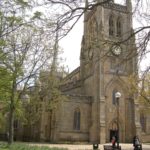
The Wandering Jew in Burnley May 27, 2012

Posted by Beachcombing in : Medieval, Modern

Today it is the turn of the Wandering Jew.

For those who have never met him WJ refused to help Christ (as he was carrying his cross) or made fun of Jesus as he hung between the thieves. This proved a bad idea. WJ now meanders cursed around the globe and will do so until the end of time in penance for his oversight. The WJ legend in some senses institutionalises European anti-Semitism: it was a medieval, perhaps a thirteenth-century creation. But it is difficult not to feel sympathy for this extraordinary individual doomed to ‘walk the earth’ like Caine. And so an anti-semitic rant actually becomes a bridge to understanding and shared humanity.

Most modern studies claim that by the nineteenth-century belief in the Wandering Jew had become purely symbolic. What then to make of this news report from that very century.

We are informed that a new race of religionists have lately risen in this locality (Burnley), who pretend to have more extensive acquaintance with the ‘mysteries of the kingdom’ that any of their predecessors. They assert with much gravity that in the darkest shades of night they are permitted to hold converse with departed spirits, and for this purpose it is their custom to meet together, and hear a sweet response from heaven. The latest intelligence they have received from the invisible world is to the effect that the Wandering Jew is in some part of Lancashire, and that he will shortly pass through Burnley, when he will make a call at a certain house and communicate such important information relative to a subject that is as yet entirely ‘unknown to mortal mind’, as will ‘astonish the natives’. Really we may inquire, what will come next?

Beach doesn’t want to set up today’s post as a Borges short story, but he found this clipping at the bottom of a pile of newspapers while preparing his tax documentation. A note says that it came from the Blackburn Times but neglects to give the date: woops… If anyone can dictate the words to any blanks here then Beach would love to fill them in. drbeachcombing AT yahoo DOT com

In the meantime Beachcombing might note that Blackburn is something of a rival to Burnley. Was this a bit of garden green slander then or some honest to God non-conformism gone very very wrong. For what it is worth Beach’s money is on the second.  As a Yorkshireman Beach, in fact, can share the intelligence that folk across the border in Lancs (Blackburn, Burnley etc) are a LITTLE strange.

The Popess: A Female Pope? April 28, 2012

Posted by Beachcombing in : Medieval

There are popes who had children, there are popes who took part in orgies, there are popes (at least one) who did not believe in God. However, Beachcombing has so far avoided the most remarkable pope of all: Pope Joan. The story is quickly told. Pope John VIII went out to bless the people of Rome after a locust storm in 854. However, between the Vatican and S Giovanni in Lateran, the Pope was struck with stomach pains. He fell down and at this point it became apparent that Pope John was actually a Joan and that she was about to give birth. The crowd was so infuriated that they fell upon the false pope and, Romans being Romans, tore Joan and the new born child to pieces.

Women do spend years successfully pretending to be men so there is nothing inherently impossible here. However, make no mistake, this little tale is cobblers: there was no John or Joan between Leo IV and Benedict III, which the dating of the story probably demands (there is a minor controversy about its chronology). The first sources comes some two centuries after the events and include Sigisbert of Gembloux (obit 1112) and Mariannus Scottus. From there the material grows through several generation into the Marchen described above: Joan appears in Boccaccio and Luther (who was scandalised about a statue of Joan in Rome).

So what is the explanation for this extraordinary story that might, incidentally, have given us the ‘Popess’ in the pack of tarot cards (pictured above)? Our sources are just too slight to base proper hypotheses off. However, there are three facts that run together. First, the early tenth century, when this story was, Beach would assume, maturing orally, was the period of the ‘pornocracy’ or government by whores in Rome: when popes had sexual relations with women of easy repute who dominated the Papal government: ‘women on top’. Second, John VIII who died in 882 seems to have been effeminate and to have been mocked as such by the population: or was this effeminacy posited on him by an attempt to transfer the legend?  Third, the legend developed in a period of growing tensions between the Pope and the rulers of Germany: this story was useful ammunition in the context of the growing war of words that would end at Canossa. Any other explanations? drbeachcombing AT yahoo DOT com

Of course, what Joan has given the modern world is a Catholic Orlando without Virginia Woolf’s chewed up prose and naturally Joan has starred in several books and two films: John Huss also brought Joan up at this trial that took balls. For reasons that Beach has never understood the later legend tried to make Joan into a Englander (‘anglica’). Beachcombing has never read but has heard interesting things about Pardoe and Pardoe’s The Female Pope (1988). Very kindly the authors have put the book on the net and Beach hopes himself to glance through it this summer.

Did Christ Exist? April 14, 2012

Posted by Beachcombing in : Ancient

***Dedicated to Larry***

Beach should start this piece with a disclaimer: he is not a Christian – ‘not that there is anything wrong with that’ – and is unlikely to ever become one. And with this bit of initial hand-wringing out of the way on to today’s question, provoked by some recent internet articles, did Jesus exist?

Well, here there are about forty sources from the apocrypha to the gospels, from Suetonius to an extraordinarily confusing passage in Josephus. Each deserve a long academic article and some tell us important things about our perceptions of the founder of Christianity. But another thing that almost all these sources have in common is that they are late: even the Gospel of Mark was written a long generation after Christ’s supposed death, ‘c.70′ to use the formulation of New Testament scholars. However, one source cannot be described as ‘late’, namely the bundle of Paul’s letters that have made it through into the New Testament, texts that long predate the Gospels and as such are, in some senses, more valuable.

Before we get onto Paul’s letter though let’s define what we mean by Christ’s ‘historical existence’. This does not mean that Christ did everything that was claimed for him in the Gospel accounts: God forbid! It does not even – to take a very extreme position – mean that Christ did anything that was claimed for him in the Gospel accounts. What it does mean is that lurking behind the stories we can see the limbs or perhaps the shadows of the limbs of a real man.

Paul’s letters are the proof that such a man existed whether or not the reader agrees with what Paul did to Jesus: Paul certainly wouldn’t be Beach’s first choice as an official biographer. And Paul was writing from the 50s-60s that much closer to Christ’s death than anyone else. What may have been his first letter, I Thessalonians, had likely been written by 52. If we accept the normal wide margin for Christ’s death of 30-36 then this means that Paul was writing his letter a mere sixteen to twenty-two years after Christ’s death. Paul may even have witnessed the crucifixion: memories of the attempts by A.N.Wilson to put Paul in the Garden of Gethsemane on the night before the trial. He certainly came across those that had done so.

Perhaps most exciting is that verse in I Corinthians where Paul writes: ‘I told you the most important part of the message exactly as it was told to me. That part is: Christ died for our sins, as the Scriptures say. He was buried, and three days later he was raised to life, as the Scriptures say’.

Meditate on this passage for a moment. I Corinthians was probably written in the middle of the 50s, let’s say c. 55,  nineteen to twenty-five years after the crucifixion.

This is the verse where we come closest to Christ the man. Paul’s key words are ‘as it was told to me’. This looks very much like, to use a later term, a declaration of faith taught to Paul sometime after his conversion in the mid-late 30s. Here then we have a text written in the 50s but one that contains, like a fly in aspic, an earlier text, one that dates back to the 40s or perhaps the 30s, one that was possibly circulating already in the decade after Christ’s death.

Beach as a non-Christian has to believe that this is all myth making, of course. But it would be nothing less than bad manners towards respectable sources to claim that this myth making was a ‘later sediment’. Myth was already being blown like the sand of dreams on Christ in the year immediately after his death. And if anyone ever tells you that Christ didn’t exist throw the Pauline Epistles at them.

Any other thoughts on the historic Christ: drbeachcombing AT yahoo DOT com

***

15 April 2012: SY writes in with this link to a controversial argument about this controversial passage alleging that it is a later interpolation.  Phil P comes close to this as well: While I am not a Christian either, I tend to treat Jesus much like the Buddha: as someone who had a great awakening. That having been said, Your quote from Paul troubles me in that he says, “He was buried, and three days later he was raised to life, as the Scriptures say’.   What scriptures could he be referring to in 50 CE?   A messiah is foretold in Hebrew scriptures but not the resurrection.   Is this a translation error? Something added in by the church later?’ The great Ashley Pond writes in with more general thoughts: I haven’t seen the God Movie but keep meaning to:  I have read all the original drafts and excerpts of The Rejection of Pascal’s Wager: A Skeptic’s Guide to the Bible and the Historical Jesus  and know the author (the way I “know” you):  (academically really sound with deeply detailed citations and sources; embarrasses me for how lazy my “scholarship” is). I of course have my own opinions on the Hebrew! Huge tracts of both story outline and even verbatim text attributed to and about THE CHRIST are anything from Babylonian to Egyptian—a laundry list of paganism’s perpetual and uncomfortable grafting onto theunderstand, not a single document of any variety supporting Jesus of Nazareth’s literal existence outside the gospels which, as I’m sure you know, don’t bear up well historically under disinterested scrutiny.’ And finally KMH A problem with the scholarly approach is that it is so difficult to empathetically enter in to epochs existing thousands of years in the past. The attitude toward written documents and  the ease of their creation has changed substantially with  advancing technology, so the likelihood of deliberate or  inadvertent written falsehoods can be  difficult to assess by modern standards. We know that the 20th century’s propensity for deliberately false statements and documents is without parallel in recorded history. This, unfortunately, affects the attitude toward any and all historical writings. In considering whether Christ actually existed, we need to determine whether any religious figure qualifies for existence  according to the standard applied. If Buddha, Krishna, Zoroaster, Moses, or even Muhammad, etc.,  are accepted as actually existing, it can strengthen the implicit case for Christ. Of course, I  believe there is no doubt that Muhammad existed, so there is some additional documentary evidence from the Koran concerning Christ’s existence, besides Christian documents. From my point of view, the important question isn’t whether Christ existed, but whether he really is who he said he is. This will be where the battle rages as false christs, false prophets, and anti-christs gain more and more of the public’s attention.’ Thanks Ashley, KMH, Phil and SY!

30/04/2012: Greg writes in: ‘I just thought I would throw out some suggested reading on the existence of Christ. I’m sure you have heard of N T Wright. His series on Christian Origins and the Question of God series is massive and stimulating. Maybe some of your readers would like to check them out. N T Wright is a Christian Anglican Bishop of course, but his examinations especially in the first book (The New Testament and the People of God) of the various approaches to the early Christian sources and Roman Palestine are fascinating for anyone. Lots of great philosophy of history in there. As well as an interesting case for the resurrection based on readings of the ghost mythology of Romans and Jews.’ Thanks Greg!

Suicide and Historical Loopholes April 7, 2012

Posted by Beachcombing in : Actualite, Ancient, Contemporary, Modern

***Dedicated to David: ‘between the bridge and the river…’***

Suicide has proved abhorrent to most spiritual traditions. Certainly, the great monotheistic religions and most of the far Eastern religions have condemned ‘self-murder’: cue lots of pulpit bashing and descriptions of hell or unpleasant reincarnations. This begs the question though of what you can do if you live in 500 BC or 500 AD or 1500 AD and you want to end your life at all costs. Beach was musing on this last night (as you do) and he wondered, human ingenuity being what it is, how individuals have got around these strictures through time. He would be very interested in any other categories or vivid examples: drbeachcombing AT yahoo DOT com At the same time he should say that he writes this well aware of the horrible gravity of these matters and their capacity to blight families and communities; none of what follows is meant to be flippant either to G-K-Chesteron-Flag-of-the-World types or, indeed, to euthanasia ‘enthusiasts’.

i) This doesn’t count. Beach has come across several examples where individuals convince themselves that certain forms of suicide are not really suicide. For instance, if I eat rat poison then clearly I am ending my life and must suffer the eternal consequences. But if I stop putting food and drink in my mouth and I die then I have not ‘done’ anything: at best we can talk of a sin of omission. Curiously the examples of non-suicide by starvation, that he has found, come from nineteenth- and twentieth-century Germany. Not sure what to make of that or its historical background. Naturally many modern just-turn-off-the-machine debates involve similar arguments. It is one thing to fill someone’s veins with poison: another to stop pumping oxygen into the lungs or to take the food tube out of someone who has spent three decades immobile in hospital. An orthodox Catholic would claim, of course, that the difference, in the end, is not a categorical one: though even Beach’s beloved uber-Catholic wife would give up here if we talk about an elderly patient refusing, say, to take medicine.

ii) It wasn’t me. One extreme version of ‘this doesn’t count’ is tricking someone else into killing you. Take ‘a soldier’s death’: remembering countless examples from the eastern front in WW2. The man who does not want to go on living leaps out of the trench and walks towards the enemy firing to be killed moments later. There are some instances of death by cop in the modern United States, one problem with having an armed constabulary: a ‘perp’ pulls a weapon and police officers fire to defend themselves not knowing that they are really being coerced. Then there are even some extraordinary instances from history where a suicide kills an innocent (murder can be forgiven in most religions) so that they can be executed. This became a veritable plague in Denmark in the Early Modern Period. (Thanks to Andy the Mad Monk for this reference and Jason Z for some comments. ) Interestingly the early Christian martyrs had debates on a related question. Was it right to go and give yourself up to the Roman authorities? Or should you sit at home and wait for them to come to you? Christian attitudes to suicide arguably formed in this period in a strong rejection of the first.

iii) Can you help me? The reader will have noted that a lot of this suicide-avoiding-stuff involves loopholes. We’ll have to hope that, if there is an Almighty, He is more interested in the letter than the spirit of the law. Along similar lines one slightly more moral version of the ‘it wasn’t me’ technique is actually negotiating with someone to kill you so the sin is not on your head. A famous historical case of this was Masada where the defenders slaughtered each other by taking lots before the Romans could break through into the inner sanctum: that peculiar reluctance found in some period of not wanting to give your enemy the pleasure of massacring you. Beach, getting fictional, also has a scene from the Three Colours White in mind where much is made of this idea and the ‘murderer’ succeeds  – the scene is extraordinarily moving -  in giving the suicide a renewed will to live. It is interesting that in many cases couple suicides involve the partners ‘helping’ each other, almost as if there is a desire (unconscious or otherwise) to avoid putting your own hand on yourself.

iv) I ended my life but to save others. This is the category for those who suspect that, contrary to what was said above, the Almighty (always granting His existence) is more interested in the spirit than the letter of the law. There are, after all, cases where an act of suicide should actually help the world: depending naturally on our appallingly limited human viewpoints of what ‘help’ means. This might include the suicide of a Woolwich cadet described in an A.E.Housman poem who ends his life because he is worried he is going to damage himself and others: he was presumably homosexual at a time, late 19 cent, when this was unacceptable.  This argument is passionately used as a justification for suicide bombing by some Islamists. An uneasy Biblical ‘precedent’ is Samson who brings down the temple on the heads of himself but also the Philistines: the same Samson praised by the normally grumpy Paul in his letters. Altruistic suicide might very reasonably be used to describe the death of Bruno Fanciullacci the Italian resistance fighter in the last war who hurled himself from an upper storey window to avoid torture and indiscretions at the hands of the Gestapo, arguably saving tens of lives.  Thinking about this Beach once had a fascinating discussion with a member of Opus Dei who argued that, by this definition, Christ himself had committed suicide. Discuss.


The Valley of Sweet Bells and Dead Bodies February 19, 2012

Posted by Beachcombing in : Medieval

Usually when Christian missionaries come face to face with a pagan shrine, the vitae tells us that the axe comes out and the splinters fly. But imagine if you were one of these (perhaps God-forsaken) missionaries in the woods of early medieval Germany or the great mountain ranges of Asia. How many really felt courage as they approached the shrine of their enemies? Here is an atmospheric description from Odoric of Pordenone of his own experiences apparently in (though the text is not clear) northern Persia.

There was another terrible thing which I saw there: for passing by a certaine valley, which is situate beside a pleasant riuer, I saw many dead bodies, and in the sayd valley also I heard diuers sweet sounds and harmonies of musike, especially the noise of citherns, whereat I was greatly amazed. This valley conteineth in length seuen or eight miles at the least; into the which whosoeuer entreth, dieth presently, and can by no meanes passe aliue thorow the middest thereof: for which cause all the inhabitants thereabout decline vnto the one side. Moreouer, I was tempted to go in, and to see what it was. At length, making my prayers, and recommending my selfe to God in the name of Iesu, I entred, and saw such swarmes of dead bodies there, as no man would beleeue vnlesse he were an eye witnesse thereof. At the one side of the foresayd valley vpon a certaine stone, I saw the visage of a man, which beheld me with such a terrible aspect, that I thought verily I should haue died in the same place. But alwayes this sentence, the word became flesh, and dwelt amongst vs, I ceased not to pronounce, signing my selfe with the signe of the crosse, and neerer then seuen or eight pases I durst not approach vnto the said head: but I departed and fled vnto another place in the sayd valley, ascending vp into a little sand mountaine, where looking round about, I saw nothing but the sayd citherns, which me thought I heard miraculously sounding and playing by themselues without the help of musicians. And being vpon the toppe of the mountaine, I found siluer there like the scales of fishes in great abundance: and I gathered some part thereof into my bosome to shew for a wonder, but my conscience rebuking me, I cast it vpon the earth, reseruing no whit at all vnto my selfe, and so, by Gods grace I departed without danger. And when the men of the countrey knew that I was returned out of the valley aliue, they reuerenced me much, saying that I was baptised and holy, and that the foresayd bodies were men subiect vnto the deuils infernall, who vsed to play vpon citherns, to the end they might allure people to enter, and so murther them. Thus much concerning those things which I beheld most certainely with mine eyes, I frier Odoricus haue heere written: many strange things also I haue of purpose omitted, because men will not beleeue them vnlesse they should see them.

Aliud terribile fuit quod ego vidi ibi. Nam cùm irem per vnam vallem quæ sita est iuxta fluuium deliciarum, multa corpora mortua vidi, et in illa valle audiui sonos musicos dulces et diuersos, et maximè de cytharis, vndè multum timui. Haec vallis habet longitudinem septem, vel octo milliarium ad plus, in quam si quis intrat, moritur, et nunquam viuus potest transire per medium illius vallis, et ideò omnes de contrata declinant à latere: Et tentatus eram intrare, et videre, quid hoc esset. Tandem oratis et Deo me recommendans, et cruce signans, in nomine Iesu intraui, et vidi tot corpora mortua ibi, quòd nullus crederet nisi videret In hac valle ab vno eius latere, in vno saxo vnam faciem hominis vidi, quæ ita terribilitèr me respexit, quòd omnino credidi ibi fuisse mortuus: Sed semper hoc verbum (verbum caro factum est et habitauit in nobis) protuli, et cruce me signaui, nec propiùs quàm per 7. passus, vel 8. accedere capiti ausus fui: Iui autem fugiens ad aliud caput vallis, et super vnum monticulum arenosum ascendi, in quo vndique circumspiciens nihil vidi nisi cytharas illas, quas per se (vt mihi videbatur) pulsari et resonare mirabiliter audiui. Cùm vero fui in cacumine montis, inueni ibi argentum in maxima quantitate, quasi fuissent squamæ piscium. Congregans autem inde in gremio meo pro mirabili ostendendo, sed ductus conscientia, in terram proieci, nihil mecum reseruans, et sic per gratiam Dei liber exiui. Cùm autem homines illius contratæ sciuerunt me viuum exisse, reuerebantur me multum, dicentes me baptizatum et sanctum: et corpora illa fuisse daemonum infernalium qui pulsant cytharas vt homines alliciant intare, et interficiant. Haec de visis certudinalitér ego frater Odoricus hic inscripsi; et multa mirabilia omisi ponere, quia homines hon credidissent nisi vidissent.

This was presumably a pagan shrine with human sacrifices round about. The money must have been offerings. Other human failings on the part of missionaries : drbeachcombing AT yahoo DOT com

***

WJ writes: ‘If Odoric was in Peria, could he be giving us his misinterpretation of  the Zoroastrian practice of exposing bodies of the dead? Maybe with some fantastic story elements added by the Muslim neighbors such as “men subiect vnto the deuils infernall”. Then Invisible has another explanation entirely: Frankly, the first thing I thought of when I read your post on sweet bells and dead bodies  was not “human sacrifices” but “poison gas.”  Hear me out… Think of the Grotta del Cane and Lake Nyos in Africa.  In each location, invisible and odorless carbon dioxide gathers in a low area (a valley) and kills those who breath it. Which is possibly why the locals in this case avoided going into the middle of the valley, but went up one side. Odoric may have been preserved, not by God’s grace, but by a favorable prevailing wind. Or, as in the case of Lake Nyos, the site might only be intermittently toxic. The silver on top of the mountains might be mineral deposits/slag thrown out of a volcanic vent. Colorful and metallic deposits are noted around vents and hot springs in Yellowstone Park, Japan, and other seismically active regions. Possibly the sweet music was gases whistling through openings in the earth. See this site and scroll down to “Music in the Air” for mysterious musical sounds perhaps produced by seismic activity .  (That does not explain the actual citherns, though, if I am reading Odoric correctly.) So which came first, the terrifying god carved on the stone or deadly seismic activity that encouraged the locals to placate the death-dealing deity? How fresh were these dead bodies? The biggest difficulty for this theory is that we don’t know the exact location. However if I’m correct in assuming North Persia to encompass modern-day Turkey, the area is, of course, very seismically active.’ Should note that some commentators believe that Odoric was hallucinating in part here (which doesn’t seem necessary to Beach), if so then this would fit into Invisible’s explanation too? Thanks WJ and Invisible!!

The Soul Zoo January 27, 2012

Posted by Beachcombing in : Medieval

So many interesting replies to recent posts to put up but little Miss B has a nasty flu so she is home from school and Beachcombing will be spending the morning with her – she is a state of such anxiety that the poor kid needs to be held at all times. Saturday seems a more promising day in this respect. Anyway on to the strange…

Odoric of Pordenone was a fourteenth-century European traveller in deepest Asia visited before in these pages. Though his memoirs make for bizarre reading, they generally seem to be borne out and Odoric is judged a reliable witness. What then about the following passage that Beachcombing finds simply inexplicable.

In the foresaide citie [Kanasia = Hangzhou in eastern China] foure of our friers had conuerted a mighty and riche man vnto the faith of Christ, at whose house I continually abode, for so long time as I remained in the citie. Who vpon a certaine time saide vnto me: Ara, that is to say, Father, will you goe and beholde the citie? And I said, yea. Then embarqued we our selues, and directed our course vnto a certaine great Monastery: where being arrived, he called a religious person with whom he was acquainted, saying vnto him concerning me: this Raban Francus, that is to say, this religious Frenchman commeth from the Westerne parts of the world, and is now going to the city of Cambaleth to pray for the life of the great Can, and therefore you must shew him some rare thing, that when hee returnes into his owne countrey, he may say, this strange sight or nouelty haue I seene in the city of Kanasia. Then the said religious man tooke two great baskets full of broken reliques which remained of the table, and led me vnto a little walled parke, the doore whereof he vnlocked with his key, and there appeared vnto vs a pleasant faire green plot, into the which we entred. In the said greene stands a litle mount in forme of a steeple, replenished with fragrant herbes and fine shady trees. And while we stood there, he tooke a cymball or bell, and rang therewith, as they vse to ring to dinner or beuoir in cloisters, at the sound whereof many creatures of diuers kinds came downe from the mount, some like apes, some like cats, some like monkeys and some hauing faces like men. And while I stood beholding of them, they gathered themselues together about him, to the number of 4200. of those creatures, putting themselues in good order, before whom he set a platter, and gaue them the said fragments to eate. And when they had eaten he rang vpon his cymbal the second time, and they al returned vnto their former places. Then, wondring greatly at the matter, I demanded what kind of creatures those might be? They are (quoth he) the soules of noble men which we do here feed, for the loue of God who gouerneth the world: and as a man was honorable or noble in this life, so his soule after death, entreth into the body of some excellent beast or other, but the soules of simple and rusticall people do possesse the bodies of more vile and brutish creatures. Then I began to refute that foule error: howbeit my speach did nothing at all preuaile with him: for he could not be perswaded that any soule might remaine without a body. Then I began to refute that foule error: howbeit my speach did nothing at all preuaile with him: for he could not be perswaded that any soule might remaine without a body.

In illa ciuitate 4. fratres nostri conuerterant vnum potentem ad fidem Christi, in cuius hospitio continué habitabam, dum fui ibi, qui semèl dixit mihi, Ara, i. pater, vis tu venire et videre ciuitatem istam: et dixi quòd sic, et ascendimus vnam barcham, et iuimus ad vnum monasterium maximum, de quo vocauit vnum religiosum sibi notum, et dixit sibi de me. Iste Raban Francus, i. religiosus venit de indé vbi sol occidit, et nunc vadit Cambaleth, vt deprecetur vitam pro magno Cane, et ideò ostendas sibi aliquid, quòd si reuertatur ad contratas suas possit referre quod tale quid nouum vidi in Canasia ciuitate: tunc sumpsit ille religiosus duos mastellos magnos repletos reliquijs quæ supererant de mensa, et duxit me ad vnam perclusam paruam, quam aperuit cum claue, et aparuit, viridarium gratiosum et magnum in quod intrauimus, et in illo viridario stat vnas monticulus sicut vnum campanile, repletus amoenis herbis et arboribus, et dum staremus ibi, ipse sumpsit cymbalum, et incoepit percutere ipsum sicut percutitur quando monachi intrant refectorium, ad cuius sonitum multa animalia diuersa descenderunt de monte illo, aliqua vt simiæ, aliqua vt Cati, Maymones, et aliqua faciem hominis habentia, et dum sic starem congregauerunt se circa ipsum, 4000. de illis animalibus, et se in ordinibus collocauerunt, coram quibus posuit paropsidem et dabat eis comedere, et cum comedissent iterum cymbalum percussit, et omnia ad loca propria redierunt. Tunc admiratus inquisiui quæ essent animalia ista? Et respondit mihi quod sunt animæ nobilium virorum, quas nos hic pascimus amore Dei, qui regit orbem, et sicut vnus homo fuit nobilis, ita anima eius post mortem in corpus nobilis animalis intrat. Animæ verò simplicium et rusticorum, corpora vilium animalium intrant. Incoepi istam abusionem improbare, sed nihil valuit sibi, non enim poterat credere, quòd aliqua anima posset sine corpore manere.

There is perhaps nothing impossible about this scene, though the theology clearly stuck in Odoric’s gullet. But still a monastery with a soul zoo out back! Early Asian Christianity contributed several unusual offshoots of Roman and Greek Christianity, but this must be among the most beautiful… Beach can’t help wondering whether it was all a misunderstanding (on the part of Chinese Christians) of some of those fabulous Roman images of Christ as Orpheus or the Byzantine images of all creation worshipping Christ.

Any ideas? drbeachcombing AT yahoo DOT com

***

28/1/12: Virginia seems to have cracked this. ‘Clearly a Buddhist belief that some souls reincarnate as animals in the next life. Buddhists teaching is that there are 4 possibilities for reincarnation until one finally achieves nirvana and stops the wheel of perpetual reincarnation. One can reincarnate into a) the realm of the demi gods until good karma is used up, b) another human life, c) an animal, d) as a hungry ghost. Ringing of bells is quite common in a buddhist monastery. Also Kubla Khan the emperor of China was a protector of Tibetan Buddhism.’ KMH has, instead, a more general reflection: ‘If you think about it, any religion or ideology, especially Christianity, spreads more readily  if a few or more  doctrinal errors are included to make swallowing it easier. Immediate examples might be Jehovah’s Witnesses, Mormons, etc. This also applies in the political arena with Communism,  Nazism, etc.  In fact, it might be said that certain groups, like the German tribes accepting Arianism,  need to experience a less than perfect version so the final step to the perfect one  will not be prohibitively  difficult. This is where “heresy” is temporarily useful. So it is not at all surprising to me that  these Asian Christians retained a belief in reincarnation or transmigration of souls.’ Thanks KMH and Virginia!

3/Feb/2012: SY writes in to say: remember the Taliesin poems that describe constant mutation from animal through animal that ends up as the change scene in Sword in the Stone. Then Adrian sterling of Anomalist fame. ‘Not really anything regarding history but the follow-up to the Soul Zoo by Virginia reminded me of this poem by Rumi. I died as a mineral and became a plant, I died as plant and rose to animal, I died as animal and I was Man. Why should I fear? When was I less by dying? Yet once more I shall die as Man, to soar With angels blest; but even from angelhood I must pass on: all except God doth perish. When I have sacrificed my angel-soul, I shall become what no mind e’er conceived. Oh, let me not exist! for Non-existence Proclaims in organ tones, To Him we shall return.’ Beach loves the last line. Thanks SY and Adrian!

2012 and All That January 24, 2012

Posted by Beachcombing in : Ancient, Contemporary

***Dedicated to Mark L with thanks for intelligence given***

The Beachcombings’ last aupair but one wanted to go back to school and get a degree as a midwife (which in itself begs all kinds of questions) but was holding off till 2013: ‘I don’t want to waste my time if the world is about to end’ she usefully explained. Beach should add that she was a bright, talented girl with the work ethic of a Weberian protestant.

From what Beach can understand the 2012 craze is based on a misreading of Mesoamerican texts and even if it were based on a correct reading of Mesoamerican texts he wouldn’t be much concerned. Since going to an evangelical church as a youngster he has constantly heard and read about the coming end of the world and, of course, almost every generation of Christians have indulged in similar conceits. The 2012 party then is, read by cry-wolf Beach, as an updated version of a very old western obsession: the vanity to believe that we are the last generation and that we are, therefore, ‘special’.

As we noted above almost every Christian generation has believed passionately in the imminent drawing of the divine curtains: heck, Revelations may have been written with Nero cast as Antichrist. However, there is at least one interesting exception to this that Beach finds it hard to get his head around. In the fifth and sixth century the Roman Empire fell hard and fast and there really was an apocalypse. The Roman economy was ground to pieces, cities emptied – urban life ended, infrastructure broke down, the monied economy ceased, bricks and tiles were replaced with wood, economic nets reaching to China and India gave way to anemic local barter and in some areas the post-Romans even lost the ability to produce pottery. In short, the Mediterranean world and its appendages were dragged kicking and screaming into the Middle Ages.

By rights the clergy and bishops and monks of that time should have gone into apocalypse overdrive. After all, this was not just the threat of fossil fuels running out in twenty years or a volcano two continents away: it was the end of the world here and now. And yet they were strangely reserved. They did not ignore Christian eschatological teachings: the world would end eventually and they politely acknowledged that fact. Yet surprisingly they did not interpret the events around them as ‘signs’ of the imminent return of Christ or the arrival of that loveable rogue (ahem!) the Antichrist: the end is nigh was completely absent, there were no sandwich boards in the fifth century. Was there some underlying reluctance on the part of late antique civilisation to get down and dirty with apocalypse or was it just a predictable human trait: faced with the real thing you talk and write about something else?

Are there other periods where apocalypse mania has ebbed as real world disasters grow? drbeachcombing AT yahoo DOT com Beachcombing is looking into the Black Death after pressing ‘publish’ on this post.

On a lighter note here is a link to a full version of a Thief in the Night: very watchable and sincerely made end-times kitsch.  Then there is this nasty, uncharitable but amusing-despite-itself scene from Six Feet Under: helium filled sex dolls and rapture warning.

***

28/1/12: The Count has strong views on 2012: I think it’s worth pointing out that everybody forgets one very important detail about this whole 2012 business. The Mayan Long Count is a repeating cycle of approximately 5126 years, therefore, assuming the Mayans to be absolutely correct about cosmology (which is debatable to say the least), whatever occurs on December 21st 2012 will be precisely as apocalyptic as the events of August 11th 3114 BC. If that date doesn’t ring a bell, don’t worry – professional ancient historians will be scratching their heads too. Though almost all of them will agree that the world didn’t end on that particular day. I should add that, if I remember the details correctly (it’s quite hard to exactly recall things which make no sense whatsoever on any level at all), what allegedly happened on that date, as it did on several previous occasions, was that the Sun was eaten by giant winged space jaguars (the animal, not the classic car, unfortunately), but was almost immediately replaced by another one of a different colour. So that was alright then. I think we can all agree that this isn’t going to happen – though if it did? WOW!!! However, I won’t be stocking up on the Batspray Flying Space Jaguar Repellant any time soon. What I think should be done instead is for people everywhere to realize that this is a fantastic excuse for a really spectacular party! 21/11/12 happens to fall on a Friday, so an End Of The World Party that becomes at the stroke of midnight a Not The End Of The World After All Party could get pretty wild. Go on, you know you want to! And while you’re waiting, you might like to have a look at this very splendid website which does exactly what it says on the tin and lists all known Ends Of The World in a convenient format, including rather a lot that have already occurred:  I admit to experiencing the merest tingle of apprehension concerning the fact that apparently this is the one thing about which the Mayans and Mother Shipton are in total agreement. However, Thomas the Rhymer’s Doomsday prophecy is both very precise about the conditions and completely unhelpful about the date, but given our current understanding of plate tectonics, and the long-term lethargy of Scottish geology, I would estimate that his condition of certain huge Scottish boulders moving a mile or so unassisted will not be fulfilled for tens of millions of years. So no immediate cause for concern there. Unfortunately, no excuse for a party either, so we’re probably better off falling back on the Mayans, if only for that. So: we have less than a year to plan the Ultimate Party. Or at any rate, the Ultimate Party for the next 5126 years. As the late great Randolph Scott said (and also James Garner in a slightly different context), there are some things a man can’t ride around. And as Prince said (more or less): “We’re gonna party like it’s 2012.” So what if it doesn’t scan? That never stopped William McGonagall. And anyway, who cares? It’s a PARTY!’ No arguing with this. Thanks Count!

Jesus Lived to 114 in Japan! January 11, 2012

Posted by Beachcombing in : Ancient, Contemporary

***Dedicated to JLB***

Beach has long been hearing rumours that Jesus Christ was actually buried in an obscure Japanese village of Shingo. But it was only this morning that he finally decided to climb up this particular mountain of madness and see what was really happening up in the mists.

According to local ‘tradition’ (always a slippery word) Jesus  spent his missing years in Japan (12-30) and then, when about to be crucified ran Nipponwards again. As a BBC reporter summed it up.

His place was taken by one of his brothers, who for some reason is now buried by his side in Japan. The story goes that after escaping Jerusalem, Jesus made his way across Russia and Siberia to Aomori in the far north of Japan where he became a rice farmer, married, had a family and died peacefully at the age of 114.

His family live there to this day in the area and babies in Shingo are traditionally marked with a cross on the forehead. The proof the ages have been looking for… You can also lay flowers on Christ’s tomb.

So where did this particular cargo-cult nonsense wash up from? Beach here would like to know more: drbeachcombing AT yahoo DOT com But this is what he has dug up so far.

In 1935 a local Shinto priest Kyomaro Takeuchi, discovered a series of documents: the Takenouchi Documents, written by Jesus himself. These documents were so controversial that the Japanese government seized control of them and stored them away in a Tokyo museum: remember that final scene in the first Indiana Jones film…

Here they were destroyed by the godless Americans in an air-raid, and we now rely on modern copies. It would be interesting to see the chain of custody.

In any case, these now lost documents were written by Christ’s own hand – naturally in modern Japanese, rather than whatever nonsense the locals spoke 2000 years ago (there was no Japanese spoken then). They explain not just Jesus’s biographical irregularities but also many secrets about the history of the world. They also, go figure, strangely echo the nationalist fervour of Japan in the 1930s.

Beach here would send readers to their leading modern interpreter, a very amiable Japanese chiropractor. Headings include such giveaways as: WHY IS JAPAN THE CENTER OF THE WORLD? THE ORIGIN OF MAYAN CIVILIZATION WAS ALSO JAPAN and AMERICAN INDIANS USED THE JAPANESE LANGUAGE! Though, let the record state that the music is by far the best Beach has ever heard online.

Beach particularly enjoyed the author’s discovery, while giving a British patient chiropractic treatment in Kent, that there was an ancient airfield immediately through the bay windows: apparently the name Herne corresponds to a similar Japanese word Hane and the soil was remarkably dense.

For the past five hundred years the West have projected their anxieties and questionable spirituality on other parts of the world: Tibetan tea anyone? There is something rather humbling then in seeing a field of Kentish beets becoming central to a Japanese visitor’s spirit quest.

***

22/1/2012: KMH writes in a comparative key: ‘To rise above the written revelation of Moses, Christianity had to appeal to the truth itself. Therefore, nothing in writing can be definitive for Christianity just because it has been written. This is one reason there are so many formal mysteries associated with the religion. The most that can be said for the Japanese claim is that it might be a work of an early Christian who had some inspiration about the life of Christ and made it to Japan. There are plenty of apocryphal works concerning early Christianity. These unsupported documents and traditions around the world evidently exist to provide some basis for Christianity in deeply-rooted cultures naturally opposed or oblivious to the religion. It is widely accepted that Thomas, one of the 12 apostles made it to India. Of course, there are claims that Christ, Solomon, and Moses are actually buried near that region. Also, a document discovered by a Russian claims Christ visited Tibet. The whole topic of these interesting claims (including Christ visiting England and Ethiopia) would make for a good book. You might thoroughly enjoy it.’ Thanks KMH!

Fairy Death Bed Conversion December 15, 2011

Posted by Beachcombing in : Modern

Beachcombing’s fairy year continues. In his grazing through the accounts of the fairy faith on the western and northern fringe of Europe one of the things that has most fascinated him is the belief of the connection between Catholicism and things fairy. There is a famous early modern comment – irritatingly Beach can’t remember by whom – to the effect that fairies left England with the arrival of Protestantism. There are the bigoted but perhaps quite astute debates about how belief in purgatory may have preserved belief in fairy land. Then there is the fact that the nineteenth-century Protestant Welsh believed that in fairy matters any sufferer should make a bee-line for a Catholic priest. While musing on this Beach came across the following bit of bizarreness from the second half of the nineteenth century, from the most bizarre corner of the United Kingdom, Strabane in the Six Counties. Today confessional warfare involves collecting money for one group or other of sectarian thugs and occasionally throwing stones at the police. A century and a half ago there was also though a fairy front!

John McCorkle, the dying man, aged eighty, was all his life a Presbyterian. He lived in a house by himself, being attended by a woman who is a Roman Catholic. The Rev. Jas. Gibson regularly visited him, and entertained a favourable opinion of the old man’s piety. He was also frequently visited by one of the elders. On Sunday the 22nd ult.. Mr McCorkle sent word to Mr Gibson that he was very ill, and requested to be remembered in the prayers of the congregation; soon after his mind began to wander. He accused the fairies of having shot him through the head, and he mentioned the name of Mr Magee – the [Catholic] priest – as having power to save him from their influence. On being asked, he said that the suggestion had come from ‘that woman there’, meaning his Roman Catholic servant.

Mr Magee was afterwards summoned by the woman in Mr McCorkles’s name. He came at once, and began his ministrations before any of the old man’s relatives, who are all Presbyterians, were aware. An old neighbour woman, a Presbyterian, came in, and was astonished to see the priest at the bedside. She told him he must have made a mistake, and requested him to withdraw. He told her he had been sent for, and refused to withdraw, but ordered her to leave the house. She at length ran and acquainted the sick man’s relatives. One of them, a respectable young woman, ran in and ordered the priest to desist. The priest seized her by the arm roughly, and forcibly expelled her, barricading the door. A male relative soon arrived and forced the door open, so as to be able to see the priest, and warn him to desist. Mr Magee put his head out of the door and ordered a Romanist, who was passing, to put the man away. This he did speedily and violently. A Romish crowd also collected to protect their priest from interruption. Mr Magee, on Sunday evening went to a magistrate and made an affidavit, in which he swore that he had been sent for by Mr McCorkle, that he had found him quite sensible and anxious to see him, but that he apprehended personal violence in case he attempted to repeat his visit, and therefore claimed the protection of the constabulary. This was granted, and shortly after eleven o’clock at night he proceeded again to the house, accompanied by a number of armed police and a crowd of Romanists. All the sick man’s relations but one, a young man, had gone home. The priest ordered his friends away. This was done, the door closed, and the priest finished his work. McCorkle was made a Romanist, and died a few hours later ‘a good Catholic’.

Naturally the Prots were not amused!

It is no wonder that such proceedings have excited deep feelings of indignation in the minds of the Protestant members of the community. The Romanists exult over their new ‘convert’ and prayers were offered for the repose of his soul in Strabane Chapel, on Sunday last. Here we have the whole machinery of proselytism. An old man, in a state of mental aberration, a Romish woman bringing the priest, a Romish crowd, and even the police assisting. Are these things to be allowed in the Protestant North? Is an aged Protestant not to be allowed to die in peace? This is another instance of the mode in which converts are made to Romanism. The conversion is a farce, but greater care must be taken that sick Protestants be protected from annoyance. We allow religious liberty to others, and we must have it to ourselves, otherwise the struggles of the past are vain and must be re-commenced.

And, of course, so they were…

Why does Catholicism and the fairy faith seemingly get on so well? drbeachcombing AT yahoo DOT com Regular readers should be warned that Mrs B is both bemused and disgusted.

***

16 Dec 2011: James writes that ‘Sir Walter Scott wrote that the Pope was indulgent of fairies. The connection between Protestantism and the flit of the fairies is often found in the seventeenth century onwards. John G and Invisible point out that a late reflex of this is from Kipling’s Puck of Puck Hill: ‘An’ old!’ Tom went on. ‘Flesh an’ Blood have been there since Time Everlastin’ Beyond. Well, now, speakin’ among themselves, the Marshmen say that from Time Everlastin’ Beyond the Pharisees favoured the Marsh above the rest of Old England. I lay the Marshmen ought to know. They’ve been out after dark, father an’ son, smugglin’ some one thing or t’other, since ever wool grew to sheep’s backs. They say there was always a middlin’ few Pharisees to be seen on the Marsh. Impident as rabbits, they was. They’d dance on the nakid roads in the nakid daytime; they’d flash their liddle green lights along the diks, comin’ an’ goin’, like honest smugglers. Yes, an’ times they’d lock the church doors against parson an’ clerk of Sundays!’  ‘That ’ud be smugglers layin’ in the lace or the brandy till they could run it out o’ the Marsh. I’ve told my woman so,’ said Hobden. ‘I’ll lay she didn’t beleft it, then—not if she was a Whitgift. A won’erful choice place for Pharisees, the Marsh, by all accounts, till Queen Bess’s father he come in with his Reformatories.’ ‘Would that be a Act o’ Parliament like?’ Hobden asked. ‘Sure-ly! ’Can’t do nothing in Old England without Act, Warrant, an’ Summons. He got his Act allowed him, an’, they say, Queen Bess’s father he used the parish churches something shameful. Justabout tore the gizzards out of I dunnamany. Some folk in England they held with ’en; but some they saw it different, an’ it eended in ’em takin’ sides an’ burnin’ each other no bounds, accordin’ which side was top, time bein’. That tarrified the Pharisees: for Goodwill among Flesh an’ Blood is meat an’ drink to ’em, an’ ill-will is poison.’ ‘Same as bees,’ said the Bee Boy. ‘Bees won’t stay by a house where there’s hating.’ ‘True,’ said Tom. ‘This Reformations tarrified the Pharisees same as the reaper goin’ round a last stand o’ wheat tarrifies rabbits. They packed into the Marsh from all parts, and they says, “Fair or foul, we must flit out o’ this, for Merry England’s done with, an’ we’re reckoned among the Images.”’ ‘Did they _all_ see it that way?’ said Hobden. ‘All but one that was called Robin—if you’ve heard of him. What are you laughing at?’ Tom turned to Dan. ‘The Pharisees’s trouble didn’t tech Robin, because he’d cleaved middlin’ close to people like. No more he never meant to go out of Old England—not he; so he was sent messagin’ for help among Flesh an’ Blood. But Flesh an’ Blood must always think of their own concerns, an’ Robin couldn’t get _through_ at ’em, ye see. They thought it was tide-echoes off the Marsh.’ ‘What did you—what did the fai—Pharisees want?’ Una asked. ‘A boat to be sure. Their liddle wings could no more cross Channel than so many tired butterflies. A boat an’ a crew they desired to sail ’em over to France, where yet awhile folks hadn’t tore down the Images. They couldn’t abide cruel Canterbury Bells ringin’ to Bulverhithe for more pore men an’ women to be burnded, nor the King’s proud messenger ridin’ through the land givin’ orders to tear down the Images. They couldn’t abide it no shape. Nor yet they couldn’t get their boat an’ crew to flit by without Leave an’ Good-will from Flesh an’ Blood; an’ Flesh an’ Blood came an’ went about its own business the while the Marsh was swarvin’ up, an’ swarvin’ up with Pharisees from all England over, striving all means to get through at Flesh an’ Blood to tell ’en their sore need.’ Thanks James, John and Invisibile!

Christian Cannibalism in the Middle Ages December 14, 2011

Posted by Beachcombing in : Medieval

Beachcombing sometimes begins his posts with naff excuses about why he can’t write much on this or that occasion, but today the pressure is really on: exams to be marked, the ill to be visited, books to be sent, syllabi to be written, course packs to be checked, the trauma of saying goodbye to much loved students... So with no more ado he will fall back on a personal favourite of his, Christian cannibalism.

Of course, Christian ‘cannibalism’ refers to the Eucharist when Christians (or at least non-Protestant Christians) believe that the bread and wine transmute, in mass, into the blood and body of Christ. Modern Christians are for the most part blasé about this: no one really thinks of the Eucharist as eating the flesh of another human being. In fact, it only really came home to Beachcombing a few years ago when explaining Christian belief to a class full of Chinese students: he can still remember the looks…The pagan Romans too were horrified to learn that Christians ate each other: memories of rumours of sexual impropriety among antique followers of the cross. There is a lot of room for cultural (mis)understanding here.

The Middle Ages, however, positively made hay with the subject. There are several saints lives where the wine and bread miraculously transform into dripping hunks of, well, body parts and the congregation celebrate as the miracle of the mass is confirmed. In the later Middle Ages, meanwhile, as the Reformation comes closer there are particularly worrying final hurrahs as Catholics celebrate the consumption of blood. An excellent book here is Wonderful Blood: Theology and Practice in Late Medieval Germany and Beyond by Caroline Walker Bynum. Just to give a sense, her chapters include 'Blood Frenzy' and 'Blood as Drops' and 'Blood as Social Survival'.

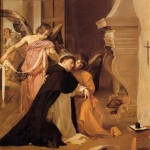
There are also some interesting reflexes in art buoyed along by that key Christian moment when Thomas inspects Christ’s wounds. Take, for example, the work above where Catherine of Siena takes Christ’s blood into her mouth: Catherine was one of those we politely call a 'mystic'.  Or a personal Beachcombian favourite: in this altar piece by Pacino Buonaguida the twelve apostles suck Christ’s blood through fistule or mass straws connected to Christ's umbilical. Sobering stuff.

Aaargh it’s already 5.00 am. Back to the grind. The pleasantest moment of the day has passed. Other examples of Christian cannibalism? Drbeachcombing AT yahoo DOT com Just three more days to go.

Page 1 of 212