Zombie Planes May 3, 2012
Posted by Beachcombing in : Actualite, Contemporary***Dedicated to Ricardo***
Beach is properly modest about his knowledge of aeronautics – apart from perhaps the prehistory of flight. But he is as moved as the next man to see the spitfire test in First of the Few or (1.37.40) or, for that matter, Corky sweating in Tales of the Golden Monkey as a zero races out of the sun. And, now, thanks to Ricardo, he has some new images from the annals of aviation archaeology to add to his mental collection.
First up are these beautiful shots of a Kittyhawk that was discovered in the Egyptian desert this March (2012). The plane came down in the WW2 apparently being flown to a repair depot (this still has not been confirmed). What the sands of Egypt did to the pilot is not yet known. But there can be no doubt that, after the initial tussle of landing, they treated the plane well. The colours and the cockpit are happily preserved. And looking at them brings back, with frightening immediacy, the desert war and long distance runs over the heads of Eighth Army against Rommel’s Afrika Corps.
Another 1942 wreck comes from the far north. In that year, a squadron of eight planes (six P-38s and two B-17 bombers) were forced to land in the desolation of east Greenland en route to Iceland. That all eight planes came down on the ice without a death is in itself a small miracle; that the crew members were taken out of Greenland without life-threatening frost-bite and gangrene is also pretty extraordinary. But what needn’t surprise anyone who knows anything about plane nuts is that the plane was retrieved in the 1990s from 250 feet of ice, piece by piece! (see the picture at the head of this post). It was then reconstructed, named Glacier Girl and then finally in 2007 it set off on the the mission it had been sent on 65 years before, attempting to fly to the UK.
Actually it had to end its flight in Newfoundland because of a coolant leak. And Beach can’t help thinking that GG just didn’t want to go anywhere near that bloody ice massif again.
If the desert and tundra are good for preserving planes a league of salt water must be pretty handy too. But Beach hasn’t found that many examples of historic underwater plane wrecks. (There is, of course, the horror in these cases that the pilot is almost certainly still sitting hunched over his instruments.) This final picture of a Japanese fighter (1942?) was taken off of Papua New Guinea. Any other well preserved planes, zombie or otherwise? drbeachcombing AT yahoo DOT com
***
4 May 2012: Southern Man writes in: Beach you forgot one of your earlier posts: the watery grave of Brian Lane. Jonathan Jarret from A Corner confesses: ‘you hit on a child’s interest of mine with this one [always a good sign!]. Deep water appears to be the thing; the Norwegian fjords have turned up a number of German WWII fighters in the last decade, and this YouTube video and its attached links are quite evocative. (The pilot seems to have got out, don’t worry.) The other place that I wish someone would mount some salvage in is Loch Ryan in south-western Scotland, where there was during the war a flying boat base. At the end of 1946, with the mighty `Flying Porcupine’, the Short Sunderland, leaving service as land-based aircraft finally matched its range and warload, the half-squadron of them that remained on the Loch were scuttled rather than waste time scrapping them, and they’re still down there. Divers report that they’re deep enough that there’s very little oxygen in the water and so their preservation is allegedly marvellous. There are some Sunderlands in museums but no flying ones and I for one would put up more than the usual airshow ticket price if one could be got into the air again. I can’t find any footage of those, but a similar thing occurred at Pembroke Dock and there there is dive video: The other place that has turned out to be surprisingly good for warbird preservation is Siberia: a fair few little Russian warbirds have made their way west ever since the locals realised that mad Westerners would pay for them in sufficiently good condition. I can’t find a good webpage on that process exactly, but if you will take my word for it that this is the story behind this machine. You will see that some of these `zombies’, like the Focke Wulf in first link, may well live twice. Googling for the Siberian stuff, by the way, also brought me this on abandoned fields which seems as if it might catch your attention.’ Next up is Wade: ‘You may have already seen this, but if not…in recent news, an American has researched and located a dozen to as many as twenty Spitfire Mark XIV planes with the more powerful Rolls Royce Griffon engines, still crated as they were originally shipped to Burma just at the end of WWII. Rather than having them returned to Great Britain, the decision was made to bury them at the Burmese airfield. Tacitus from Debris writes in: Look at this now on display at Chicago OHare and in swell shape. Remarkable details of preservation, and I like the story of the faux aircraft carriers on Lake Michigan. Then Invisible: ‘You’ll find many tales of zombie planes here including the 20 Spitfires found buried in Burma [see Wade above] and the remains of an RAF pilot discovered with his Spitfire 5 metres under a French farm. Here at the National Museum of the United States Air Force, there is a poignant display, with some parts of the plane, about Lady Be Good, a B-24D Liberator (wikipedia), lost in the Libyan desert during the Second World War. Tragically, the crew thought they were bailing out over the Mediterranean instead of the desert and walked in the wrong direction, not knowing that the plane, with a working radio and some supplies, could have been reached. When found, the plane was incredibly well-preserved. The remains of the crew were not recovered until the 1960s. Thanks to Wade, Tacitus, JJ, Invisible and Southern Man!!
14/May 2011. Judith W (aka Zenobia) writes in: This just appeared, with a wee bit more information and the pilot’s name….: You might well also be interested in some of the extraordinary pictures of the Kittyhawk P-40 crashlanded in the Egyptian desert (via CassandraVivien). They were taken by Jakub Perka, the Polish oil worker who discovered the plane. Sadly, that was a month ago and the plane is now being stripped of its parts by locals for scrap. While this is obviously a remarkable find, I remember horseriding in the desert many years ago, not quite as far as el-Alamien, and the horse kicking up all sorts of army kit, empty food tins, spent ammunition, an amazing collection all lying under a few centimetres of sand. I’m sure it’s all still there, untarnished by time.’ Thanks Judith!
Pyramids in Italy April 29, 2012
Posted by Beachcombing in : AncientThe pyramids of the Etruscan king Porsenna (fl c. 500 BC) are one of the great mysteries of antiquity. What does this passage ‘mean’? What did they really look like (try and visualise them)? Where were they? Hell, did they ever really exist?
[Porsenna] was buried below the city of Clusium in the place where he had built a square monument of dressed stones. Each side was three hundred feet in length and fifty in height, and beneath the base there was an inextricable labyrinth, into which, if any-body entered without a clue of thread, he could never discover his way out. Above this square building there stand five pyramids, one at each corner and one in the centre, seventy-five feet broad at the base and one hundred and fifty feet high. These pyramids so taper in shape that upon the top of all of them together there is supported a brazen globe, and upon that again a petasus from which bells are suspended by chains. These make a tinkling sound when blown about by the wind, as was done in bygone times at Dodona. Upon this globe there are four more pyramids, each a hundred feet in height, and above them is a platform on which are five more pyramids.
Sepultus sub urbe Clusio, in quo loco monimentum reliquit lapide quadrato quadratum, singula latera pedum tricenum, alta quinquagenum. in qua basi quadrata intus labyrinthum inextricabile, quo si quis introierit sine glomere lini, exitum invenire nequeat. Supra id quadratum pyramides stant quinque, quattuor in angulis et in medio una, imae latae pedum quinum septuagenum, altae centenum quinquagenum, ita fastigatae, ut in summo orbis aeneus et petasus unus omnibus sit inpositus, ex quo pendeant exapta catenis tintinabula, quae vento agitata longe sonitus referant, ut Dodonae olim factum.Supra quem orbem quattuor pyramides insuper singulae stant altae pedum centenum. supra quas uno solo quinque pyramides.
This text appears in Pliny (obit 79: NH 36) who claims that he is quoting here Marcus Varro (obit 27 BC) perhaps his Antiquitates rerum humanarum et divinarum, a lost work. Where Varro got it from is anyone’s guess. Talk of ‘Etruscan sources’ among Classicists seems optimistic, but this is the first century B.C.: so it is perhaps just possible.
Chiusi (Clusium of the ancients) has been excavated and there is absolutely no sign of what must have been – again granting that it once existed – an architectural monstrosity. The closest is what is sometimes called Porsenna’s Labyrinth, a series of tunnels under the city whose purpose is still not understood: several other Etruscan cities including Perugia have similar subterranean passages.
Twentieth-century digs at Chiusi have made Varro into a liar or more probably a naïf. But budding Indiana Jones are unwilling to give up such fabulous material and have decided that perhaps there was more than one Clusium. There has even been a mini Atlantis style hunt with archaeologists and desperados identifying other possible locations up and down the peninsula. A present favourite is the hill of or around Florence. Any other locations: drbeachcombing AT yahoo DOT com
Oh and Beach cannot leave this without quoting von Humboldt on Porsenna
‘The story formerly current in Germany, and reported on the testimony of Father Angelo Cortenovis, that the tomb described by Varro of the hero of Clusium, Lars Porsena, ornamented with a bronze bat and bronze pendant chains, was an apparatus for collecting atmospherical electricity, or for conducting lightning (as were also, according to Miehaelis, the metal points on Solomon’s temple), was related at a time when men were inclined to attribute to the ancients the remains of a supernaturally-revealed primitive knowledge of physics, which was; however, soon again obscured.’
From North Carolina to Chad: Families and Food March 10, 2012
Posted by Beachcombing in : ActualiteAn ‘ill’ day with interesting complications in the throat area so Beach is going to go off topic with this extraordinary book he recently stumbled upon: Hungry Planet: What the World Eats (Peter Menzel 2005). This exercise in photo-journalism has a fair bit of manipulation behind it: but the idea itself is an extraordinarily simple and effective one. Turn up in about 30 of the 200 odd countries in the world and then photograph a family with the food that they expect to eat in one week.
Of course – and this is where the manipulation comes in – there is going to be quite a lot of picking and choosing. As you cannot visit every single country how do you decide which countries to choose? And as you are going to have to choose a region within a country how do you choose which part of the country, never mind what family in that region?
In the United States you could pick, as the editor decided to here, a family from North Carolina who seem to live almost without fresh food: there is a solitary bunch of grapes. Or you could choose a wealthy white family from southern California with their vegan chef as the editor did not. Naturally, a junk-food family that can buy lots of cheap but bad food comes closer to the stereotype of American families (Michael Pollin etc) and is perhaps closer to a genuine median?
But if choices are not always scientific the effect is nevertheless striking. This book is an efficient twenty-first century equivalent of parents telling their children ‘Eat that! There are children starving in Africa!’ Of which more below… Going down the scale we come next to a Polish family with their predictable predominance of root and ground vegetables and reduced processed food.
Then Egypt where processed foods are becoming increasingly a luxury item: indeed, from friends in Egypt Beachcombing knows that the ‘sophisticated’ diet is a modern processed one, that naturally cannot be afforded by most of the population.
From here we come to a very rural family in Ecuador: this, Beachcombing should note, is not how most people in Ecuador eat, nor is it how most people in Ecuador dress!
Then finally and most tragically this image of a refugee family in Chad, a country that has spent most of the last generation as the armpit of the world: the result of a corrupt political class, unstable neighbours and lots of guns.
The American family spends about 250 dollars a week. The fatherless bairns in this picture are, with their mother, all fed on less than 1 dollar a week. They can’t get much more than a thousand calories a day from this mush of beans and grains: there are six of them, five of them in a phase of acute growth.
Beachcombing is always looking for striking and unusual books: drbeachcombing AT yahoo DOT com
Ancient Laughter, Modern Bewilderment January 28, 2012
Posted by Beachcombing in : Ancient***Dedicated to Andy, the mad Monk***
Humour, it is sometimes said, is the most socially dependent aspect of literature. The gags that set William Shakespeare’s audience laughing now, very often, leave us shivering cold. Sometimes the generational shift is there under our eyes: the jokes in 1930s movies, Will Hay for example, appear fabulous to Beach but leave his students giving each other quick and significant glances in the direction of their teacher.
Shakespeare’s laughs and Will Hay’s antics are, at least ‘modern’. But some trips into ancient humour really freeze up the reader. Even one of Beachcombing’s favourite books – the Golden Ass – written as a comedy/ Roman road movie, is rarely as amusing as it was intended to be: the reader today remembers the piquant sex and salvation in Isis (‘she is our lady’) not Roman toilet jokes.
In fact, anecdotes – along with satire? Juvenal is still funny – survive particularly well through the centuries, so much so that often we are still telling the same tales centuries later with cars replacing carts and ‘queens’ overlapping with Roman catamites. But if you have laughs based on puns or social institutions then you might as well give it up.
Nor were the Greeks any better. Beach has already visited in this place the hilarity caused when Chrysippus (c.206 BC) the oh-so-serious stoic philosopher laughed himself to death at a drunk donkey. It probably never happened but couldn’t they have made up something a little more juicy? Take some examples now, instead, from the premier Greek joke collection – yes there is one – Philogelos. Beach was initially attracted to the Greek equivalent of the Irish or the Jewish mother joke: the Greek intellectual. Always good to put the boot into philosophers. But these ones hardly fanned a smile.
An intellectual checked in on the parents of a dead classmate. The father was wailing: ‘O son, you have left me a cripple!’ The mother was crying: ‘O son, you have taken the light from my eyes!’ Later, the intellectual suggested to his friends: ‘If he were guilty of all that, he should have been cremated while still alive.’
An intellectual came to check in on a friend who was seriously ill. When the man’s wife said that he had ‘departed’, the intellectual replied: ‘When he arrives back, will you tell him that I stopped by?’
An intellectual had been at a wedding-reception. As he was leaving, he said: ‘I pray that you two keep getting married so well.’
The same intellectual said that the tomb of Scribonia was handsome and lavish, but that it had been built on an unhealthy site. [Beach’s favourite: he spontaneously grinned here]
Upon the death of his wife, an intellectual was out shopping for a coffin and got into a big fight over the price. When the salesman swore that he couldn’t sell it for less than fifty thousand, the intellectual said: ‘Since you’re under an oath, here’s the fifty thousand. But throw in for free a small casket, in case I need it for my son’. [wth!!!!]
And finally a joke that is still told today.
A friend met an intellectual, and said: ‘Congratulations! You’ve got a baby boy!’ The intellectual replied: ‘Thanks to buddies like you!’
In any case, all this begs the question: how many Greek intellectuals does it take to change a lightbulb? Best answer to be immortalised on this site – drbeachcombing AT yahoo DOT com
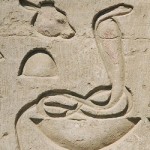
Beachcombing knows Greek and Latin literature relatively well, but he has always felt a little lost in the Egyptian world. He did though stumble on this interesting site that lays Egyptian humour ‘bare’ with such epics as:
After a considerable while Hathor, Lady of the Southern Sycamore, came and stood before her father, the Universal Lord, and she exposed her vagina before his very eyes. Thereupon the great god laughed at her.
Yes, quite… Look out for the incest jokes too.
But what really set him off on this whole rollicking trip through the ancient world was a link sent in by Andy, the Mad Monk on some of the oldest jokes/riddles in history: this time from Mesopotamia. Here we see a series of ‘classics’ that are so obscure, presumably because of punning on language (which is almost impossible to translate) and our relative lack of knowledge of Mesopotamian society.
‘In your mouth and your teeth (or urine). Constantly stared at you. The measuring vessel of your lord. What is it?’
Answer: Beer.
‘He gouged out the eye. It is not the fate of a dead man. He cut the throat: A dead man – who is it?’
Answer: A governor… a governor is portrayed as executioner.
‘The deflowered girl did not become pregnant. The undeflowered girl became pregnant. What is it?’
Answer: Auxiliary forces.
Things seem to get progressively worse the further back we go. Neanderthal jokes – mammoth turds and body hair? – would perhaps have been physically painful. We should probably thank the gods that they couldn’t write.
***
3 Feb 2012: Ruththeunstoppablycurious writes in with this interesting reflection. ‘I‘ve often wondered at humor, both modern and historical. Slapstick and bathroom humor seem to work most widely and across time, even today within the Anglo world, and I would surmise among other close linguistic and cultural groups. I find comedies that I revisit from the 60′s to be flat and slow, with some exceptions. I remember my dad telling me a joke that he found hysterical — I could see what was supposed to be funny, but it didn’t tickle. These days the humor is often obscure to me — we don’t have television, so I have my daughter explain it — and often then it falls flat. I wonder if my sense of humor is a bit frayed around the edges or just out of date; maybe not; my smart-mouth still gets me in trouble sometimes. Anyway, I have often wondered how often historians have not realized that the primary writings they were studying were actually humor. Some satire is in-your-face, even across centuries, but others might not be so obvious. What might future historians think of Jonathan Swift’s A Modest Proposal, absent sufficient context? Today there are people who don’t get that The Onion is satire. http://www.theonion.com/ And yet, humor still says something about the society from which it springs because it IS so contextual. Parsing that out is VERY tricky, even today. Note that gentle humor becomes more popular at times, to be overtaken by harsh, mean humor at other times. (Just a general observation on my part over several decades!) Perhaps it has to do with what’s hurting, or perceived as hurting at the time. Robert Heinlein, the science fiction author, went to some lengths in Stranger in a Strange Land to illustrate the purpose of humor as an alleviation of pain.’ Then we have the lightbulb jokes. There were about ten and here are the four best of the crop. Beach would vote for Ray, but they are all of Platonic calibre. Ray: how many Greek intellectuals does it take to change a lightbulb? Twelve. One to change the bulb, ten to sit chained looking at the shadows on the wall, and one to lecture them on how the world isn’t like that.’ Then PJ: How many Greek intellectuals does it take to change a lightbulb? Zero, for verily that is the job of a slave, not a man of learning. Besides, can we not learn as much from an absence of illumination as we do from a brightly glowing but artificial luminescence?’ Or Adrian Sterling from the Anomalist: How many Greek intellectuals does it take to change a lightbulb? One to change the lightbulb and the other to diddle the catamite. Then Southern Man: One to smash it, ten to argue over whose fault it was and one to hand out the hemlock. Thanks Ruth, Ray, Adrian S and PJ!
Vintages Past January 17, 2012
Posted by Beachcombing in : Ancient, Modern***Dedicated to Larry***
There is a beautiful scene in the junky teen fantasy Highlander (1986) where Connor (the decapitator) opens a bottle of eighteenth-century brandy in late twentieth century New York.
‘1783’ states our hero ‘was a very good year. Mozart wrote his Great Mass. The Montgolfier brothers went up in the first hot-air balloon. And England recognized the independence of the United States.’
Personally Beachcombing gets excited when he drinks a 2009 bottle to think that he is taking into his body the juices of three seasons past. But imagine drinking a vintage from 1950, or 1850 or, yes, 1783! Those grapes were picked by men and women who are now dust beneath our feet…
Such aren’t the moments when history come alive. They are the moments when history lays its long clammy hands on our shoulders and says ‘you’re next’!
Of course, it does not fall to everyone to be able to sample two or three hundred year old bottles of wine and experience this rare transcendence. But some have been so lucky. Trimalchio’s feast has a hundred year old vintage – though part of the joke seems to be that it is not particularly good – and Beach has previously in this place celebrated a 120 year old bottle of Polish wine that was opened in 1918 to celebrate Poland’s renewed nationhood.
But there have been older drinking experiences (outside of Hollywood films) particularly when wine has been isolated in the bulks of wrecked ships in cold seas. For example in June 2011 some 150 year old wine was found on a civil war era ship that had gone down in 1864 near Bermuda. In 2010 some champagne was discovered at the bottom of the Baltic and allegedly tasted pretty good.
Then if you really want blood poisoning last August some 2000 year old wine was found in a ship off the Albanian coast. Actually Beach jests: the stoppers had rotted away and sea water had got in: there was no Roman wine to talk of… just an interesting coloured salt-water.
If you can’t afford the old bottles you can at least buy recreations. Beach has been wanting for years to find some way around custom restrictions and import a bottle of Tutankhamen Ale, recreated using the molecular traces of beer found in an ancient Egyptian temple kitchen. And ditto for Stone Age beer, disgusting by all accounts.
But what really got Beach thinking about this was an email from Larry this morning about an eccentric Englishman – hardly a rare occurrence we know – who has decided to make the world’s oldest wine from scratch.
An Englishman working in Chile has launched what is believed to be the first wine aged with a meteorite formed during the birth of the solar system. Norwich-born Ian Hutcheon has released a Cabernet Sauvignon called Meteorito [!], aged with a 4.5 billion-year-old meteorite from the Asteroid Belt between Mars and Jupiter.
Any other ancient vintages: preferably drinkable ones? drbeachcombing AT yahoo DOT com
***
18/01/2012: WKJ writes in ‘It’s fictional and not drinkable, but your post on vintage wine sent me back to reading “a vintage from Atlantis” by Clark Ashton Smith. (which is online, Eldritch Dark website I think). Thanks WKJ!
21/01/12: Next up is Andy the Mad Monk ‘This is a quote from the book The Blandys of Madeira: 1811 – 2011 by Marcus Binney. Churchill visited Madeira in 1950 and was royally entertained: Graham Blandy describes how towards the end of dinner Churchill ‘asked me what was the best Madeira on the list, to which I replied I believed that it was the 1792 Blandy Solera’. When it arrived at the table Churchill said, ‘I must do honour to this,’ and stood up, put his napkin over his elbow and poured the wine for each of his guests. Then he sat down and talked of the year 1792, three years after the French Revolution, when Louis XVI and Marie Antoinette were still alive. The bottle came from a pipe (105 gallons) taken on board HMS Northumberland as it sailed south carrying Napoleon to exile in St. Helena. The Emperor had not drunk the wine and, as it had never been paid for, the pipe returned to Madeira. And this might tickle your fancy on ale from Edward VIII’s coronation. And on Sumerian beer. Adrian Sterling, meanwhile, from the Anomalist writes in with some ancient recipes or as he puts it ‘Who needs to import when you can make it at home and thumb your nose at customs? You can make a batch then have your friends over to watch Arsenal kick some Manchester butt while loudly musing ‘I can’t believe they DRANK this stuff.’ Inimitable! Thanks Adrian and Andy!
3/Feb/2012: And here is Andy at it again with a past beer recipe. Thanks Andy!
Israel Saved by the Soviets in 1973? January 13, 2012
Posted by Beachcombing in : ContemporaryIn 1948, 1967 and 1973 Israel fought wars that could conceivably have seen the destruction not only of the Israeli state but also of the Jewish community in Palestine. None of these wars came closer to Arab success than the last, the Yom Kippur war. Egypt and Syria (with Iraqi backing) managed to achieve almost complete surprise and broke through the Israeli lines on Suez and almost broke the Israeli lines in the north on the Golan Heights.
What is remarkable looking back is what a close run thing Yom Kippur war was not only in military but also in intelligence terms. The Egyptians and Syrians had taken for granted that news of their attack would get through to Israel’s extraordinary intelligence agencies: either Mossad or AMAN. In fact, they believed that Israel’s cabinet would know of the attack at least five days before it began.
This seems to have been a reasonable assumption. The higher echelons of the Syrian and Egyptian government knew of the decision in September: a month before October 6th. The Commanders of the Egyptian army on Suez knew from 1st October, Egyptian divisional commanders were told on the 3rd and battalion commanders on the 5th. The Soviet Union was warned on October 3rd and there are reasons for thinking that Soviet advisors on the ground must have known (or been able to guess) at least a day or two before that. (Beachcombing remembers earlier discussions of how many people can keep a secret…)
And yet it was only at 6.00 AM on the day of Yom Kippur itself that the Israelis finally decided that war was inevitable and the cabinet was hurriedly convened. Even then the Israelis guessed wrongly in assuming that the attack would come twelve hours later at 6.00 p.m. They had time to mobilise (kind of): but they lost the chance to make pre-emptive strikes on Egyptian and Syrian airfields. Indeed, the Israeli cabinet were still arguing the pros and cons of a pre-emptive air attack at 2.00 pm when their enemies started firing.
Part of the credit for this must go to the Syrians and Egyptians who worked several bluffs. But perhaps more important were the various miscalculations of Israeli intelligence, more dramatic in their way than America’s corresponding failures prior to Pearl Harbour. From late September clues had dripped in but the Israelis had simply failed to put two and two together: the forward deployment of Arab planes, the taking of SAMs from Damascus to the Golan Heights, the issuing of live ammunition to the Egyptian army…
However, it was not until 5 October that Israel’s high command began to get antsy. News that Soviet advisors and their families were being flown out of Syria and Egypt came as a nasty surprise and one that could not be explained away as easily as the use of proper bullets on Sinai. Simultaneously, photographic evidence from Suez – after technical failures and bad weather – showed a massive build up of Egyptian troops.
At this point something strange happened. The Israeli security head held back from pronouncing war until he had confirmation from an important source within Egypt (Ashraf Marwan?) that came (confirming war) on the early morning of Yom Kippur itself. The details given in that report demonstrate that the Israelis had someone high up in Egypt’s government or with high up contacts there, perhaps someone who could only be contacted in an emergency; otherwise the prior silence of this source is strange.
What is extraordinary looking back is how lucky the Israelis were. If we accept that AMAN approached their special Egyptian source, then the news that really seems to have caused that approach was the flying out of the Soviet advisors from Syria and Egypt in the days previous. The Soviet Union clearly wanted to show its distance from an independent act of war on the part of two of its satellites in the Middle East.
But what if the Soviet Union had not given out this important signal to every CIA and Mossad agent in Cairo and Damascus? Israel would have known nothing till it was attacked at 2.00 pm. True the borders had been reinforced and leave had been cancelled – the Israelis recognised that the temperature was rising – but mobilisation would have started several hours too late. As it was the Israelis only just held the attack on the Golan Heights and the Egyptians broke the Israeli lines on Suez and were still on the Israeli side of the canal when the ceasefire was called. Curiously then it looks as if the Soviet Union reduced a potential Israeli catastrophe to a military and intelligence disaster.
Beachcombing is always looking for hinge moments; moments when history could have turned out differently. drbeachcombing AT yahoo DOT com
Plotinus Meets a God January 8, 2012
Posted by Beachcombing in : AncientA WIBT (Wish I’d been there) moment from later antiquity, brought to mind, in part by stories at the end of 2011 about Socrate’s daemon. The subject is Plotinus, a follower of Plato and the thinker who offered the ancient Mediterranean a ‘sensible’ alternative to Christianity: neo-platonism.
Plotinus, as all Platonists, had mixed feelings about magic. On the one hand, Plotinus saw magic as a distraction from the goal of unity or identification with the ‘One’; a particularly dear aphorism of Plotinus is that ‘I will not go to the gods, but they must come to me’.
But Plotinus also seems to have had a ‘gift’ for magic. He was either extraordinarily percipient (Beachcombing’s explanation) or (for those psychically minded) a clairvoyant for he managed such tricks as identifying a household thief and predicting the future of a child; he also was alleged to be able to turn black magic on those that attacked him with spells.
But most interestingly Plotinus once got involved in what Beachcombing can only describe as a séance. It is a particularly haunting scene because it shows foolish mortals getting in way over their heads.
An Egyptian priest who came to Rome and wanted to give a display of his wisdom asked Plotinus to come and see a visible manifestation of his own companion spirit [i.e. his daemon]. Plotinus readily agreed, and the evocation took place in the temple of Isis; the Egyptian said it was the only pure spot he could find in Rome. When the spirit was summoned to appear a god came and not a being of the spirit order, and the Egyptian said ‘Blessed are you who have a god for a spirit and not a companion of the subordinate order!’ It was not, however, possible to ask any questions of the god or even to see him there any longer, for the friend who witnessed the manifestation strangled the chickens he was holding as a protection, either because of jealousy or because he was afraid.
When Beachcombing thinks of conjuring up gods he imagines Edwardian gentlemen playing at the occult in underground basements in east-end pubs: the poor sops! But here is a ‘real’ encounter from the heart of the pagan Mediterranean in the third century A.D. The Egyptian priest summons Plotinus’ daemon and to his amazement finds that he is not dealing with a household ‘brownie’. Unfortunately before the god can properly reveal himself ‘the friend who witnessed the manifestation’ strangled the chickens he was holding ‘as a protection’. That begs a number of questions…
Beachcombing remembers that the Temple of Isis in Rome was outside the pomerium in the campus Martius. Presumably an almighty gust of wind blew through the doors unhinging for a second the tense players in the ritual. Perhaps even Plotinus blanched momentarily! Oh to have been there…
Any other ancient rituals to conjure up spirits? Drbeachcombing AT yahoo DOT com
Cocaine, Nicotine and Ancient Egypt October 24, 2011
Posted by Beachcombing in : Ancient
As regular readers of this column will attest Beachcombing is your typical small-minded historian. He doesn’t much like novelty and if there is a controversy he will float effortlessly into the orthodox camp. But with the argument over cocaine use in the ancient world he risks, however briefly, going the other way: if only to annoy archaeologists.
For those who have never come across it here is ‘the story so far’.
In 1992 a respected German scientific periodical, Naturwissenschaften, published a note by a series of accredited academics claiming that they had discovered traces of cocaine and tobacco in hair samples from ancient Egyptian mummies.
Drug use among the ancients, as among the moderns, is no cause for surprise. The Neolithic Revolution, the single most important human event, the event, indeed, that begins our millennial-long escape from the seasons, was arguably buoyed along by the need to create intoxicants.
Hashish and opium have been found in antique tombs.
There were certainly drugs around then ‘back in the day’. But the worrying thing about this particular discovery was that tobacco and cocaine are made from New World plants and yet here they allegedly were in Ancient Egyptian bodies a little short of three thousand years before Columbus!
If you are going to introduce a piece of evidence that breaks a historic orthodoxy like the early modern discovery of the Americas then there are three ways you can do this.
First, you can play at Darwin and become a pioneer: you can wade in with a long five hundred page book, backing up your assertion with years of research and oodles of footnotes. Let’s hope that you have a Huxley or two in the wings.
Second, the coward’s way out, you can publish your findings, making fun of them and explaining that you are flummoxed and that you probably need to clean your lab.
Or, third, the pragmatist, you can bring them out in a low-key fashion, say in a note, then run for cover.
The scholars involved took the most sensible way forward, the pragmatic one. They ran the flag a little way up the flag mast just to see what would happen. And, of course, the first sound they heard was machine gun fire ripping their flag to shreds.
Scholars reacted with what might diplomatically be called ‘bewilderment’ and various solutions were offered as a way out of this paradigm-breaking discovery. The lab results were simply wrong; the lab results were right but the results had come about from post-mortem treatment of some kind; the lab results were right but the corpses had been ‘infected’ after discovery in the modern period; the lab results were right but the mummies were not genuine ancient mummies, rather they were early modern fakes.
If Beachcombing had been at the receiving end of this he would have already been beating a hasty retreat. But to her credit the toxicologist whose name was at the top of the 1992 paper, Svetlana Balabanova did no such thing, though she reports receiving insulting letters.
Like several scientists sucked into this dispute she had been surprised by the results and had exhaustively repeated her tests before going public. Her attitude seemed to be: I’m no historian, it is not down to me to sort this out, but I stand by the quality of my lab work.
Historians and archaeologists, once the initial hubbub was over, just shook their heads and moved on. Few were going to risk professional ridicule by even interacting with this material.
In fact, it fell to a documentary maker to put together The Curse of the Cocaine Mummies setting out the implications of the discovery. The programme was actually far better than the title suggests and transcripts are to be found online. In short, diffusionists, Egyptologists and archaeologists were all brought together for a happy old mish mash.
Not the least interesting part of the show was a respected Egyptologist Dr Rosalie David, at Manchester University, going back over some of the material from the original tests. RD, a sceptic, was not given access to the mummies from Germany used by Balabanova – though she decided, after several hours in the archives, that most of these were genuine ancient mummies as opposed to modern fakes. However, she ran too a series of tests on three ancient bodies from a museum in Manchester and to her shock these had nicotine in their hair and tissue samples.
In subsequent years other testers found similar results. The greatest interest admittedly came from Svetlana Balabanova’s lab: SB by now seemed to be suffering from an understandable obsession over the matter.
[SB] tested tissue from 134 naturally preserved bodies from an excavated cemetery in Sudan, once part of the Egyptian empire. Although from a later period, the bodies were still many centuries before Columbus discovered the Americas. About a third of them tested positive for nicotine and cocaine. Balabanova was mystified by the presence of cocaine in Africa but thought she have a way of explaining the nicotine. As well as Egypt and Sudan, she tested bodies from China, Germany and Austria, spanning a period from 3700BC to 1100AD. A percentage of bodies from the other regions also contained nicotine. Egypt 89%, Sudan 90%, China 62.5%, Germany 34%, Austria 100%. [documentary]
Beachcombing recently wrote of the pain of accepting new knowledge in any discipline. There is always a conflict: the need to be open to new ideas, and yet, at the same time, the need to have filters.
The case of suspected Egyptian cocaine use is the finest example he knows from history/archaeology of professionals getting this balance wrong. After all the people involved here were not fringe crackpots, but experts who were staking their reputation on the accuracy of results that had, at first, surprised them.
Personally, Beach would bet, if not his house, then a significant part of his mortgage that cocaine and tobacco did not make its way across either the Pacific or the Atlantic in prehistory. But the initial contempt – remember the letters? – and more strikingly the deadening silence that followed on from these finds – with plenty of guffawing into sleeves – was hardly, shall we say, ‘polite’.
Surely any self-confident discipline should be able to accept anomalous material on board, take it under cognizance and then have a generation either to research it out of existence or to integrate it into ‘core knowledge’?
When archaeologists and historians get all hot and bothered about Erik von Daniken and his ilk, they forget that these kinds of displays invite talk of establishment cover-ups.
These kinds of displays also get in the way of sensible solutions.
A small group of scholars have had the guts to wrestle with this material directly. Larry Cartmell and Cheryl Weems, for example, in 2001 published a brief note (Chungara: Revista de Antropología Chilena) looking at eighteen ancient individuals from the Oasis of Dakhleh in Egypt all of whom were negative in hair samples for cocaine, but fourteen of whom had positive readings for nicotine. The authors play up an idea from the margins of the cocaine/tobacco debate, in as much as a debate had taken place. Perhaps there was an African plant that could have produced these nicotine readings? They note that the low levels of nicotine present in the hair samples suggest dietary use rather than smoking.
But where, in the world, did the cocaine (if that is what it is) come from? drbeachcombing AT yahoo DOT com
***
24 Oct 2011: Open Sesame writes: ‘Just one initial reaction. I personally am ready to believe just about anything if the evidence takes me there. But where I start to have problems is with the quantity of tobacco and cocaine that would be needed to create these readings across Euro-Asia-Africa. It is the equivalent of every burial in antique Europe having strips of silk from China. Items from far away were extremely rare and valuable. We would expect occasional readings not the kind of numbers you’ve offered here. Perhaps we really are looking for a local source of nicotine and ‘cocaine’ then.’ SY also writes in ‘I quote the abstract of the following piece by Balabanova from 2001 that suggests that she is rapidly going in the ‘native crop solution’: at least for nicotine. ‘Nicotine use in early Mediaeval Kirchheim/Teck, Germany’, Journal of Comparative Human Biology 52 (2001) 72-76, Human bone samples of 123 Alemans of the 5th to 7th c AD were investigated for nicotine. In 23 individuals nicotine was found at levels between 31 and 150 ng/g, and in 49 others nicotine was found in traces. The results indicate that in Germany plants of the genus Nicotiana should have been present, known and used, well before Columbus. The purposes behind this use might have been domestic/medical or ritual, or possibly even as a luxury as occurs today.’ Thanks OS and SY!
8 Nov 2011: David Counsell writes in with what looks like a vital corrective. ‘I am a medical doctor who has worked with the Manchester Mummy Project since the Mid 1990s. I looked at this as part of my PhD on Intoxicant use in Ancient Egypt and my results have been published in 2 sources in addition to my thesis - check out Chapter 13 in Egyptiam Mummies and Modern Science, Editor Rosalie David; which gives a full explanation. In a nutshell the amount of these drugs found in the mummies was overestimated as rather than being presented in the common unit, nanogrames per mg of sample material (ng/mg) they were presented as nanogrames per gram of sample (ng/g) giving a figure 1000 fold exaggerated. When you adjust the unit you find that the level of nicotine found is not as high as in smokers and is consistent with a dietary source of nicotine eg Celery which was known to the Ancient Egyptians. Similarly the cocaine level once corrected is so low as to be considered negative by most labs in the mid 1990s and is most likely a trace contaminant form the lab where the work was done. Overall the explanation is quite dull which perhaps explains why it hasn’t had the same publicity as the original ‘discovery’.’ Thanks David!
From the Mahogany Ship to Mons Badonicus: An Archaeological Fantasia October 17, 2011
Posted by Beachcombing in : Ancient, Contemporary, Medieval, Modern
Inspired by thoughts of Nag Hammadi, Howard Carter and Leslie Alcock at Cadbury Beachcombing spent an evening wondering about archaeological fantasias, discoveries that he hopes will be made before he himself becomes an archaeological subject and is put into the ground.
Boudica’s grave. Boudica was, of course, the queen of the Iceni who gave Nero and Roman settlers in Britain nightmares. After being defeated in the field by the Romans in 61 AD, we are told by Tacitus that she poisoned herself and by Cassius Dio (62, 12) that she fell sick and died, the Britons giving her a ‘costly burial’. Imagine the treasures that were thrown into the secret place, the burning torches, the sacrificial victims with hazel wrapped around their necks and mistletoe berries smeared on their lips. Perhaps some day a bulldozer working on a bypass in Norfolk will send a stream of gold from out of the roots of a dying oak. (Note that there is a very curious legend that Boudica was buried under King’s Cross Station. Beachcombing has been unable to trace the origins of this. It seems about the least likely place any self respecting rebel would have left their warrior queen, especially given what she had done to Londinium.)
The Mahogany Ship. Beach doubts very much that the early Portuguese ever made it to Australia. He has always been intrigued though by legends of a possibly Portuguese mahogany ship, which stood off the coast in the province of Victoria. It is the holy grail of those who search for proof of early European contacts with the deep Pacific, but regrettably it was never seen after the mid nineteenth-century, when of course interest in such things was starting to pick up. That there was a large shipwreck is beyond question: there were many reliable witnesses. Beach – and he is not alone – would love to see this hulk dug out of the dunes or lifted from its watery grave so that its origins can finally and definitively be established. For what it is worth, we are betting on an eighteenth-century whaler…
The Fortifications of Badon. Sometimes in the fifth or more probably the sixth century the British-Celts defeated the Saxons at the Siege of Mount Badon, a battle often associated, though probably wrongly, with ‘King Arthur’. Historians have argued over which of a half million British hill-tops was Mount Badon since the times of Milton. There have even been rather bizarre attempts to sketch out British cavalry strategy and put units on maps, all this on the basis of a dozen words in Latin in Gildas about the ‘last victory of the fatherland’. Beach isn’t asking for much here. He doesn’t want precious stones or King Arthur’s crown. He just wants some war graves, a couple of late Roman belt buckles and a Roman road marker with the words Mons Badonicus scratched upon it for the literate passerby.
The Vanished Legion. The three legions lost in the Varus Revolt have now been found. The Ninth Legion never vanished at all, pace the great Rosemary Sutcliff. But there is still some mystery in the world. Herodotus describes how Cambyses, the son of Cyrus the Great, sent 50,000 soldiers in 525 BC to do some wrecking at Thebes. After more than a week in the desert they simply disappeared, presumably in the mother of all sandstorms. There have been claims that the army has been found, but Beachcombing doesn’t believe a word of it. Again, let him be clear. He doesn’t want 50, 000 men lain out end to end, but he is asking for some striking friezes carved out by the archaeologist’s trowel.
The Honour Rings Cave. A frisson of evil to finish off. As Hitler took down the Reich stone by stone he took care to hide his own ill-gotten gains from posterity and not a few Nazi treasures too. It would certainly be more noble on Beachcombing’s part to ask for the recovery of the Amber Room (which was almost certainly burnt) or some of the world’s masterpieces that disappeared at that date, for example, Van Gogh’s Painter on the Road (also probably burnt). However, he has to confess to being more fascinated by the search for the Honour Rings. The Honour Rings, made of silver, were a crucial piece of SS paraphernalia. When as SS soldier fell or died they were removed from hacked off hands and shrapnelled bodies and then taken back to Wewelsburg, the Nazi Grail Castle. Those that returned though, and the number 9000 is often given, never appeared at the end of the war. Legend has it that a member of the SS high command was entrusted with putting these objects in a cave and blowing up the entrance as the Allies were getting close. One day someone is going to stumble on this particular nest of vipers… and Beachcombing wouldn’t mind being there when they do. Imagine the glint of torchlight off several thousand silver skulls.
Any other archaeological fantasias gratefully received: drbeachcombing AT yahoo DOT com
PS And then there’s the one that we couldn’t track down. This Beach read about in his tender years and he just spent the last hour tracking through little Miss B’s bookshelves, where most of his infancy books are kept. An African chieftain brings away various sub-chieftains to hide a great treasure from a colonial power (presumably the British). He kills all but one of the chieftains to keep the treasure secret and by the time a treasure hunter has arrived at the house of the last surviving witness, half a century later, that man has lost his mind.
***
24 October 2011: Irish Archaeologist wants an Irish codex or something recognisably Irish from either Iceland or Greenland ‘but don’t hold your breath’. Jimmy wants to find the brass plate that Drake left in his Californian New England, possibly in the bay of San Franciso and no, he writes, the present brass plate is NOT genuine. Invisible writes: Your post on archaeological fantasias made me want to dig out Richard Halliburton’s Book of Marvels, with its tales of treasure lost and found. Although it can’t be classed as a discovery, since the site is known, I would like to live to see the actual tomb mound of the First Emperor excavated at last. According to Ssu-ma Chi’en/ Sima Qian, the tomb included a clay model of the “world” including lakes and flowing rivers of mercury. Above, the ceiling was moulded with a map of the heavens with stars represented by jewels and oil lamps fed by a reservoir of oil so they would burn eternally. Apparently archaeologists have found high levels of mercury in the soil around the tomb so I am hoping the maps are real. The historian also says that the tomb was guarded from robbers by booby traps including poisoned arrows from automatic crossbows. If the emperor’s body was surrounded by layers of coffins or sealed with clay (supposedly ground-penetrating radar shows a large, sealed section within the mound), perhaps he would be as well-preserved as the Marquise of Tai and we could look upon the actual face of the First Emperor, not just a skeleton. Failing that, I would settle for the lost treasure of the Inca, including a garden of gold and silver flowers, hidden from the Spaniards in some remote cave in the Andes. Or the grave of Sir John Franklin. Or the Chinese junk rumoured to have been found in the sands of Sacramento , California . I don’t really care if the Chinese discovered America or not, but it would be delightful to have such an unlikely story be true. Open Sesame does not believe in trans-Atlantic crossings in ancient times but he would like to get to the bottom of the mystery of the Bay of Jars in Brazil, where allegedly a Roman ship ran ashore in ancient times. Thanks to Irish Archaeologist, Jimmy, Invisible and Open Sesame.
27 Oct 2011: The great Ancient Digger writes in with one of her own. ‘One of the most elusive of mysteries is the location of Alexander the Great’s tomb. Alexander was a champion of Near Eastern and Middle Eastern culture, art, and literature, so if his body was ever discovered in a geographical area associated with the cultures he touched, would it not make sense that a temple or sculpture be erected in his honor? In 330, when Alexander marched into Pakistan and into the northwestern area of India where the Battle of Hydaspes River was brutally fought and won, he turned back to Babylon. We know what happened next…or do we? Did he ever turn back? Or did he stay right where he was? The history books tell us that he returned to Babylon and died shortly thereafter. Where is the tomb? A great conquest for a great man should render a monument of great proportions. It doesn’t exist.’ Beachcombing is tempted to add YET! Thanks Ancient!!
Hearts, Genies and Gnosticism at Nag Hammadi October 14, 2011
Posted by Beachcombing in : Ancient, ContemporaryHoward Carter whispering ‘wonderful things’, Leslie Alcock finding Dark Age timber at Cadbury (‘that was Camelot’), Bedouin shepherds investigating a complex of caves at the Dead Sea… All wonderful, of course. But for Beachcombing none of these quite match the thrill of the discovery at Nag Hammadi in 1945.
In that year, possibly in December, a group of Egyptian farmers led by one Mohammed Ali Samman were out digging for fertiliser near the Egyptian town of Nag Hammadi when they hit the mother-lode: a mummy and a one metre long red earthenware jar. The farmers, after some argument, decided to break open the jar, for one had pointed out that there might be gold inside. And, overcoming their fear of genies, the earthenware container was smashed and Ali and his friends took out twelve leather books. Disappointed at not discovering coins or nuggets Ali gathered up the books to take them home: his companions refused them, neither he nor they realising that what they had stumbled upon was in every sense more valuable than gold.
The books were not treated as they should have been. It seems that Ali initially tore the volumes up to share them out only throwing them back together when the rest of the party expressed their disinterest. He then took them home where his mother used pages from these sixteen hundred year old books to light her stove: [expletives deleted]. And there they would have remained had it not been for, of all things, a blood feud.
Ali and his brothers were intent on revenging themselves on a man, Ahmed Ismail, who had allegedly killed their father. In fact, this being rural Egypt in another age, he and his brothers hacked Ismail to bits with sharpened mattocks – Ismail had foolishly fallen asleep by the side of the road – and ate his still warm heart.
In the subsequent police investigation Ali feared detection - he was eventually arrested for the crime – and gave the books to the village priest so they would not be discovered by the police, thus saving them from his mother’s kindle pile. The priest showed them to his brother-in-law who stayed at his house once a week to teach English and history. And from there they slowly made their way to Cairo, one - the so-called Jung Codex - getting lost in Switzerland on the way.
These twelve volumes were the most substantial Gnostic collection the world had ever seen and make a mockery of papyrologists pouring over itty-bitty fragments from the Egyptian sand dunes. Beachcombing has one English translation, which runs to 550 pages - on the table before him and the names, many unknown to theologians prior to the discovery, are redolent enough: The Thunder - Perfect Mind, The Gospel of the Egyptians, The Concept of Out Great Power… Reading even a few pages is like taking a walk in a very strange but beautiful city around twilight.
Ali, who sounds like the nicest sort of scoundrel, was never able to bring archaeologists back to the exact spot of the discovery. Or rather he brought them to three separate spots claiming that each was the site of the discovery! We cannot even be sure of the details of his account, details that were remembered decades after and that had important variants depending on when he told the story. Was there really a mummy, for example? Its inclusion sounds like something out of genie mythology.
Beachcombing would certainly have given six months of his life to have been there that day when the spade went ‘clink’. He would also, it goes without saying, have given six months of his life, not to have been there when Ali’s mother was making her cous-cous by lighting the Gospel according to the Crucifix or other such treasures from the burning libraries of the past.
We at strangehistory.net are putting together a list of extraordinary archaeological discoveries and the events around them. Any offers? Drbeachcombing AT yahoo DOT com