John Lukacs: The Legacy of the Second World War April 5, 2012
Posted by Beachcombing in : ContemporaryJohn Lukacs’s The Legacy of the Second World War is, like most books by that brilliant and maverick historian, a bit of a mess. The chapter headings say it all. Chapter One, ‘Seventy Years Later’ and Chapter Two ‘the Place of the Second World War’ can pass muster. However, then everything is thrown off kilter. Chapter Three is about the carving up of the post-war world. Chapter Four is about Hitler’s personality. Chapter Five is about a meeting between two nuclear physicists (yes that meeting). Chapter Six, ‘Rainbow Five’ is about the American choice to finish in Europe before knocking out Japan. Then Chapter Seven discusses the origins of the cold war.
Usually run-around structures are not promising in a book: the ability to create a greater unity reflects on an author’s ability to be cogent, to the point and interesting from page to page. But in the case of JL the messier the structure the more interesting things seem to get.
The chapter, for example, on Hitler would justify the purchase of the book in itself. Again the arguments covered don’t always hold together: these are really three or four mini chapters strung one after another. But each section represents stimulating and sometimes taunting essays by a scholar who has refused to be cowed by contemporary ‘wisdom’ on the war.
So, there are thoughts on Hitler’s extraordinary state craft; Hitler as a Judaephobe rather than an anti-semite (JL as a Hungarian Jew was himself lucky to survive the Second World War); Hitler’s bizarre hesitation at Dunkirk; Hitler’s understanding that Germany was losing the war; Hitler’s indirect negotiations with the Allies…
JL at one point speculates whether Hitler will not become, in our future historical imagination, a second Diocletian: a ruthless defender of civilisation just before the barbarians cross the frozen Rhine. It would be absurd if this happened. But there is something eerily convincing about JL’s sense of where the world will drift in the next century. We are, as he often reminds his readers, at the end of an age. We’ll have to see how Beachcombing’s grandchildren have Hitler introduced to them in their text books… That is if there are still text-books to pass out.
Reading the book the historian that Beachcombing is sometimes reminded of is, of all people, the young David Irving; something that will make JL froth at the mouth should he ever read this. But JL, now in his eighties, has the younger David Irving’s talent as a gifted outsider. Yet there is none of DI’s grand-standing (Hitler’s Diary) or perverse/obscene political positions (re the Holocaust) or unfortunate heroes (let’s leave it at that). There is wisdom and a bubbling but always sensible moral impatience with the world. This might not be an ideal primer on WW2, but The Legacy is certainly the best advanced commentary Beach has read.
Beach is always on the look out for good books on WW2: drbeachcombing AT yahoo DOT com
And so it begins… Images from 1914 March 21, 2012
Posted by Beachcombing in : Contemporary
[students in Berlin, off to enlist]
Beachcombing has recently become interested in crowd photography: large groups of people, preferably in rather strange or extreme situations. And as part of this ‘project’ he started collecting photographs from perhaps the dizziest month in western history: August 1914. The war is just beginning and young and not so young men are racing to enlist, most of them with smiles on their faces. They are – and this is something that comes through these pictures – not only supported by their nearest and dearest, but their nearest and dearest seem to be almost as happy as our imperial warriors.
[Just joined up in Exeter]
The sheer enthusiasm unsettled many of the leaders who were responsible for the world war that was to come. Lloyd George noted, while walking through ecstatic crowds, towards the House of Commons: ‘These people are very anxious to send our soldiers to face death‘… and so they were. Revenge didn’t come into it: at least not then. There was something about transcendence and the nation state: that Beachcombing can just get glimpses of in these jubilant faces.
There may have been other wars where men were so happy to go off and kill and die for their country: but none jump to Beachcombing’s mind. The contrast with the Second World War is particularly striking. Then, the populations of even the most ‘enthusiastic’ nations gritted their teeth.
[Goodbye at the Gare d'Est in Paris]
The First World War may or may not have been worth fighting. But these images don’t give justified causes. In fact, the silly hats and the moustaches, so similar from nation to nation: give a tweedle-dee, tweedle-dum feel to the whole enterprise, as if Europe was about to war over Swift’s boiled eggs rather than Serbia and Belgium’s territorial integrity. Look, for example, at the essential similarity of these scenes in London (Buckingham Palace) and Berlin (with the Kaiser speaking to his people). Then just to underline what these moments did to people, look who crops up in this shot from Munich in the third image…. Back story here.
Or what about Trafalgar Square against Unter den Linden?
It is an incredibly puerile thought given how many millions were going to die: but, well, couldn’t they just have settled it all with a massive boater throwing competition?
Beachcombing was set off on this hunt by the following image of French Heavy Cavalry leaving Paris: that’s right Captain, charge the two machine gun nests and then straight to Berlin!
Heavy cavalry! WtH!! But from there he branched out into other shots of women saying goodbye to the boys.
[German troops x 1]
[German troops x 2]
[French troops: a real frisson here]
[New Zealand troops]
And as a variation on theme, the sons wearing their fathers’ helmets as they go to leave their civilian clothes at home.
Then just to round off with another kind of photo and another kind of hysteria, here is Kier Hardie, the grand old man of British labour, addressing a pacifist meeting in London. The hats are the same…
Any other August 1914 pictures before the guns come out: drbeachcombing AT yahoo DOT com
Dunkirk and Golden Bridges December 13, 2011
Posted by Beachcombing in : ContemporaryDunkirk is one of those moments in recent history that you have to look at sideways to have even a modest chance of understanding and still then there is something that defies analysis. How was it that the British Expeditionary Force, demoralized, bloodied and on the run, with the greatest army of the twentieth century snapping at its heels was allowed to slip away to Britain? (For the sake of present arguments we will forget the hundred thousand Britons, a third of those who had gone to France, who didn’t make it home.)
How indeed? Churchill called it a ‘miracle’, which is one way of ending the debate. Others were just left scratching their head. Lieutenant General Henry Pownall (who given his exalted position in the BEF should have known) was still worrying over the question in Burma four years later: ‘I shall not ever forget my feelings during the black fortnight in May, 1940, when the capture or annihilation of the entire BEF seemed almost inevitable. I do not yet know how that came to be avoided.’
There are numerous factors: the desperation and the skill of the Allied troops defending the perimeter; the unbelievable calm on the Channel; the long history of the Royal navy getting British troops out of jams (‘five years to build a ship, five hundred years for a tradition’)… But among these there is only one that matters and that is Hitler.
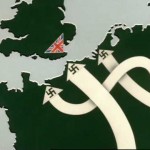
On 24 May Hitler ordered a ‘halt order’ to his armour crashing into France. For three days German armour remained immobile, recuperating before pushing on to finish the job. The BEF escaped because of Hitler’s decision. The question, of course, is why Hitler called a halt to his army at just the point the sword had been swung back to finish off the Allies?
Here there are different theories but they might be summed up as follows:
(i) ‘That idiot Goering’: Goering convinced Hitler, 21 May, that his Luftwaffe could finish off the BEF, trapped in the pocket. He was wrong as it happened, but Hitler believed him.
(ii) ‘That idiot Hitler’: Hitler just couldn’t believe his luck. Something was going to go wrong. The British and the French were about to violently counter attack. Best consolidate.
(iii) ‘Stabbed in the Arras’: A notable British counter attack 21 May had unnerved the Germans and particularly Hitler: an exaggerated report from Rommel helping. The Allies seemed stronger than the Germans had believed.
(iv) ‘Golden Bridge’: Our real war is with France not with Britain. Whip the British and then let them get away. It will be easier for the British to negotiate their way out of the war and to have cordial relations with us afterwards if their army has not been annihilated.
The conventional answer is point (i) and (ii) and probably in the end the larger part of the truth is there: of course, all four of these could be reduced to ‘That idiot Hitler’. (iii) has become more popular in British histories over the last years for obvious reasons: again though it is just an aspect of (ii). Most intriguing though is the question of (iv). Is it possible that, on some level, Hitler wanted the British to escape destruction?
Perhaps the pertinent words here are ‘on some level’. The human mind is complex and even something as simple as Beachcombing waking up at 4.00 am this morning has about fifty different causes, most impossible to separate from each other. How much more then were Hitler’s motives likely to be mixed and complicated as he decided the destiny of a continent? Perhaps even Hitler himself would have had problems sorting them out: though a predatory weasel like AH would not, in any case, have wasted much time on these kind of reflections.
Certainly, there are clues that Hitler might have, in part, wanted the British to get away. Some of these clues come too late to be taken entirely seriously: Hitler, for example, in 1945 talked of how Churchill had not appreciated the ‘sporting chance’ he had given the British. But this could so easily be Hitler rearranging the past to better write his obituary: that was, at that date, fast approaching…
Other comments from his secretary and a Luftwaffe general suggest though that at the time Hitler said similar things. Were these perhaps comments that came after the BEF had escaped and so were a similar rationalization? Was this Hitler, the expert manipulator, saying different things to different peoples as he so often did?
Most contemporary historians have no time for these kinds of arguments, but as John Lukacs argues in his excellent Five Days in London (the seed for much of what is written here) there might just be something to the Golden Bridge. If so it is the most striking example of Hitler completely misunderstanding the British.
Any other explanations for the 'miracle' of Dunkirk? drbeachcombing AT yahoo DOT com
16 Dec 2011: Louis writes ‘There is, as far as I can see, a good explanation for this Inhis book: The Blitzkrieg legend: the 1940 campaign in the West von Karl-Heinz Frieser,John T. Greenwood, Mister Frieser gives his analysis of what happened during 23 and 24 May. Von Runstedt gave a halt order on the 23rd, (probably because he either very anxious about his flanks, or jealous of von Manstein and his Sichelschnitt plan and wanted it to fail), and was sidelined by the GeneralHQ (OKH), and deprived of the Panzer Army group. When Hitler came to von Rundsteds HQ, he was appalled, because he did not know of this decision to deprive von Rundstedt of the Panzer army group. And Hitler then made a political decision. He confirmed the halt order of von Rundstedt, and chastised the GeneralHQ (OKH) for not informing him (of the change in command of the Panzers), and not waiting for his input on this. HE, Hitler, was the master of Germany and he did not want an independent army that could take decisions like that without his knowledge and OK. The way it is stated in the book, and with all the rest of the “Options” more or less unlikely (both militarily and political) this looks to me the only viable option. Below is the paragraph from the German Wiki about the Battle of Dunkirk, which more or less says the same thing, about this being a political decision, and not a military one. Die Gründe für den Haltebefehl vom 24. Mai werden noch heute kontrovers diskutiert. In der Regel wird der Haltebefehl Hitlers auf dessen eigene Autoritätsdurchsetzung zurückgeführt. Da er während des bisherigen Westfeldzuges als militärischer „Führer“ völlig außen vor gelassen wurde, nutzte er den Haltebefehl dazu aus, seine eigene Autorität zu festigen. Andere Gründe, beispielsweise die eingeschlossenen britischen Truppen könnten als Unterpfand für eventuelle Friedensverhandlungen mit den Briten dienen, werden allerdings als Erklärungsversuche häufig zurückgewiesen. But whatever the reason, it did save a lot of British, and also lots of French, troops from going into captivity’. KMH writes, meanwhile, 'I am in favor of the last idea because I don't believe Hitler wanted war with his equals or superiors. According to his master race theory, he was completely justified in conquering and enslaving the inferior races such as the Poles, Slavs, etc., mostly in the East. Engaging Britain, if necessary, should have only come after all other objectives had been achieved, not at the beginning. The suspicious flight of Hess to Britain supposedly to discuss ending the hostilities may support this argument. However, the vainglorious visions of Hitler ended in a two-front war he originally vowed never again to be caught up in. For what it is worth, even the witches in England were devoutly praying for calm weather to rescue the BEF in addition to the customary believers. Philosophically, without these initial disasters such as Dunkirk and Pearl Harbor, the later true successes such as decoding the enigma machine, and new inventions such as the proximity fuse may not have come as quickly.' Several readers wrote in to say that the golden bridge is a way to dampen British and French heroism at Dunkirk. Thanks Louis, KMH and others!
Luftwaffe Kills Two Rabbits, Perhaps December 10, 2011
Posted by Beachcombing in : Contemporary
Little Miss B in seventh heaven last night and this morning as the family has been gifted a small black rabbit. This black rabbit is not destined to have the happiest of lives as LMB insists on watching Disney cartoons with it. Beachcombing, in any case, fell asleep with rabbits and woke up thinking of them, but could only come up with one really good rabbit story from history – readers are welcome to contribute others: drbeachcombing AT yahoo DOT com
The story he refers to are, of course, the famous two rabbits killed on Shetlands November 13, 1939, the first British Luftwaffe casualties of the Second World War. The first human casualty would have to wait till April 1940, though there after they would come with depressing frequency till by the end of hostilities 60,000 plus had been killed by bombs, crashing planes, rockets and strafing machine gun fire.
Anyway, back to the rabbits. A Heinkle bomber had gone in to hit some flying boats near Sullom Voe. The bomber missed but left one impressive looking bomb crater and in this bomb crater the locals found two rabbits. (See the photograph above).
Uncharitable souls have suggested that these rabbits were planted to underline the moronic incompetence of the Luftwaffe. If so it was a good public relations trick and the rabbits do look suspiciously well preserved, particularly if they were, as the photographs suggest, pulled out of the crater itself.
Of course, the Luftwaffe would answer any charges of incompetence through all too competent action (upon action) in the months ahead.
At this point the rabbit casualties meshed with a song that had been first aired in public in mid October of 1939: Run Rabbit, Run Rabbit Run, Run. Well worth listening to in the original. Its lyrics, indeed, became the unofficial anthem of Britain in the phoney war: bonhomie and absurdly misplaced self-confidence.
Run rabbit – run rabbit – Run! Run! Run!
So run rabbit – run rabbit – Run! Run! Run!
Run rabbit – run rabbit – Run! Run! Run!
Don’t give the farmer his fun! Fun! Fun!
He’ll get by without his rabbit pie
So run rabbit – run rabbit – Run! Run! Run!
Take this short description of the life of an evacuee: After our meal, we go to listen to the news from London. I’m allowed to listen to children’s hour, and shortly after that, I’m put to bed. There are plays, music recitals, and comedy shows. There’s Tommy Handley in the ITMA show with all the funny catch phrases. There’s Mona Lott, the cleaning lady, ‘Can I do you now sir? and ‘It’s bein’ so cheerful that keeps me goin’. Colonel Chinstrap – ‘I don’t mind if I do.’… Some popular songs are played many times in one day. The popular wartime song [Run Rabbit Run] is always on the wireless. It’s inspired by the fact that in the period of the so-called phoney war, the only casualty caused by Hitler’s bombs is a rabbit. Of course, it isn’t long before the wits substitute the name Adolf for rabbit and it isn’t long before Charlie introduces me to the art a rabbit shooting.
Interestingly there is a bit of cobblers attached to this story. Some claim that the song came about because Hitler said that he would eat rabbit pie when he successfully invaded Britain! This seems a rather unlikely comment for AH to make, not least because he was (largely) vegetarian and also because the phrase, unless there is a German idiom hiding behind it, means nothing. Hitler was not, in any case, particularly interested in an invasion of Britain at this time, that did not slip into his shopping list till the collapse in the west in spring 1940. This interpretation presumably came from the lyrics of the song itself that make the farmer, rather than Hitler, into the rabbit.
Don’t give the farmer his fun! Fun! Fun!
He’ll get by without his rabbit pie
So run rabbit – run rabbit – Run! Run! Run!
***
11 Dec 2011: Tim from Detritus of Empire sends in ‘Lyrics from the seminal stoner album “Dark Side of the Moon”, by Pink Floyd Breathe (Waters, Gilmour, Wright) 2:44 Breathe, breathe in the air./ Don’t be afraid to care./ Leave but don’t leave me. / Look around and choose your own ground. / Long you live and high you fly/ And smiles you’ll give and tears you’ll cry / And all you touch and all you see / Is all your life will ever be. / Run, rabbit run. / Dig that hole, forget the sun, / And when at last the work is done / Don’t sit down it’s time to dig another one. / For long you live and high you fly / But only if you ride the tide / And balanced on the biggest wave / You race towards an early grave.’ Run rabbit run onwards is from the original song. Thanks Tim!
12 Dec 2011: Mike G writes in to point out that this was Shetland not Orkney (Beachcombing brain made a silly mistake here). According to local lore one rabbit not two were killed: Beachcombing seems to remember a photograph of two rabbits but contemporary reports refer to one? Then what about this link: it seems that the rabbits were dropped over Germany by a RAF bomber addressed to Goering! Then Marvin writes in about the Jimmy Carter killer rabbit incident. Thanks Marvin and Mike!
Hitler’s Italian Fantasy Life November 16, 2011
Posted by Beachcombing in : ContemporaryBeachcombing offers today an other example of a historical dream. However, unlike the nightscapes of Leonardo or Augustine, here, instead, is a fantasy from Adolf Hitler.
Now Hitler’s private life is not particularly well known. There are unsubstantiated rumours about his genealogy and his sexual preferences, and his family relations (including a possibly murdered niece). And this lack of knowledge means that we don’t know what Hitler conjured up in his head when he lay back in bed or on the couch between rabble rousing. Until forty the best bet is that he dreamt about power and German troops marching through Paris with Wagner playing on the radio. But once he had achieved that there are hints that he fantasized, instead, about the dolce fare niente to the south of the Alps.
Certainly, in Hitler’s Table Talk, a record of the Fuehrer’s delirious ‘wisdom’ dispensed to his dinner guests in the years in which he led Germany, we hear time and time again about Italy and its beauty.
Part of this stems from Hitler almost homo-erotic love for Mussolini: ‘[a]s I walked with [the Duce] in the gardens of the Villa Borghese, I could easily compare his profile with that of the Roman busts, and I realised he was one of the Caesars’.
But the more important reason for this enthusiasm is the memory of the road not taken: Hitler’s failed life as an artist. Hitler recalls the beauty and wonders of the peninsula, connecting it with his dissipated aesthetic side.
‘I lived marvelously in Italy. I don’t know any country that enlivens one more. Roman food, how delicious it is!’
Or ‘The Italians have a splendid foundation of peasantry. Once when I was travelling to Florence, I thought, as I passed through it, what a paradise this land of southern France is ! But when I reached Italy – then I realised what a paradise on earth can really be!’
And the highest praise for a wannabe Bocklin: ‘From the cultural point of view, we are more closely linked with the Italians than with any other people. The art of Northern Italy is something we have in common with them: nothing but pure Germans’.
Of course, all these mix in with effortless and rather condescending put downs from cold Germany. But the point is that Hitler had a Tonio Kruger thing going and it is apparently here that AH’s heart roamed in his moments of rest. ‘My dearest wish would be to be able to wander about in Italy as an unknown painter.’
The most interesting word in this sentence is ‘unknown’. For Hitler going back to being an artist was not just an escape from politics but an escape from success.
When he had finished shouting at his generals he managed to lie back then and saw himself painting a Gothic church just outside Perugia or Piacenza, while, doubtless the local peasants threaded flowers for his hair or offered him polenta dotted with peppercorns.
Heavy the head that wears the crown…
What is sometimes not appreciated is the extent to which Hitler’s fantasies may have changed the course of the war in Italy. On several occasions, but most notably with the German army’s illogical retreat from Florence, Hitler seemed to have preferred strategic discomfort to the ruin of Italy’s architectural marvels. A shame he and Kesselring didn’t extend the same courtesy to the Italian people…
Beachcombing is now taking not only historical dreams but historical fantasies as well: drbeachcombing AT yahoo DOT com
The Great Crying November 11, 2011
Posted by Beachcombing in : Contemporary, Modern
Beachcombing has been troubling his unpretty little head about notable cloudbursts of tears in modern history. In the ancient world, some honest tears seem to have been acceptable: from Alexander crying at learning he would only ever conquer one world, to Aeneas shedding some big ones over women and burnt cities, to Odysseus ‘We must bury our dead and let one day’s tears suffice’, and on to Agamemnon hamming it up in the underworld.
Most medieval tears that come to mind involve piety and saints or ‘most sincere repentance’ and the stabat mater. Aquinas perceptively said that tears bring pleasure or as Walter Hilton put it: ‘As water in the vine through the heat of the sun is turned to wine, just so shall bitter tears truly through fervor of charity be turned into the wine of spiritual comfort’.
But in the modern world, particularly from the 1850s onwards tears became unpopular, except in mourning women, spoilt children and readers of Dickens: and they were not particularly welcome even then.
There follow a very select list of some of the most memorable weep-fests in modern history. Not that famous men and women did not weep often. Hitler would cry when a pet died: Orwell cried when he watched Mrs Miniver (‘a terrible film’).
But here there are moments when ‘in the face of the country’ historical greats let it all out publicly, an act that in some uptight western cultures was not that far from defecating in a crowded room.
Who could forget, for example, Michael Collins breaking down at the funeral of Thomas Ashe, killed in British custody, in a culture and a time when these things were simply not done. Collins listened to the gunfire over the coffin and managed to struggle through one of the briefest orations in history: ‘Nothing additional remains to be said. That volley which we have just heard is the only speech which it is proper to make at the grave of a dead Fenian’.
Vittorio Emanuele Orlando (obit 1952), sometime Prime Minister of Italy, wept at the Paris negotiations after the war when Italy was denied Fiume. Indeed, in a notable case of crying culture clash, he gave a full vent to his Latin histrionics disgusting the other allies who didn’t do tears. ‘I writhed on the floor. I knocked my head against the wall. I cried. I wanted to die.’ Clemenceau, the French leader, was more lyrical: an old man with prostrate troubles he reflected: ‘Oh if only I could piss like [Orlando] can weep!’
Generals shouldn’t cry of course: with the exception of Grant, Napoleon, Lee, MacArthur, Patton, Montrose and about five hundred others. But General De Gaulle, a tepid man in many ways, sometimes let off great cloudbursts of tears. In 1960 in London he wept when he placed flowers at the statue of General Foch, remembering doubtless the moment he had done the same in less happy circumstances in 1940.
Margaret Thatcher is said to have wept in the British cabinet when the first casualties of the Falklands War came back. However, it is her public breaking down in the year of her ‘assassination’ (1990) that is remembered by history (pictured above). Thatcher was bundled down the steps of Downing Street with her ever faithful husband Dennis and there ‘the Iron Woman’ went to pieces in the full and embarrassing glare of the world’s cameras.
Today we live in a world where – for better or for worse – tears are slowly dribbling in from the cold. A male politician particularly would do himself no end of good by dropping a bit of saline at a public appearance. Obama’s tears worked in Ghana, Hilary Clinton’s almost worked in New Hampshire. Tony Blair, meanwhile, claimed that he wept for the dead in Iraq.
Berlin, 30 April 1945 October 22, 2011
Posted by Beachcombing in : ContemporaryBeachcombing had two formative experiences over the last week. One was discovering that peanut, banana and honey sandwiches can be substantially improved through the use of raw ginger. The other was watching Die Untergang (Downfall) the 2004 film describing the final days of Hitler in April 1945. On balance, Beach prefers the liberal use of ginginer to biopics on bastards, though Untergang definitely begs and keeps the viewer’s attention. But Hitler’s death is strangely topical, particularly as two journalists have proved (to their own satisfaction) that Hitler (obit 1962) actually escaped with Eva Braun to Argentina and had two daughters!
Personally, Beach won’t be holding his breath over this one. But there is no question that the evidence for Hitler’s death is not all that it could have been.
The forensic evidence was gathered by the Soviets who muddied the waters: no drawing from the spring of eternal truth for the sons of Lenin. Stalin, playing one of his long games, announced to Truman at Potsdam in 1945 that Hitler was not dead but hiding in Spain or Argentina! And the much vaunted piece of Hitler’s skull in the Soviet archives actually, it has transpired, belonged to a woman.
But before we get carried away it should be remembered that Hitler’s jawbone was confirmed by his dentist: imagine having that job. And the eyewitness accounts are difficult to get around, particularly that of Heinz Linge, Hitler’s valet, who was responsible for the burning.
Those who argue that Hitler survived the bunker have to overcome not only jaws and memory though. There are three other difficulties. First, there is the problem that Hitler had again and again said he would commit suicide at the end: ‘I have three bullets… two for you if you betray me, the last for myself’. Second, there is the problem of how Hitler could have escaped from Berlin at that late hour with Soviet troops less than a kilometre away: Bormann almost certainly died doing the same. And, third, the difficulty of how Hitler’s new location in the Alps or on the Pampas or on Franco’s private estate in Galicia was kept secret for another twenty years.
One or two of these could doubtless be knocked down: people lie, scientists screw up, miracles happen. But run the jawbone together with the others and you have a mountain range that make the Himalayas look like fairy foothills.
Any other opinions of Hitler’s death? drbeachcombing AT yahoo DOT com
Beach prefers his dictators well done and, he should end by saying, the most memorable scene in Untergang was the burning of the bodies. It is a fine example of ‘bad wiring’ in a film that the diehards saluting Hitler’s pyre is the most memorable single scene, notwithstanding the fact that here is the final extinction of a man loathed by this blogger, most of the modern world and the film-makers. Even Goebbels mad eyes, some silly heel clicking and Russian shells sending everyone diving cannot remove the ‘magnificence’ of the occasion. The Valkyries probably didn’t make it down through the Soviet artillery and the Yaks, but the director accidentally created a scene that suggests that they really should have made an extra effort.
***
23 Oct 2011: Southern Man writes in ‘Beach there is a lot of rot written about Hitler and suicide, allow me to quote from an excellent piece on Axis History: ‘Hitler contemplated suicide several times in his life (after the Putsch, after the death of his niece), he made speeches attesting that he would either be victorious or ‘would not survive the outcome’ (Reichstag speech, Sept. 1, 1939)…’Germany will find itself either reborn or us dead”…”I have three bullets…two for you if you betray me, the last for myself’ (Hitler during the Beer Hall Putsch). ‘Death is so easy..a brief moment of pain perhaps, then eternal sleep’ (Hitler to his ‘chauffeureska’).’ Next up is KMH with some almost metaphysical considerations about dictators: ‘It is perhaps natural to believe that oppressive dictators will die in a similar way that they caused others to die – poetic justice is most satisfying. But strangely, we see it happening only with the second tier of dictators – those who only have national, not international aspirations. So Qaddafi died of bullet wounds, etc. The most important personages don’t seem to die from violence or from legal proceedings (hanging, etc.). Stalin may have been poisoned by his doctor. Napoleon died on St. Helena. Ivan the Terrible, Oliver Cromwell and Mao seemed to have died naturally. So why would Hitler go against the grain? I believe the stories about his escape to Argentina or Antarctica not probable in his physically unhealthy condition. But he may have temporarily escaped to a secret bunker in the southern mountainous region only he knew of in specific detail. He died there perhaps due to his untreated illnesses. Dental records, the Argentina theory, etc., would be for one of his doubles. It is difficult to believe that these predestined personages are immune to a common death by violence, but their incarnation isn’t personally profitable or meaningful otherwise.’ Then several a couple of comments about Downfall. DCR writes: ‘Several people who were in the bunker when [Hitler] and Eva Braun killed themselves and served as technical consultants to the film. One was the radio operator who heard the shot and saw the bodies.’ The historical precision behind the film was much boasted over by the directing crew. On this theme JCC points any German speaking readers to an interesting article by Wim Wenders: thanks Southern Man, KMH, JCC and DCR!!
5 Nov 2011: Gerrard Williams has written in with some details about his book: Grey Wolf – The Escape of Adolf Hitler ‘We’re published in English worldwide by Sterling (wholly owned By Barnes and Noble) and have shifted almost 40,000 copies worldwide in the last three weeks. We have had extensive media coverage here on Sky News, The Sun, Express, The Mail and Western Mail as well as many articles in Foreign Newspapers and web-sites. I’ve been interviewed by Sir David Frost for Al-jaz’s “Frost over the world”, RTL 4 [about 1800], am doing a piece with ZDF in the coming weeks, talking to Dan Snow at “the One Show” and Ch7 Oz are doing an hour long piece on the book in February for their top rating Sunday Night Current affairs show, filming with me in Argentina, London and Berlin. I’ve also appeared on Deutsche Welle, and numerous other radio stations here and in Canada. I’m also due to do a piece with CNN(I)’s Becky Anderson in December on “Connect the World.” Although the book is now available in Barnes and Noble Stores across the States I’m finding it difficult to get any mainstream coverage there. I can promise you I haven’t “lost it”. This really is the exposure of one of the most incredible lies in history. There are over 500 sources in the book. There’s more about me on My Author’s page on Amazon.co.uk plus a video of my interview with Sky news and a clip from the film we’re currently producing. On Tuesday I did a long interview with Michael Harris at CFRA Ottowa , and today we got a full page in the Jewish Telegraph. I’ve also attached a review from the ‘states. Here you can find the first fifty pages or so of Grey Wolf…. and here you can find my interview with Deutsche Welle.’ Thanks Gerrard and good luck!
Agony at the Dentists October 7, 2011
Posted by Beachcombing in : Contemporary, ModernBeachcombing went to the dentist this morning and had the inside of one of his teeth removed: apparently too many peanut, honey and banana sandwiches are bad for you… But, in the inevitable passing-the-time-of-day conversation between scoops of tooth, something interesting came up – pain control.
Beach had noticed in his last trips that dentists increasingly suggest trying operations without anaesthetic: offering to inject if things get nasty along the way. His dentist confirmed this, laughing at what a funny lot her patients are. Some always want anaesthetic even for an aggressive scraping: others don’t want anaesthetic even when a tooth is to be yanked out.
After this conversation Beachcombing spent an aimless hour or two looking at how great men and women got by in the dentist chair in the days before novocaine. Perhaps there is a very short monograph to be written on famous individuals suffering at the dentists on the level playing field of oral pain. After all, in most ages of the world having a man with pliers messing around in your mouth would have been the single most agonising experience of your life, trumping even childbirth. And unsurprisingly the vast majority of our ancestors turned out to be ‘cowards’.
Lincoln had his jaw bone broken in 1841 when a dentist removed a tooth without anaesthetic and was thereafter – with excellent reason – scared of the white-coated ones. ‘In 1862 Lincoln developed a severe toothache and consulted Dr. G. S. Wolf, who had an office near the White House. As Wolf prepared to pull the tooth, Lincoln asked him to wait. Lincoln ‘‘took a container of chloroform from his pocket, inhaled it deeply, and sleepily gave the signal for the dentist to proceed’’.
In his early readings in Third Reich history Beach once stumbled on some nonsense about Hitler refusing to be anaesthetised when he had teeth removed and entering a blissful trance state, doubtless fantasising about Lebensraum. Seemingly though this is a bad case of cobblers for a 2009 book on Dentist of the Devil documented Hitler’s dislike of the dentist chair. The Fuhrer refused a single session for root control but turned up on nine different days to get the work done slowly. Sensible but hardly Aryan hero stuff.
Talking of Hitler, his nineteenth century predecessor, the Emperor Bonaparte, whohas Beach’s eternal enmity for the destruction of the Venetian Republic – ‘once she did hold the gorgeous East in fee’ – also had difficulties with dentists. On St Helena: ‘[General Bonaparte] recently lost a tooth (wisdom tooth). It was his very first surgical operation, and under such circumstances, his behaviour was far from brave. In order to be able to extract his bad tooth, Doctor O’Meara was forced to make him be held on the ground’.
Betsy Balcombe, Napoleon’s young English friend on the island, who used to call the Emperor ‘Boney’, berated Napoleon. ‘You are complaining about the pain caused by an operation of such little importance! You, who assisted at countless battles, and escaped a shower of bullets, you, who got injured so many times! I am ashamed of you.’
By the way if you wish to purchase this tooth…
However, there are also those men and women who rose above dental extraction with unnatural reserve. Uber Catholic Mrs B reliably states that Josemaria Escriva, the founder of Opus Dei would go to the dentist without anaesthetic. The dentist, indeed, begged his patient: ‘Monsignore, say something, tell me if I’m hurting you’. ‘Carry on, carry on’, responded Escriva, ‘do whatever you have to. Don’t worry about me, I’m just a priest!’
Hoping that Mrs B will never read this, Beach should also note, in a hushed voice, that JE used to flagellate himself till the blood from his back ended on the ceiling tiles. For all we know he ‘enjoyed’ the challenge of the dentist’s chair too.
Beach’s experience of dentistry has been kinder. He was certainly struck that, even though the dentist yesterday scooped out about eighty percent of a tooth without anaesthetic, there was virtually no pain. Only at the bottom of the tooth as the drill came close to the nerve did things get dicey.
But nor is Beachcombing going to kid himself: if that tooth had had to be extracted by a blacksmith in the fifteenth century or if a man in a white coat in the 1930s had had to put in some root work he would be gibbering in a corner today.
Any other famous dentistry ordeals from the past? drbeachcombingATyahooDOTcom And, two that got away. Beach remembers a reference to an escaped criminal on a cruise liner who posed as a dentist and managed to remove a millionaire’s tooth without any pain during a twelve-hour operation. Any ideas? Naturally, some or all of these details will be incorrect. Also isn’t there a story about a man tying a piece of string to a bullet and his tooth and then firing the bullet?
***
14 Oct 2011: SY writes: ‘Hitler really hated dentists. He famously said: ‘I would rather spend two hours in the dentist’s chair than have another meeting with him’ Thanks SY
Superman versus Hitler May 12, 2011
Posted by Beachcombing in : ContemporaryOh those happy, innocent afternoons a few decades ago! Home from school /college Beachcombing would sit through the junk that British children’s television had to offer. He would quickly take in the news headlines on BBC 1 at 6.00 pm (cruise missiles, inflation, cricket defeats…) and then turn over at 6.02 pm to BBC 2 where a whole series of B films from the 1930s and 1940s were spewed out, day after day, month after happy month. Tarzan, Will Hay, Miss Marple, a Chinese detective whose name Beachcombing forgets, the various Mrs Minervas, that idiot with the ukulele…
But what about Superman? Well, one of Beachcombing’s favourite cinematic tricks was the way in which some of these movie heroes from the ‘Golden Age’ had unlikely and often very anachronistic walk on roles in the Second World War.
There were, for example, some fabulous Basil Rathbone/Sherlock Holmes outings (2?) where Watson and Holmes fight the Reich – including an iconic shot of 22b Baker Street with sandbags piled around it.
Tarzan and Jane also ‘did their bit’ when a couple of Teutonic s.o.b.s turn up in the jungle. If Beachcombing remembers correctly Johnny Weissmuller – Hollywood’s noble savage – pretended not to be able to pronounce the word ‘Nazi’ which, of course, must have had the WW2 cinema-audience rolling in the aisles and which, if truth be known, amused the young Beachcombing too.
In any case, since that time Beachcombing has always had a bit of a thing for the way that movie figures were drafted for the fight against the Axis forces. And just recently he came across this lovely example of a parallel phenomenon, a comic book figure, Superman putting the world to rights – memories of Donald Duck’s Nazism.
The strip in question is from an American magazine from February 1940 just before the balloon went up on the western front. America is still obviously neutral at this date. And it is interesting how Hitler and Stalin are not shown as enemies – they had after all just divided Poland up between them. While Mussolini and the Japanese – Pearl Harbor is almost two years away – are nowhere to be seen despite aggression in the Pacific and Benito’s frequent invasions.
There is also a moving and entirely misplaced faith in the League of Nations which had, after all, fluffed its last ten international assignments and which the United States had, perhaps sensibly, avoided joining.
This begs the question: what would have happened if Superman had brought Hitler and Stalin to Geneva in 1940. And the answer is, of course, ABSOLUTELY NOTHING.
In any case, even the simplest dolt knows that Messerschmitt propellers were made of kryptonite.
Any other unlikely war efforts from popular culture? drbeachcombing AT yahoo DOT com
Best of Enemies April 2, 2011
Posted by Beachcombing in : Contemporary, Modern**This post is dedicated to Rob who came up with what Beachcombing finds an inspired idea**
Beachcombing is always going on about how he is looking for historic pictures, especially of the lesser known kind. He was most excited then when a correspondent recently opened up a raw and largely unmined vein: what Beachcombing will call ‘the best of enemies picture’. Foes brought together after the event…
Ok three rules.
1) Photographs only, pictures don’t count or we’d be swamped with bad textbook inklings of Bismarck and Napoleon III, Lee and Grant…
2) No ‘in pain’ poses. Its fine if the old enemies clearly still don’t like each other. In fact, all the better. But no shots of one side being put upon by the other: German generals being brought into a room to surrender, Bosnian Muslims being led towards a ditch with Serbians loading their machine guns…
3) Shooting is necessary. The foes must have been foes in war, not just in politics, otherwise we’d have old political adversaries pretending to get on, lame stuff.
Beachcombing has spent the last hour in search of qualifiers and, with his usual level of cheating, has come up with several that give him pleasure. However, he’s sure that there are plenty more out there – please send them in: drbeachcombing AT yahoo DOT com
Naturally the creme-de-la-creme was sent in by Beach’s correspondent Rob who invented the best-of-enemy genre. Here we have the Japanese and Russian high command together after the battle at Port Arthur. Funnily enough, the Japanese seem to be having less fun than the Russians.
Beachcombing was seriously disappointed by how few American Civil War shots he turned up. But there is this pretty frightening one of Custer (as in bury my heart at LBH) and a lieutenant Washington. Washington has just surrendered, but the two seem to be getting on well enough and Beachcombing could detect no pain in the good Confederate’s eyes – just perhaps light boredom.
Ok Mugabe and Thatcher never went to war. Though Thatcher certainly will have seen Mugabe – absolutely rightly – as a proxy for the Soviet bloc. And Mugabe – equally rightly – will have seen Thatcher as a secret sympathiser for Ian Smith, first and last Primeminister of an independent Rhodesia. Was there never a photograph taken of Smith and Mugabe in the same room? That would have been a cracker.
Beachcombing’s favourite of the lot. The loveable McNamara shakes hands with ex Vietnamese military commander Vo Nguyen Giap. Perhaps its the first world subservience to the third world in McNamara’s eyes that makes the picture. Allegedly they had dinner together afterwards…
Ok again Carter and Castro didn’t fire missiles at each other, but their two regimes had been spitting and snarling for the previous twenty years and service men on both sides had died.
Ah Gold Meir: what’s not to like? GM once said that she could forgive the Egyptians (and by implication the pictured Sadat) for killing ‘our sons, but not we will never forgive you for making us kill yours’. The wily old bird only kept her word though when necessary: for here she is in forgiving mood. 
An interesting couple of pictures here. Sadly Stalin and Hitler never met: that would have been a photograph… But Molotov ran into Hitler when signing THAT pact and likewise Ribbentrop shook hands with Stalin so there was an indirect meeting. Beachcoombing particularly liked looking over these photographs. Hitler was so much better at faking than Stalin. Indeed, Hitler seems to be enjoying Molotov’s company, while Stalin clearly detests the aristocratic Ribbentrop.
With grey hair and more years than he’d care to remember Beachcombing can authoritatively state that they were all loathsome human toadstools.
McCarthur and Hirohito neither grin, nor, Beachcombing suspects, could they bear it.
And the most moving of all: British and German soldiers meet in no man’s land, Christmas 1914. Tomorrow they’ll be enemies again… ’and maybe God shall cause to be, who brought forth sweetness from the strong, out of discords harmony, sweeter than the bird’s song’.
***
4 April 2011: Thank God that Invisible is there to put Beachcombing right. ‘I need to mention that the Lt. James B. Washington in the photo with 2nd Lt. George Custer had been a classmate of his at West Point. Washington (a descendant of George Washington) was captured during the Penninsula campaign 1in 1862 and Custer made sure that he was treated well. There were a number of young men who attended West Point and who fought in the Indian wars of the Southwest together, who then found themselves on opposite sides during the Civil War. So the two young Lieutenants were actually the best of friends–at least before the War.’ So friends, then enemies, then friends again… Thanks Invisible!