A Romani Mystery in Eleventh-Century England March 9, 2012
Posted by Beachcombing in : Medieval***Dedicated to Stephen D***
Our knowledge of the ancient and medieval movements of peoples depends on extraordinarily inadequate contemporary sources and the deadly (and often unsupported) prejudices of historians and archaeologists. But now, with the use of DNA sampling and other techniques, including isotope analysis, science is coming to the rescue: giving us surprising insights into long dead periods and blowing away our assumptions like so many cobwebs.
Beach particularly likes a paper from Biology Letters (2005) 280-282 by Töfp and Rus Hoelzel that makes a mockery of certain British chronologies. The authors were surprised (to say the least) to find a Romani mitochondrial haplotype in a cemetery in Norwich in East Anglia, a cemetery that was in use from the tenth to eleventh centuries ‘ca. 930-1050′. This means that – drum roll – somehow Gypsy (‘Romani’) DNA got into the English blood stream prior to 1000 AD: which is pretty extraordinary given that the Romani are generally thought to have got to the United Kingdom c. 1600 AD!
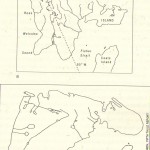
Beach noted in his post of yesterday that he does not read Russian. And he should note at this point that he does not read DNA either. The graphic above is, for example, supposed to mean something and sentences like the following leave him feeling not only inadequate but also vaguely nauseous: ‘A fragment of 264 bp (including primers) of the mtDNA HVS-I was amplified using primers 16099 (50AACCGCTATGTATTTCGTAC30) and 16331 (50TTTGACTGTAATGTGCTATGTA30) (numbering according to Anderson et al. 1981).’
Quite.
But even a DNA dullard like Beachcombing knows that the Romani are special. As a sub-continental people who made it into the Mediterranean Basin and subsequently as far as Scotland and Scandinavia: the Romani brought an entirely alien strain of DNA deep into a region with its own distinctive genetics. The result is that Romani DNA is particularly easy to pick out: certainly, it easier than arguing about the DNA differences between ‘Celts’ and ‘Germans’ and similar such nonsense.
With this by way of apology how do the authors explain this embarrassing stray? Well, they kindly offer five explanations:
1) An independent mutation in the British population: ‘very unlikely’.
2) A Romani-style halotype which may be present but undetected in the European population: ‘the probability is very low’.
3) The halotype was common in Saxon times but has since been lost: the authors also think this is improbable.
4) A Viking serving in the Varangian Guard in the ninth or tenth century somehow fathered, with a Romani mother, a child who later came to Britain or who was born there.
5) ‘The independent arrival of Romani people in England, 500 years before the oldest known record’.
Beach has not the knowledge to pontificate on the arguments for (1-3): all he can note is that the authors do not seem to take them too seriously. If readers know better or if research has since changed things please let Beach know: drbeachcombing AT yahoo DOT com
The Varangian route seems to be rather tortuous. East Anglia had an iced sugar Norse sprinkling but was not part of the mad-dog cursed Viking heartlands: Orkney, Cork etc. Were there even Romani in the Byzantine empire in c. 950 say? Our best – though admittedly very uncertain sources – would say not.
The final possibility is surely the best one – if the authors can be trusted in their judgements over 1-3. It is attractive because it covers so many possibilities. It could involve a small group of Romani mercenaries being hired into an East Anglian fyrd: though how did they get there? Or it could, instead, be a Romani slave traded through Syria and up onto the Northern European trade routes: God help her!
Then a final thought. It would be interesting to know how exclusive this mitochrondrial haplotype was in India. If we are talking about a general Indian feature – the “gypsies” only in European terms – Indian contact with Anglo-Saxon England would be easier to explain than the specific movement of one nomadic tribal society, the Romani. Beach remembers earlier posts including the embassy to St Thomas.
In any case, fascinating stuff and thanks again to Stephen for taking the time to send this stoneless cherry in.
***
18 March 2012: Karen writes in: Phoenicians were traders for tin, and travelled to many countries. Perhaps they also traded in slaves. Celts were known to hire themselves out as mercenary warriors at times. Even to distant lands. (Galatia was a settlement of Celts, and although these were probably not from Britain, certainly it shows that mercenaries could and did go far afield for opportunity.) Warriors are known to take slaves as booty. There is no reason to think that Celtic people had no slaves from other countries. There were soldiers in England from many areas of the Roman world. Higher ranking officers sometimes had slaves, or brought wives. Royalty, especially, was known to have slaves, and often a taste for exotic ones. Also English royals did marry royals from Europe. In those days, DNA tests did not exist, so it would be impossible for a king or prince or lord to tell if a baby was really his, especially if he were Spanish, Portuguese or a swarthy Eastern European himself. The era of the gravesite is a time marked by wars and pestilences, with rough knights hardly more than terrorists of the peasants in Europe. In such confusing times, who knows who was brought to England or by whom? This Romani DNA, while found in a gravesite from 950 or 1000, could have been passed down for many many generations in England, and indeed may still be in some small population of very “white” English persons.’ thanks Karen!!
American Indian Settlers in Iceland? November 20, 2011
Posted by Beachcombing in : Medieval, Modern
*** Dedicated to Wilson ***
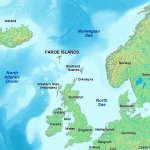
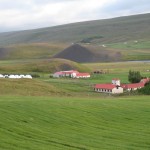
Iceland, the tiny nation floating between Britain and Greenland, has been isolated for much of its history. This isolation has given the island two extraordinary resources: one is a spectacular landscape, untainted by industrialisation (see above); and the second is a closed DNA pool.
A closed DNA pool = an extraordinary resource? In days gone by such sentiments would have been the prerogative of Nazis. But since the early 2000s it has been understood that Iceland’s small and homogenous population, close to 300,000 with virtually no foreign influxes, makes the island a perfect setting for genetic investigation as there is little ‘background noise’. This relatively simple genetic situation can then be cross-referenced with detailed Icelandic medical records, a boon for those investigating heart disease, various neurological conditions and cancer.
For historians though there is a further prize lurking here. The extensive investigations into Iceland’s genetic pool have kicked up some surprising insights into Iceland’s early history: one of which – an apparent Amerindian migrant – definitely deserves a bizarre history post.
Iceland’s first settlers were Vikings from the homelands but Scandinavians also came from their rapidly evolving settlements abroad, particularly in Britain and Ireland. Not surprisingly ‘Insular’ genes also appeared then in Iceland, salting Scandinavian ones: probably indicative of a large slave influx from Jorvik and Dublin. All of this is borne out by the genetics.
However, a 2010 study (Ebenesersdottier et al) surprised everyone by showing one more exotic strand of dna, C1e, which appears to come from a female Amerindian donor. More than 80 modern Icelanders carry this DNA strand and it is estimated that c. 1700 about 4 Icelanders carried the same. Then ‘there is good reason to believe that the C1e lineage arrived in Iceland several hundreds of [sic] years before 1700’.
The proof of the antiquity of this DNA (prior to 1700) goes beyond Beachcombing’s weak grasp of science. Does it depend on something in genetics itself? Or does it – and this would be worrying – depend on calculations about when Icelanders ‘should have’ come across Native American populations? If the Amerindian in question could have arrived c. 1600 then everything that follows here would need to be written in different terms. One thinks, for example, of possible cases of Amerindian boats lost at sea.
The authors go on to write, perhaps unnecessarily sexing up what is, in any case, an exciting enough discovery:
‘[T]here is no direct evidence of contact between the Vikings and Native Americans – i.e. that they actually met. Our findings raise the possibility that there was in fact contact between the Icelandic Vikings and the Native Americans which led to a Native American woman’ being brought back to Iceland.
This passage is a bit disingenuous in that the sagas, some of which read like historical accounts, describe contact between the Vikings and the native populations. Indeed, we have previously here looked at one famous meeting in Vinland. The implication is presumably that only L’Anse aux Meadows is ‘proof’ and yet it is L’Anse aux Meadows which demonstrates that the sagas were essentially correct.
But what the historian in Beachcombing finds really extraordinary is the following. If a native American woman was brought back to the Greenland settlements and, eventually, to Iceland, how did this escape contemporary Norse writers? Wouldn’t this have been one of the most remarkable events of the age?
Well, for us yes. But evidently for the Icelanders no. There is not even a vague allusion in Icelandic literature to this forgotten Inuit Eve: even though there were Icelandic ‘records’ (discuss) at this time. The real story here for Beachcombing is not the unsurprising minor contact between peoples at this date, but the remarkable blind spot in the medieval Norse mindset that could pass over a Native American woman being sold in the slave market at Reykjavík.
Any other examples of DNA opening up interesting contact between cultures? drbeachcombing AT yahoo DOT com
***
26 Nov 2011: Invisible writes in with a sensible objection: ‘My question arising from your post is: is Amerindian DNA the same as Inuit? Since you’ve got Inuit settlements in Greenland from (approx) the year 1200 – just a hop, skip, and a kayak away from Iceland–I don’t see why Inuit DNA in the Icelandic population would be remarkable. But if the Amerindian DNA is something different: say, Sioux or Apache or Mayan, that would be startling. I don’t know enough about the gradations of DNA to know how finely the genetic/tribal boundaries can be drawn.’ Beachcombing luckily has a colleague at hand who has dabbled in DNA. He claims that the genetics of the Inuit and the Amerindian population should be similar as they are essentially the same people: Asian emigrants from the New World. The question he would have is whether lapplanders DNA is all that very different… Thanks Invisible.
28 Nov 2011: Stephen D writes in support of Invisible. ‘No, it can’t be an Inuit connection. The Icelandic American DNA is haplogroup C, Inuit is A or D. Interesting detail from the Ebenesersdottir paper though: it’s a new subgroup, C1e. C1a-d are already known, and Amerindian; but nobody can say whether C1e is Mayan, Algonquin or whatever (Sioux or Apache are, um, geographically implausible). A wild guess might be Beothuk (right part of world, idiosyncratic language so possibly ditto genetics, now extinct and so DNA not readily accessible).‘ Thanks Stephen!
31 Dec 2011: Stephen D writes in with still more and it is wonderful stuff: ‘I’ve dug down a bit further into the online data, and it seems that while it is true that the Icelandic mitochondrial DNA falls into a unique subclass, C1e, with at least 14 mutations separating it from C1a (eastern Siberian) or C1b-d (Amerindian), and with no known complete corresponding sequences anywhere, there are a number of partial mitochondrial sequences that may well turn out to be C1e. These are: 2 ancient Tainos sequences, Dominican Republic (good preColumbian seafarers, from Lesser Antilles to Bahamas: largely extinct: strong candidate in my opinion); 1 ancient Ciboney sequence, Cuba (mostly driven out of Antilles by Tainos: extinct: weaker candidate); 2 ancient American Midwest sequences, Oneota: wrong place?; 2 modern samples, Brazil: probably wrong place; 3 modern sequences, Chile, 1 modern sequence, Peru, 1 modern Canadian sample (Nuu-Chah-Nulth, Vancouver), 1 American sample (Apache): definitely wrong place; 2 modern sequences, origin unknown, no use to anybody; And then it gets interesting; 1 modern sequence, Canary Islands: probably descendant of Amerindian brought there post-Columbus; 1 modern sequence, Germany of all places: probably as above but Ebenesersdottir et al don’t completely rule out older C1e component in European populations; DNA does get around. You may have come across the Tuareg mitochondrial component in modern Hungary (presumably brought there in retinue of some Turkish pasha), and Thomas Jefferson’s Y chromosome DNA found in his lawful white and bastard coloured family, which despite the Jefferson’s Welsh ancestry turned out to come from Egypt or thereabouts (presumably via some merchant, official or soldier in Roman times).’ Thanks Stephen!
Skraelings and Demons August 30, 2011
Posted by Beachcombing in : Medieval, ModernHere’s a nice example of how intelligent men and women were able to create beasts/demons from a compounded misinterpretation.
First, in the early Middle Ages, some of the Viking dragon boats sailing out of Scandinavia missed the party to the south, where the pointy-headed ones were wrecking settlements in Britain, the Baltic, northern France, Spain and further afield. These 'other' Norse headed to the north and settled first Iceland, then Greenland and finally and, temporarily, the Canadian coast. In Canada and Greenland they came across the sub-arctic peoples of this area. These they termed the skraelings and Beach offered, a year and more ago, a brief description of an early Norse-Skraeling meeting, which ended predictably enough, in tears.
The Vikings had their doubts about whether the Skraelings were human or not. But by the time that news of these curious creatures was carried back home then they were emphatically trolls or ogres.
There is some problem understanding the priority of legends here. It is just possible that the Irish had already encountered the Inuit prior to the Norse voyages into the North Atlantic. There is also the problem that Laplanders and other Asian sub-arctic peoples were being reported in western Europe at about the same time.
Contact with sub-Arctic peoples withered as European contact with Greenland grew less and then, finally, as the Greenland colonies disappeared in circumstances that we still don’t understand (another post, another day).
However, and here things start to get silly, these legends remained and survived renewed contact with Sub-Arctic peoples in the Age of Exploration and in Asia and even in Lapland. Now there was a problem though. European folklore demanded that the northern regions hosted dwarfs or trolls – terminology varied – but travellers came across unusual (to them) humans but no signs of northern pygmies.
Beach has visited the always interesting Athanasius Kircher on other occasions. Consider how AK scratching his head about the little people of the north who stubbornly refused to be found by western Europeans. The following translation is excerpted from an excellent Christian Latin website. The Latin, Beach quickly transcribed from AK’s work.
In his Book of the Embassy to Moscow, Paul Jovius [unknown person – tr.] writes: ‘Beyond the Lappland, in the region ‘twixt Corum and Aquilo [exact locations unknown – tr.], where heat is forever absent, pygmies can be found – so some witnesses of exceptional trustworthiness have related. These pygmies, even after they grown to the greatest height to which they can attain, do not exceed the height of a lad of ten years of age. They are an uncanny species of human being, using a grunting form of speech, so that they seem to be as closely related to apes in their behaviour as they are distant from actual humans in their bodily mass, mentality, and height.’ With regards to these pygmies, the reader ought to consult Olaf Magnus, who refers to them as Screlingeri, i.e., ‘Cubit-Highs’. The most venerable authors – Plutarch, Ctesios, Pliny – have also made mention of monsters of this sort – and likewise assert that they do indeed exist, so that I cannot thus easily deny that they do. But I do not readily conclude that these pygmies are a true species of human being, since no nation can be found, even if one combs the entire earth, with any knowledge of humans of this kind, let alone where such a species flourishes.
Paulus Iouius in Libro de Moscouitarum Legatione: ultra Lappones, inquit, in regione inter Corum Aquilonem perpetua oppressa caligine pygmaeos reperiri, aliqui eximiae fidei testes retulerunt, qui postquam ad summum adoleuerunt, nostratis pueri denum annorum mensuram non excedunt; meticulosum hominum genus & garritu sermonem exprimens, adeo ut tam simiae propinqui , quam statura & sensibus iustaque proceritate ah homine remoti uideantur. De hisce uide Olaum Magnum, qui eos Screlingeros, hoc est, Cubitales appellat. Meminerunt & huiusmodi monstrorum Auctores grauissimi, Plutarchus, Ctesias, Plinius, ac proinde ea aliquando uisa essa uti non facile negauero. Ita homines eos ueros fuisse non facile assiuero, cum huiusmodi hominum in tanta orbis terrarum perlustrati notitia nulla Natio inuenta sit, huiusmodi pygmaeorum altrix.
AK has an easy answer to the problem. These pygmies are not humans but demons!
My conclusion, therefore, is as follows. It is certain that these pygmies are seen by shepherds and farmers in the most remote corners of the Arctic lands, those lands condemned almost entirely to perpetual darkness. Since shepherds and farmers are, according to Olaf Magnus, disposed to every sort of superstition, and delude themselves easily with regards to the existence of spirits, it ought to seem remarkable to no one that they ordinarily see the demons manifesting under the form of a human pygmy. In this way the demons can both perpetuate the superstition among the minds of the credulous, and to confer benefits upon those to whom they have manifested. If, moreover, such a genus of little human indeed exists in the foggy septentrional regions, why have they remained hidden from the Batavians, that exceedingly curious race, who has done naught else for the past sixty years other than engage in the exploration of the most hidden recesses, not only of the north, but of every corner of the entire world? Why have the Batavians found nothing of pygmies of this sort in any nation? Why have no dwarves of this kind ever been taken from Lappland, Karelia, Cremesia [location unknown, perhaps Estonia or Vepsia – tr.], Finland, or from any of those countries hard by Germany – Suevia [now the province of Schwabenland in Germany – tr.], Denmark, or the Netherlands? Furthermore, monsters from even the most remote regions of the Indies are not ordinarily brought to our country, nor can anyone be found who would dare to claim that they had ever seen a pygmy answering to the description of the Cubit-Highs in any of the aforementioned nations. Thus all the accounts of the ancient Geographers concerning pygmies of this kind, written primarily for an unsophisticated readership, are purely mythical.
Unde concluditur, eos a rudibus & agrestibus hominibus in ultimo Septentrionis angulo tenebris fere perennibus damnato uisos esse. Cum enim dicti homines teste Olao ad omne superstitionis genus procliues sint & daemonibus facile se deuoueant, mirum fane nemini uideri debet, eos sub humana pygmaei forma, tum ad superstitionem in simpliciorum animis propagandam, tum ad eos beneficiis quibus interdum afficiuntur deuinciendos apparere. Si enim tale homunculorum genus in caliginosis istiusmodi regionibus extititit, cur curiosissimos Batauos latuerunt ? Qui iam a sexaginta annorum spatio fere nihil aliud agunt, quam ut non dicam quosuis abstrusissimos Septentrionis, sed & orbis terrarum angulos explorare non definant, nihil tamen de huiusmodi pygmaeorum natione compererint. Cur nullus huiusmodi nanorum ex Lappia, Biarmia, Cremesia, Finlandia, caeterisque, in Germaniae uicinas nationes, Sueciam, Daniam, Hollandiam, unquam abductus fuit? Cum tamen minoris momenti monstra ex ultimis Indiarum partibus fecum in patriam abducere non definant: neque hodierna die ullus reperitur, qui similem pygmaeum cubitalem in iis partibus se uidisse asseuerare audeat.
***
31 August 2011: Invisible writes in 'I wonder if the 'pygmies' were the Icelandic huldufólk/hidden people/elves, who are said to range from a few inches high to more-or-less human size. (The master of the Elf School/Álfaskólinn in Reykjavik says there are 13 types.) Even today they are very difficult to find--some people say they are just adept at living unobserved; others say they come from another dimension. Still others, of course, say they don't exist at all. Just the sort of creatures to appear and disappear in remote areas with 'superstitious' farmers and shepherds as witnesses. And, since there are apparently good/Christian elves and bad/pagan elves, clerics seeking to stamp out superstition might well classify them as demons. If they weren't so purely mythical, of course...' Thanks Inv!
Battle of Maldon and Overheart August 10, 2011
Posted by Beachcombing in : MedievalBeachcombing has a long tradition of screwing up anniversaries – wrong days, wrong months, wrong years… But just for once he thought that he would get things right and offer his readers a story on the right day – 10 August– and hopefully in the right tone. What we have here is a Weird War, a massacre and a lot, depending on your perspective, of stupidity or heroism.
In 991 the fledgling Kingdom of England was fighting for its survival against a blitz of Viking attacks on the east coast. In Essex in that year the ‘dark sails’ were spotted on the horizon and the local militia under an elderly warrior, Byrhtnoth, went out to meet the invaders. The battle was to take place on a beach, at Maldon, which can be visited with profit by modern day trippers. The Vikings had landed – as was their sneaky, conniving way – on a tidal island there and the militia, determined to defend their Kingdom, blocked the approach from the sea effectively bottling up the raiders.
So far, so normal. Every one has played their part in the illuminated manuscript of the past. The Vikings have raged, the locals have shivered but have held the shield wall intact. However, now the actors are about to leave their script… Bizarrists beware.
The Vikings having failed to force their way onto the mainland now decided to push their luck. One of their leaders shouted across to the men of Essex (in Anglo-Saxon or trusting in their tolerably similar German tongue) asking for the militia to move back a few hundred yards so that the Vikings could cross, form up on the beach and so have a ‘fair’ fight – not something that characterized Viking warfare but anyway. Incredibly Byrhtnoth agreed and, giving up his excellent defensive position, he let the nasty Scandinavians onto English soil so that the rumble could go down.
The results of this spectacularly brave/stupid decision are recorded in a near contemporary heroic poem. The militia was overrun, Byrhtnoth was killed and decapitated and his household, as convention demanded, gathered around their lord’s body determined to die where he had fallen. They succeeded and the Vikings were then free to raid and destroy to their heart’s content through the heartlands of Essex. For the first time in English history the crown gave Dane-geld, buying the Vikings off with all the sad consequences that flowed from that.
The poem does not criticize Byrhtnoth directly, though it describes his decision as stemming from ofermod (‘too much heart’) that might be, as J.R.R. Tolkien argued many years ago, an epic poet shaking his head somewhat, perhaps even accusing the dead hero of hubris. But can turning a battle into a duel ever really be excused? Beach hasn’t the slightest idea: these are questions for the ages. If pushed he has some sympathy for the words of one modern Anglo-Saxon scholar.
Nothing could diminish our admiration for his brave response [of Byrhtnoth] or for the loyalty which he displayed towards his king… But nor should we, from our own vantage point removed one thousand years in time from Athelered’s reign, condemn the actions of those after Byrhtnoth who knew only too well how things had turned out. There may have been a little touch of Byrhtnoth in every one of them; but what for him was a matter of principle had been turned by his death into a far more difficult choice.
Other strange examples of fair fighting in dirty wars? Beachcombing needs to know. Drbeachcombing AT yahoo DOT com
***
10 August 2011: Ricardo writes in with memories of the noble Duke Xian of Song who allowed – in a striking parallel to Maldon – his enemy to safely cross the river before attacking them. Even better Mao didn’t like Xian: ‘We are not the Duke of Song!’ – there are few higher recommendations. Daniel from Civilian Military Intelligence Group writes in with cases from the American Civil War and WW2. First ‘during the battle for Monte Cassino, there was a moment when the SS and the US and British decided to call a ceasefire to clear out dead and wounded and the SS paratroopers borrowed US and British gurneys and then returned them!’ Oh those punctilious Germans… Then ‘Richard Rowland Kirkland, Company G, 2nd South Carolina Volunteer Infantry, Army of the Confederacy. Kirkland was a Sergeant who had seen Battle, including Second Manassas and Shiloh. At the Battle of Fredericksburg, masses of Union soldiers under General Burnside made frontal assaults on the Confederates entrenchments along the Rappahannock River on December 13th, 1862. It was a foolish and wasteful assault that cost 6,000 dead on the first day alone and thousands more wounded; it also cost Burnside his job. During the Civil War, battles ended when the sun went down. So as combatants headed to their own lines, all one could hear were the frightful cries from wounded soldiers for help. All through the night, Kirkland, stationed at a stonewall near a sunken road, was jolted by the lugubrious mournful cries of Union soldiers. The next morning, Kirkland asked his commander’s permission to gather canteens and blankets to help the wounded. General Kershaw allowed the gesture and in broad daylight the General watched as he gathered water and wool cover and carried it to the soldiers. During the hour and a half while he helped wounded soldiers on the battlefield, in this small area no one from either side fired. They waited until Kirkland was done ministering. (On September 20th 1863, Kirkland was killed at the battle of Chickamauga. He has since been feted with song and story and statues.)’ Then there was also the question of music: ‘Often bands would play during the evenings even when the sides were so close they could hear each other. After the second day of Fredericksburg, the Union forces had brought their band along with them and they played that evening. One night, a Confederate yelled, ‘Now play one of ours!’ the Union band immediately struck up ‘Dixie’. Memories of Lincoln calling for Dixie to be played as the war wound down. Then finally ‘during the Battle of Kennesaw Mountain, a fire swept through the dry grassy hills between the Union and Confederate lines. Many wounded soldiers actually burned alive in this fire. At one juncture, a Confederate officer hollered ‘We won’t fire a gun until you get them away’’. SY pays tribute to Hans Langsdorff captain of the German pocket battleship Graf Spee. ‘HL prided himself on never taking a life when attacking British merchant shipping, even congratulating enemy captains who had not immediately surrendered so as to send off distress signals. He was finally defeated by British guile at the Battle of the River Plate, scuttled his ship – saving his 1000 crewmen from certain death – and then committed suicide before being repatriated to Hitler’s Germany. His funeral in Buenos Aires was almost unique in the war as it was also attended by British officers.’ Thanks SY, Ricardo and Daniel!!
11 August 2011: Jonathan from A Corner of Tenth Century Europe writes specifically on Maldon: ‘In the first place, though the Anglo-Saxon Chronicle, with rare unaninimity between its manuscripts, agrees that 991 was the first year in which Danegeld was paid, and subjoins this to the notice of the death of Byrhtnoth, it does not say explicitly that the one caused the other, but blames it on the ‘marvels’ that the Vikings had wrought that year on the east coast. One should not necessarily assume that Maldon was the first of these, I think, not least because it makes more sense of Byrhtnoth’s decision if the army he cornered were already notorious. I’ll come back to that, but the first point I wanted to make was simply that, of course, money had been paid to the Vikings before by Alfred, and occasionally by his son Edward on bad days. Whether that is the ‘English’ crown is a long debate – there was no other left but was there an England yet? But the 991 solution was, at least, not unheard of. As to Byrhtnoth’s weird decision, I think it is clear from the poem (and I’ve seen it argued by people with more Old English than me, more to the point) that while the English were safe on the mainland, the Vikings were also safe on the island; neither side could come at the other over the narrow causeway. Byrhtnoth’s choice, therefore, was not between a successful defence and a slaughter of his own men, it was between a fight that might go either way and the Vikings certainly getting away scot-free to ravage until cornered again, if at all. He couldn’t engage without them coming to the mainland. Given the chance to actually stop this instalment of the Viking threat, he took it. A stupid gamble? (More stupid than the Viking offer?!) Maybe, but the poet doesn’t say that; instead he blames a particular section of the English army for not liking the look of this and turning tail, leaving Byrhtnoth and his loyal followers to fight on outnumbered. It doesn’t, as far as I can see, say that the English were outnumbered till then. I’m not sure whether keeping a defence in being would have been wiser, in retrospect, than trying to deliver a temporary knock-out blow, but it is at least clear that when the writer of the section of the Anglo-Saxon Chronicle that covers this period (all done in a lump in 1016, so the author knew how things would turn out – very important!) was writing it up, he thought that the biggest problem in his mind was armies that never caught the enemy or, if they did, didn’t engage. Men like Byrhtnoth, he would presumably have seen as the solution, not the problem; the problem was that there were so few like him to take his place.’ Surely a very important point here is that if Byrhtnoth had not fought the Vikings they could easily have sailed away and ravaged another part of the Essex or English coast. Thanks as always Jonathan!
15 August 2011: Tim writes in with another ‘fair fight’. ‘With regard to your recent post on fair fights, I’ve always found the story from the War of 1812 of the Battle of Boston Harbor interesting for its civility. You may already know the story, but if not, Wikipedia does a fair job describing it. The HMS Shannon was sitting outside the harbor attempting to block the exit of any American warships. The USS Chesapeake was being refitted in the harbor, and was ready to attempt an escape. The captain of the HMS Shannon sent to the captain of the USS Chesapeake inviting his ship out to sea to engage in battle: ‘As the Chesapeake appears now ready for sea, I request you will do me the favour to meet the Shannon with her, ship to ship, to try the fortune of our respective flags. The Shannon mounts twenty-four guns upon her broadside and one light boat-gun; 18 pounders upon her main deck, and 32-pounder carronades upon her quarter-deck and forecastle; and is manned with a complement of 300 men and boys, beside thirty seamen, boys, and passengers, who were taken out of recaptured vessels lately. I entreat you, sir, not to imagine that I am urged by mere personal vanity to the wish of meeting the Chesapeake, or that I depend only upon your personal ambition for your acceding to this invitation. We have both noble motives. You will feel it as a compliment if I say that the result of our meeting may be the most grateful service I can render to my country; and I doubt not that you, equally confident of success, will feel convinced that it is only by repeated triumphs in even combats that your little navy can now hope to console your country for the loss of that trade it can no longer protect. Favour me with a speedy reply. We are short of provisions and water, and cannot stay long here.’ According to wikipedia, the Chesapeake set out before her captain received the note, but the story remains interesting as the Chesapeake’s captain had the same intent as the Shannon’s captain: meet in neutral grounds and have at it. Patrick O’Brian even cribbed the facts of the battle for one of his Aubrey and Maturin books. Spoiler: you guys won. Overall, it wasn’t our smartest war.’ Thanks Tim!
Last Human Sacrifice in Europe? August 2, 2011
Posted by Beachcombing in : Ancient, Contemporary, Medieval, Modern
***This post is dedicated to Sword-and-Beast and Ostrich***
Beachcombing has often set a Guinness-Book-of-Records-style competition for the last cavalry charge, the last head hunters or the last execution by blade in the west. And recently an email from the Sword and the Beast got him thinking about the last human sacrifice. SandB who has travelled extensively in eastern parts writes: ‘I take the liberty of suggesting another topic, that may interest you as well: human sacrifice. I know at least on case in the XX century in East Timor (a child was killed to mark the transfer of power in a village), and I was told such a practice still it goes on in remote areas of Bolivia, for instance. Since your blog is, first and foremost, of historical knowledge, I think that a most interesting post would be of the last human sacrifice in Europe (or maybe the UK). I am quite curious about such practices.’
Certainly human sacrifice continues in the east to this very day: an excellent book relating to India, the Raj and the persistence of human sacrifice is The Sacrifice of Human Being by Felix Padel. Sorry for the Indiana Jones picture above, Felix…
In Europe there is a staggered period where traditional human sacrifice was slowly overawed by less sacrificial cultures. The Romans were repulsed by human sacrifice – don’t mention gladiators – and yet there is good evidence that hs continued underground up until the end of the Empire in Gaul and Britain, as indeed it was carried on underground in the Mediterranean world till perhaps the second or third centuries of our era. Beach has previously looked at interesting case from civilized Athens and will soon turn to some curious Roman exceptions.
The last traditional human sacrifice from Europe surely dates back to the Viking Middle Ages when the Norse still killed humans at their boat burials: examples can be given from the Isle of Man in the west to the Volga in the east. They also killed in their sacrificial groves, most famously at Upsalla.
We might suspect that illicitly HS went on even after conversion as it may have gone after the coming of Christianity elsewhere in northern Europe.
However, unless one is going to get artsy and suggest that the Holocaust or the Inquisition involved human sacrifice is it really likely that any human sacrifices took place between say 1100 and 2000?
When the blade did come out it came out, Beach guesses, in one of two specific circumstances.
First, non-European communities bringing sacrificial customs to the west: there is, for example, a particularly unpleasant example of a young African boy being cut up and hurled into the Thames
Then, second, the use of sacrifice in what might be loosely called ‘witchcraft’ practised either by degraded aristocrats in Hell Fire Clubs or by rather more rosy-cheeked Wiccan sorts in more recent times.
Here Beach quotes, with thanks, an email from Ostrich: There’s a persistent story that the New Forest coven of witches employed a human sacrifice in May of 1940 as part of an effort to prevent Hitler from invading England. Gerald Gardner, the mid-20th century popularizer of Wicca, is quoted by JL Bracelin as saying ‘We were taken at night to a place in the Forest, where the Great Circle was erected; and that was done which may not be done except in great emergency.’The phrase “that was done which may not be done except in great emergency” is generally held to refer to human sacrifice, of course. The usual story attached to this is that the sacrifice was a willing one – the oldest member of the coven celebrated the rite nude, on an exceptionally cold May night, and took an extra portion of the fly agaric mushroom which formed part of the ritual. Within a few days, whether from exposure or poison or both, he was dead. If true, then the man’s as great a war hero as any, in that he willingly gave his life to help stop Hitler, whether it had any effect or not. I’m sorry to say that I’ve got my doubts as to whether it actually happened. Gardner’s rather coy remark seems to be the only primary source for this – lots of writers relate the details of exposure and poison (mainly over-excitable fundamentalist Christian writers expounding on the dangers of Wicca – most seem to skip over *why* the alleged sacrifice took place, as well as the exceptional nature of it), but none seem to cite a source. Wiccan Roots by Philip Heselton seems to be where the fleshed-out version originated, as best I can tell, but I make no claim to authority on this. The problem there is that Heselton admits that he’s speculating on the details. It seems rational and informed speculation, but it’s speculation nonetheless.’*
Any other human sacrifices in Europe 1100-2000? Drbeachcombing AT yahoo DOT com
*Ostrich’s References: ‘Gerald Gardner: Witch by JL Bracelin (JL Bracelin was a real author, but the book is commonly believed to have been written by Idries Shah) and Wiccan Roots by Philip Heselton’.
3 August 2011: First up is PCB who writes ‘Voltaire tells us that the Portuguese burned heretics to stave off another earthquake like the one in 1755 – he may have been exaggerating, but the mental link between capital punishment and appeasement of the gods is a very durable one. Certainly, here in Massachusetts, it was felt that softness on the witchcraft issue would cause God to withdraw his favor from the colony in a very real and palpable way. Our commonwealth no longer practices such autos-da-fé, but in Texas and other states, judicial murder has become nearly a state religion – you cannot get elected unless you vow to kill more criminals than your predecessor.’ Then CCBC filling in details from Iceland: ‘The last human sacrifice in Iceland occurred when Christianity was adopted in 1000 AD (or 999, the pedants say). I know this is a century before your asking date but: As the Lawspeaker Thorgeir lay under his cloak seeking to determine whether or not Christianity would be Iceland’s religion, various pagans held a great sacrifice. ‘The heathens then held a well-attended meeting and made a decision to sacrifice two people from each Quarter, and called on the heathen gods not to let Christianity spread throughout the country.’ The pro-Christian party’s riposte: ‘…they said that they also wished to hold a sacrifice of as many people as the heathens. They said this: ‘Heathens sacrifice the worst people, and push them over cliffs and crags, but we shall make our selection on the basis of people’s virtues and call it a victory offering to our Lord Jesus Christ. We must therefore live better lives and be more careful to avoid sin than before…’ (from Kristni Saga, on-line PDF) This concept of a ‘living sacrifice’ is apparently derived from Romans 12 and/or Hebrews 13. Anyway, the pagans shoved eight slaves off of cliffs (or maybe ten, since there were possibly five quarters in Iceland…don’t ask.) So far as I know, this was the last human sacrifice in Iceland.’ Thanks PCB and CCBC!
4 August 2011: Simon G writes in with this extraordinary tale of Bella in the wych elm (1941) that was completely new to Beach. Note Margaret Murray’s theory, the slightly mad but always fascinating academic who also suggested that William Rufus’s death in the New Forest was a sacrifice. Thanks Simon!
Cat Burial in Iceland July 31, 2011
Posted by Beachcombing in : MedievalThis site has long tried to further the place of cats in history: something that typically involves describing the horrible things that humanity has done to felines. However, to date it has all been theoretical: a letter about Shelley’s refined animal cruelty; a Belgian tourist brochure about throwing cats off towers; or spurious but strangely fascinating nonsense about what Brahms was said by Wagner to have done to Viennese cats. However, with archaeology we can finally get our hands dirty. Enter from left stage the Icelandic dig site of Ingiríðarstaðir, a pagan era cemetery from the north east of that island.
In the summer of 2010 at Ingiríðarstaðir what Beach, who becomes squeamish about these things, will call a ‘death pit’ was found. And in this pit were discovered fragments of skulls from two different adults and a cat skeleton (partially pictured above) with several other animal bones. Like the dogs of Roman Reading, Calleva to friends, or the horses of numerous Anglo-Saxon graves this cat has to mean something.
Beach read about this recent find from Ingiríðarstaðir in a fascinating 2011 MA thesis Freyja’s Cats: by Brenda Prehal that is happily available online. This thesis is admirable in several respects, and is particularly fascinating read for anyone who finds cats or/and Vikings curious.
BP has worried herself silly over the significance of the find at Ingiríðarstaðir – cats were not particularly common in Viking era Scandinavia and seem to have been still rarer in Iceland. All her research, in fact, is based on the idea that cats ‘were not only the exotic pets of the elite, but were associated with the home, fertility, and the female magic of Freyja’, Freyja being of course the Viking goddess of fertility. This is a reasonable enough conclusion given that Freyja’s chariot was pulled by cats and given also that in one of the sagas, Erik the Red, a sorceress is shown with a cat fur gloves and a cat fur hat. There is then also a broader female association with domesticated cats in all cultures.
But how do we get from this simple fact to explaining an act of cat/human sacrifice in pagan age Iceland? The pit – presumably dating prior to 1100 and conversion – does not have the characteristics of an Icelandic pagan burial. In fact, it was associated with a turf wall where there was also a pit of newborns – such pleasant folks the Vikings. It was then likely a work of ritual magic. But from there on in it is all guesswork. BP suggests that the two unfortunate victims and the cat were an act of sacrifice to appease the dead or other powers in the valley.
The cat might represent the involvement of female magic. It might involve the ‘participation’ of a woman either as mistress of ceremonies or as owner of one of the skulls that was lodged for a thousand years under a turf wall. Alternatively, if cats were truly rare, then the cat in question may just have been a valuable blood gift to place in the pit. What ever interpretation is the right one, time-travelling moggies now have yet another corner of the globe that they should avoid.
Beachcombing is always on the look out for cat stories: drbeachcombing AT yahoo DOT com
***
31 July 2011: KMH writes in with a modern atrocity: ‘It is a dark truth that any object, even cats, that is loved, revered or considered an element of religion or spirituality will almost automatically receive an unjust amount of negative, brutal treatment by enemies. This is human psychology. However, in our post-modern times a new phenomenon has appeared, the strange mutilation of cats by cutting them in half – the lack of blood and precision of the cut resembles those associated with unexplained cattle mutilations. Is it quite possible that aliens are responsible for this atrocity?’ Thanks as always KMH! RQR77UBMNWQX
Bad Ass One-Liners from the Epic Tradition May 21, 2011
Posted by Beachcombing in : Ancient, Medieval
This post is dedicated to Ashley over at Sedition who inspired it
There is, across the world, an epic literature, sometimes in prose more often in poetry, celebrating the deeds of men who lived, in happier times, caught between the gods and the earth. The ‘shapers’ who sang the heroic ages of the world – in pre-Christian Scandinavia, Homeric Greece, prehistoric India… – had none of our modern preoccupations about peace, turning the other cheek or – how they would have laughed – ‘the high road’. They celebrated the clash of arms. And in playing up the tedium of the afterlife – ‘I would rather be a slave in a landless household than Lord of all the dead!’ – they heightened a warrior’s sacrifice in the here and now, as men with biceps and shields proved unmoved by extinction, caring only for renown.
Within this literature there are some excellent examples of heroic one-liners that mix comedy and heroism together in a way that no one, not even Tarantino would get away with today.
Ashley, over at Sedition, who has a bit of a thing about Vikings, has sent in an excellent example from Grettir’s Saga: ‘Thorbjorn came rushing up to the door, and with both hands he drove the spear into Atli’s waist, forcing it right through his body.’ But Atli, passing over to the other side remains cool, looking down at the weapon of his undoing he merely notes: ‘Broad spears are becoming fashionable nowadays’.
Note that Ashley gives a whole post over to this Atli quotation and does it far better justice.
Beachcombing has been looking for equivalents from other heroic traditions. One favourite and famous example appears in Herodotus’s account of the Spartan last stand at Thermopylae in 480 BC. Always sold as democratic and liberal Greeks doing their bit to keep the Oriental despots out, Thermopylae was, of course, despotic and tyrannical Greeks trying to keep tyrannical and despotic Orientals out, but, anyway, Beachcombing digresses.
King Leonoidas, the Spartan general, on being told by a Spartan, Dienekes that there are so many Persian arrows that the sun has been blocked out replies: ‘Good, then we shall fight in the shade!’
It is stirring but stupendously silly stuff, enough, in fact, to make Beachcombing wish that he had some Greek blood in him.
A ‘Trojan’ line comes, instead, when Glaucus faces his enemy Diomedes on the plain of Troy in book six of The Iliad. Glaucus in a bit of pre-combat flyting gets all lyrical:
The generation of men is like that of leaves. The wind scatters one year’s leaves on the ground, but the forest burgeons and puts out others, as the season of spring comes round. So it is with men: one generation grows on, and another is passing away’.
But whoever wrote these beautiful lines – ‘Homer’? – was wise enough to deflate the whole thing. Diomedes is so moved by this reflection and some genealogical considerations that he refuses to fight and he and Glaucus, instead, swap suits of armour (as you do). However, the poet tells us that ‘Zeus stole Glaucus’ wits’ because his armour was worth a hundred oxen and Diomedes’ only nine.
Remember this passed for high humour in archaic Greece… They were laughing all the way to the slave market.
The medieval Irish were particularly good at blending the heroic with the obscene, especially when gore or/and excrement figured. Forget Cu Chulainn tying himself to the pillars of Dublin’s postoffice with a raven on his shoulder and read, instead, the far more attractive Story of Mac Dathó’s Pig. Two Irish warbands gather and argue who should get the first cut of a huge boar. The warriors insult and counter insult each other till at the end Cet and Conall, the two most impressive warriors in the room, face off.
‘Get up from the pig now,’ said Conall.
‘But what should bring you to it?’ asked Cet.
‘It is quite proper,’ said Conall, ‘that you should challenge me! I accept your challenge to single combat, Cet,’ said Conall. ‘I swear what my tribe swears, that since I took a spear in my hand I have not often slept without the head of a Connaughtman under my head, and without having wounded a man every single day and every single night.’
Cet has looked into the abyss and begins, at this point, a humiliating climb down.
‘It is true,’ said Cet. ‘You are a better hero than I am. If Anlúan were in the house he would offer you yet another contest. It is a pity for us that he is not in the house.’ ‘He is though’, said Conall, taking the head of Anlúan from his belt, and throwing it at Cet’s breast with such force that a gush of blood burst out from Anlúan’s lips. Cet then left the pig, and Conall sat down beside it.
There must be many other examples of this ‘bad ass’ heroic tradition, mixing high courage and low comedy. Beachcombing, certainly, would be grateful for any other examples. He’s trawled the Romans’ poor excuse for epics and has come up with nothing, he would be particularly interested in Indian traditions. drbeachcombing AT yahoo DOT com
***
20 May 2011: Ashley has just sent in another. Perhaps the Vikings have the edge here… ‘The other one that I always remember is the one family is going to burn out the ‘hero’. This involves lighting the house on fire and killing the occupants as they flee or letting them remain and die in the fire. The guys want to be sure the target is home first. So they send one guy up to the door to check. The door is open a little so he leans in to peek and a hand axe swings down across his face. He staggers back to his friends with his scalp hanging half off and they say, ‘Well, is he home?’ And the reply is: I don’t know if he’s home but his axe sure is!’ Thanks Ashley
Viking and Pirate Black Cats May 8, 2011
Posted by Beachcombing in : Medieval, Modern***This post is dedicated to BAY and Raspberry Beret***
Beachcombing would be the first to admit that he has been overdoing it with cats recently: this despite not even particularly caring for moggies, being much more a dog and tortoise person. But an email from BAY on Beach’s black cats – unlucky for some piece has provoked him to one more May kitty post: ‘The reason I heard, years ago, for black cats being unlucky in southern Europe and other places (inc. USA ) [but not in Britain], was that the Vikings, when they ransacked, pillaged, etc. a village would leave a black cat behind, it being a good-luck omen for them (but therefore bad for everyone else, of course). The British Isles were pretty much Viking territories, or parts of them were, so, hence black cats were seen as good luck omens… I was told this years ago by an Italian I met. It sounds reasonable, but I have no idea if it’s true.’
Beachcombing also had an email from Raspberry Beret saying almost exactly the same thing about pirates in the early modern period.
Beachcombing can shed at least a little light on this belief. There must though be a lot more information out there: drbeachcombing AT yahoo DOT com
First, Vikings and pirates (and of course when away from home Vikings were pirates) had access to cats. Vikings believed that Freya’s chariot was pulled by cats – colour unspecified. And any intelligent sea captain would make sure that he had a mouser on board his vessel to keep vermin to a minimum.
But where does the legend – for such it surely is – of pirates/Vikings leaving black cats behind come from? One work on the Barbary Coast pirates seems to give an answer:
(42) ‘To this day some southern Italians maintain the prejudice against black cats in their part of the country comes from the old belief that these were corsairs’ cats – their familiars actually – left behind either accidentally or as spies when the raiders sailed away.’
Surely the origin of this belief – and not we are in Italy again – is the idea, as our author says, that the cats were diabolical ‘spies’ and this is not the origin of the superstition but just a reflex of the notion that the black cat belonged to the devil.
Poor Italy was the principal hunting ground of the Muslim Corsairs through several centuries and there are still memories in Sicilian folklore of the terror they brought with them. Pity help any black felines who happened to be in an area after the Corsairs had done stealing villagers!
Beachcombing took his life in his hands and went searching for recent evidence of this Italian ‘prejudice’ on the net. There are many examples: though most include rationalizations such as the following taken, almost at random, from a Yahoo Answers board.
‘I seem to remember that the Saracen pirates had black cats on their ships (black because they were more common in the homelands) to stop mice eating the pirate’s provisions. When the pirates arrived in the area they wanted to sack the first to get to a village were the cats that were seen as symbols of bad luck for what they heralded. I am not certain of this theory but it seems interesting to me!’ (Mi sembra di ricordare ce i pirati saraceni avessero sulle navi dei gatti neri (perché erano i più diffusi nelle zone di provenienza) per impedire ai topi di mangiare le provviste, quando i pirati arrivavano per i loro saccheggi i primi ad arrivare nei villaggi erano i gatti da allora visti come simbolo di malasorte per ciò che conseguiva al loro arrivo. Non sono sicura della verità di questa teoria ma mi sembra interessante!’)
Surely this is the origin of the story that BAY and Raspberry Beret ran into? Of course, black cats are not more common in the Arab world. Again what we have here, is a popular theme: namely that the Muslim Corsairs were the Devil’s sailors.
It would be interesting to establish when the earliest reference to black cats as unlucky creatures appears. Presumably there is nothing pre-Christian from Europe? But then black cats are often reviled in the non-Christian world too.
Vikings Vikinged in Dorset UK March 29, 2011
Posted by Beachcombing in : Medieval, PrehistoricBeachcombing has sometimes confessed in this place that he is not a great fan of the Vikings. Indeed, say ‘Viking’ to your average medievalist and they will get lyrical about sturdy boats and trips to Greenland. Beachcombing, on the other hand, sees burnt monastic libraries, lines of children being brought to slavery in the fiords and a couple of kings whose chests have been opened to the elements, just for the hell of it. It gives Beachcombing some satisfaction then to know that every so often the locals got one up on the Norse pirates.
Beachcombing is referring to the pile of skulls that was found in the summer of 2009 at Ridgeway Hill near Weymouth (Dorset) in the UK. The find – as most important early medieval discoveries – was a chance one. A ‘relief road’ that friend of archaeologically-minded historians everywhere uncovered a pile of forty eight skulls and fifty one headless bodies in a Roman-age quarry.
Here was what, in a later age, would be known as a ‘war crime’.
However, before our tear ducts open in sympathy these were unquestionably invaders. All but a handful of elder ring leaders were young males, from late teens to early twenties. They had no possessions buried with them. But testing on the teeth of a handful – the magic they can now do… – suggested that the victims had come from Scandinavia. Indeed, one had grown up in the Arctic Circle!
Given that the atrocity dates to the tenth century when the English Kingdom of Wessex was almost overrun by Viking warriors, it is reasonable to assume that these were some of the rare Vikings who found themselves on the losing side in that dismal century. Payback for Maldon and other disgraces of those years.
The place of killing was probably some way from the place of capture: it was on the parish line and close to some prehistoric barrows, a place beloved of executioners as Beachcombing established only last week. This hints that they had been marched after capture to be killed or that they had been captured conveniently close to an execution site.
Nor will their last moments have been happy ones. Their lack of clothes suggest that they had been stripped naked. And there are ‘grim’ marks on their body suggesting abuse and pain. The head shots were rarely clean: blunt swords and axes taking several blows to end the lives of the prisoners. In one case a victim’s hands had been cut, suggesting that he reached up to stop the blade descending. Given that some were only sixteen Beachcombing can muster up a modicum of sympathy.
Then when it was all over the bodies and heads – minus three presumably taken for display purposes – were dumped in the old Roman quarry Beachcombing referred to above: there was no question of burial with respect.
Beachcombing is fascinated at the way that early medieval historians generally avoid the implications of violence in their period. Faced by such appalling details as this though there can be no question that life for a Dark Ager, perhaps particularly the warriors was, often, bittersweet (ahem).
For a description of a Viking execution Beachcombing has put up a post that may be worth reading.
Beachcombing is always interested in slaughter in the archaeological record: drbeachcombing AT yahoo DOT com He has a file full of British examples but would love some from further afield.
***
6 July 2011: Round Judith writes in with a link to the Guardian and further work on this mass burial in Dorset. Before the article disappears behind the pay wall, Beach will excerpt some of it: ‘The fashion for dental bling goes back 1,000 years, according to a new discovery by archaeologists. Long before contemporary trends for gold dental caps or teeth inlaid with diamonds became popular, young Viking warriors were having patterns filed into their teeth… The front teeth [in the grave] have horizontal lines that were so neatly filed, archaeologists believe it must have been done by a skilled craftsman rather than by their owners, and the process undoubtedly would have been excruciating. David Score, of Oxford Archaeology, the unit which has been studying the bones since they were discovered in a pit near Weymouth in 2009, said: ‘It’s difficult to say how painful the process of filing teeth may have been, but it wouldn’t have been a pleasant experience. The purpose behind filed teeth remains unclear but as we know these men were warriors, it may have been to frighten opponents in battle or to show their status as a great fighter.’’
22 Feb 2012: Invisible write in with an update from a BBC piece: ‘Dr Britt Baillie, from the University of Cambridge, said she believed the killings could have taken place during the reign of Aethelred the Unready. Following a series of Viking attacks he had ordered all Danish men living in England to be killed on 13 November, St Brice’s Day in 1002. The killings which ensued became known as the St Brice’s Day massacre. Remains have been found in Oxford and it is thought that massacres also took place in London, Bristol and Gloucester. However, Dr Baille said in some respects the killings at Ridgeway Hill were unique. Unlike the frenzied mob attack that took place at Oxford, all the men were murdered methodically and beheaded in an unusual fashion from the front. The Cambridge academic said she believed the skeletons belonged to a group of Viking killers who modelled themselves on a legendary group of mercenaries. They were the Jomsvikings, founded by Harald Bluetooth and based at Jomsborg on the Baltic coast.’ Thanks Invisible and notional thanks to the BBC!
Reading Runes at Runamo March 25, 2011
Posted by Beachcombing in : Medieval, ModernThe horror! The horror! Beachcombing joined the rest of his family this morning with headlice and so is rushing this post in between a delousing shower and the preparation of an application for a new job for Mrs B. Apologies too to all those many correspondents to whom he has not yet replied. He hopes to catch up over this weekend. This is the last really horribly busy week of term and then it is all downhill to a summer full of writing, pistachio nuts and visits to the swings. Oh happy days!
Anyway for now on to the extraordinary story of intellectual perversion behind Beachcombing’s all time favourite rogue-researcher: Finn Magnussen (obit 1847 – Finnur Magnusson in Icelandic). FM was a first rate Icelandic scholar who brought science to the study of Norse literature and translated, among others, the Elder Edda. Indeed, what follows is for Beachcombing not primarily the study of FM’s folly but of a universal and all too understandable human weakness among past-loving historians: the ability to see things that are not there.
In 1833 FM led a group of scholars on behalf of the Royal Danish Academy to visit the famous runes of Runamo (Blekinge Sweden). These runes – the Serpent of Harald – first appear in history in the twelfth century when Saxo Grammaticus described how they were already at that date illegible: they run across a horizontal pathway of granite (see picture).
However, this was the early nineteenth century and with that can-do mentality that has long since migrated from Europe to the Americas FM and friends put their minds to the mystery.
July 14 workers were sent in to remove the grass so the experts could get at the runes. Men with doctorates never got their hands dirty back then. Oh no, sir! Then a geologist was sent to examine the marks because there were some footling worries that the runes may have been caused by erosion in some places!! The geologist chalked in the natural runes – though he was not able to read runes (ahem!) – and then the group artist sketched these out for FM.
Almost two hundred years later we can imagine the excitement as Magnusson set to work. Yet he was immediately faced with disappointment. The long strip of runes were, in no way, legible: even though he tried and tried again for a year. Then one fine morning…
I had the sudden impulse to read the inscriptions backwards or from right to left. Immediately I could read the word hiiltekinn (hildekinn or hyldekinn) and the other words could then soon be read without much difficulty, according to the rules by which one would read in Iceland (and other countries) of olden times, and partly from how one usually makes sense of the so-called bind runes (complex or intertwined runes). One after another I wrote down the words. I discovered with the exception of the first words, written in Old Norse, that they made up regular, yes even alliterative verse completely in accordance with the existing rules of the so-called Fornyðalag (the verse of the antique age also known as starkaðarlag), and were probably the song the great bard is said to have composed of the battle at Bråvalla, in which Harald Hildetand ended his days. (translation Rix)
It was naturally the climax of Magnussen’s career and to Beachcombing’s mind the scald that FM found on the rock vein is one of the finest to have been passed down to us. Certainly the academies and newspapers of Europe thought so and praise was heaped on the northern scholar.
Hildekind conquered (received) the Riches (the Kingdoms – the Government),
Gard carved (the Runes)
Ole gave Oath (swore an Oath of Loyalty)
Odin blessed (or consecrated) the Runes!
(Hope) Ring must fall to ground! [fall in battle]
Elves, Deities of Love
Ole (hate, despise, abandon)!
Odin and Freyr
And the Lineage of Aesir
Destroy, destroy
Our enemies!
Grant Harald
A great Victory. (translation Rix)
Now, however, Beachcombing has to bring out the sledgehammer he’s been hiding under his keyboard. The problem was that Saxo Grammaticus had been wrong all those centuries before. The ‘runes’ of Runamo – Runamo itself means the ‘Cliff of Runes’ – were nothing more than erosion marks.
Indeed, geologists swarmed into the area and proved this by taking chisels to the ‘runes’ (!) and showing that the cuts were too deep for a runic carver and that they appeared in relation to the pressure put on the path by passing carts. Harald’s Serpent was, damn it, nothing more than a dolerite dike with cracks.
Poor old FM – who was clearly an honest man – found himself in disgrace and with a couple of other misinterpretations to his name, including a misreading of the Ruthwell Cross and some North American ‘runes’ (!) his life spiralled down to divorce, death and rune (get it?).
Still let’s hope he didn’t have headlice…
Beachcombing loves to collect stories of scholars seeing things that are not actually there: drbeachcombing AT yahoo DOT com
If Beachcombing survives the insecticide he’ll be back at this time tomorrow.